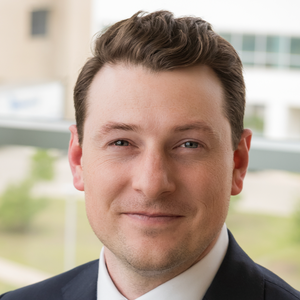
Dr. Joseph Kelling is a highly-trained plastic surgeon with an expertise in aesthetic surgery of the face, breast, and body. His intention is to create a warm and welcoming environment to foster a discussion about your aesthetic goals. With an emphasis on pati
Asked By: lalallri
ANSWER
Hi, I saw your question and concern. Many people have gallstones and often times this is something that is able to be treated conservatively with diet modification and medicine to treat your intermittent pain. It is completely appropriate and possible to have a cosmetic operation such as lipo 360 and a tummy tuck if you only have gallstones. Now, if you develop an acute attack or inflammation of your gallbladder, then I would have your gallbladder removed and try to wait 3 months before pursuing any body contouring surgery. Alternatively, if you do not need to have your gallbladder removed immediately, then you could do the body contouring first and wait 3-6 months before having your gallbladder removed. I hope this helps!
Asked By: hapuna19
ANSWER
As you know, Bellafill is a filler that isn't fully degraded by the body's natural processes, which can lead to the granulomas or persistent changes you've continued to notice. None of the current fillers are ever completely eliminated by the body — some are simply better tolerated than others, which is why physicians and injectors have to be especially careful with placement given those long-term effects. That said, a facelift or neck lift is still very much an option for you. The main consideration is that prior filler placement can make the surgical dissection slightly more difficult, since the tissue planes may be more scarred together. This raises the risk profile only slightly — not enough to outweigh the cosmetic benefits of surgery, assuming you're otherwise a good candidate. I hope this helps!
Asked By: Travel365
ANSWER
When considering partial submandibular reduction I think it is important to consider the added risks with this operation. I do believe this is a part of the neck lift operation that is much more commonly performed now even compared to five years ago. When I discuss this part of the operation with my patients, I tell them that the most common risk associated with it is prolonged submental swelling -- this can be noticeable for 3-6 months and the swelling will continue to improve even up to a year after your surgery. The other two primary risks that I discuss, though much less common, are development of a salivary leak (~1-2%) or temporary nerve injury (~5%) that almost always recovers within 3 months and it is easy to temporarily correct any asymmetry that would occur during this nerve healing process. As far as I have seen in the literature, there have been no reported accounts of dry mouth following SMG reduction. Also, the gland is a highly vascular structure so it can increase the risk of bleeding during the operation or post-operatively (very rare). The type of anesthesia provided is more left to the preference of the surgeon, I do my deep neck surgery with the patient intubated because I feel that is generally safer, but I'm sure there are plenty of surgeons that feel strongly the opposite way. At the end of the day, this is a great technical advancement in cosmetic neck surgery and certainly provides a superior aesthetic result.
Asked By: lala516
ANSWER
Hi there, I understand what you are seeing in these photos of yourself. Has your surgeon offered you a revision or is he saying that you would need to go back to have the glands removed? It is always difficult to assess the entire situation through the review of a few photos, but this looks like a prominence of your anterior digastric muscle, which can become more visible once the subplatysmal fat is removed from the neck. The submandibular gland often creates more fullness laterally, and may also be contributing to the issue if it has not been contoured as part of the deep plane neck lift. In patients like yourself, I think it is useful to perform an ultrasound of the neck to better visualize the anatomy that is present. Depending on your skin quality, it may be possible to do a revision through an incision under your chin alone, but you may need more tightening laterally to create the best possible contour. I hope this helps!
Asked By: Carito29
ANSWER
Hi there, I do believe it is safe to perform a hysterectomy and abdominoplasty at the same time and I regularly do this in my practice. I think the biggest thing to consider when combining these two operations is that it can elevate your risk of developing a blood clot (DVT/VTE/PE). You should make sure your plastic surgeon is screening you appropriately for the risk of this and they may offer you a blood thinner to decrease this risk post-operatively. I am fortunate to work with some excellent OB/Gyn colleagues that make this a possibility so make sure your OB and plastic surgeon are comfortable working with one another.
Asked By: Practical642190
ANSWER
Hi, thanks for this great question. To start, the FDA recommendations for silicone implant monitoring are to perform a MRI or a high frequency ultrasound of the breast implants starting five years after the implants have been placed and then every 3 years after this. For my patients over the age of 40, I typically tell them to replace their regular screening mammogram with a breast MRI or ultrasound every 5 years so that the breast implants can also be investigated. Also, many plastic surgeons, myself included, have ultrasounds in our offices to look at the implants of our own patients or prospective patients so it may be worth it to start with the surgeon that has placed your breast implants. The second part of this question is related to the dangers of silicone implant rupture. All implants will form a layer of scar tissue, also known as a capsule, around the implant. Because the current silicone that is used in breast implants is a semi-solid, the silicone will typically stay within the shell or within the capsule formed. If this happens, the most common thing that I have seen is that the rupture stimulates an inflammatory response that can lead to a capsular contracture of that breast implant. If the silicone extends beyond the capsule, then you can get silicone migration into surrounding tissues (breast and lymph nodes primarily) or the silicone can form silicone granulomas. These granulomas will feel like firm nodules and could also potentially interfere with your breast cancer screening and look like a breast cancer on the imaging study. If you do have a ruptured breast implant, it is recommended that the implant is removed due to the previously stated risks. Although, this is not an emergent issue and can be managed electively.
Asked By: joonb2117
ANSWER
Hi there, First off, I want to say that it looks like you take great care of your skin and you have very few telltale signs of facial aging. This is very important to understand and realize about yourself. With that being said, a deep plane facelift will help lift the corner of your mouth, but I don't think that the risks outweigh the benefit in your particular situation because there are less invasive ways to treat what you are seeing. The first one, which is very simple, is to inject Botox into the DAO (depressor anguli oris) muscle. This is the muscle that functions to pull down the corner of the mouth. The difficulty in the injection is identifying the correct muscle to target because it can create an asymmetric smile if the wrong muscles are affected. The next one, is to add some filler near the corner of the mouth to help support the tissue in the area. When I look at your photos, what I am seeing the most is the shadow of the cheek volume over the corner of the mouth causing it to look downturned when the corner of your mouth has actually maintained a nice position over time. Now, the question becomes -- when is the right time to have a deep plane facelift? Ideally, I think this is when you start to see descent of your mid-facial volume, the appearance of jowling along your mandibular border, and an aging appearance in your neck on a profile view (I almost always do a neck lift along with my facelift). Though, the best outcome comes when you also still have good skin and soft tissue quality. Most of the time, this is individuals in their early to mid 50s, but occasionally in their late 40s. I hope this helps!
Asked By: Peaceful714332
ANSWER
Hi there! Compared to the pre-liposuction photo, it looks like you have achieved a tremendous result from the submental liposuction. Submental liposuction and Kybella (Deoxycholic acid) both focus on treating subcutaneous fat (the fat directly beneath the skin), but it does nothing to treat the underlying anatomical structures. For many people, the appearance of a "heavy neck" is likely genetic in nature -- many of their family members will have a similar appearance to their jawline and neck and it will persist, or only minimally improve, even if they lose weight. This is because the underlying anatomy needs to be contoured in order to achieve a more aesthetically ideal neck. You also have a slightly underprojected chin, which is also contributing to what you are noticing. With all that being said, the combination of an isolated neck lift and placement of a chin implant could improve the appearance of your jawline and neck. Though, the full benefit is difficult to assess without performing a physical examination. I can confidently say that Kybella would offer very little benefit.
No reviews yet.
When reviews are available, you’ll see ratings, tags, and photos here.