
If 2025 was the year aesthetics went mainstream, 2026 is the year patients take control. Patients are showing up more informed, more opinionated, and more willing to revise past decisions.
So far this year, breast surgery has dominated search traffic on RealSelf like never before, led by a surprising surge in revision procedures that signals a generation actively reconsidering and optimizing past decisions. Body contouring continued its post-GLP-1 evolution, expanding beyond fat removal into full-body reshaping, skin quality, and structural refinement. Energy-based treatments quietly stole the spotlight from some longtime injectable favorites. And an entirely new class of procedures, from AlloClae body contouring to rib remodeling, is continuing to gain momentum and intrigue.
Beneath it all, a few bigger shifts are underway. AI is reshaping what happens before a patient even walks into a consultation room. Regenerative medicine is moving from niche to norm. And a continued wave of celebrity transparency is changing what people feel comfortable asking about and admitting to.
The RealSelf community is more informed, more intentional, and more engaged than ever, and the data from the first quarter of 2026 tells the story.
The data from the first quarter of 2026 tells the story. Here’s what’s been trending in the world’s largest aesthetics community this year so far.
Core stats and call-outs
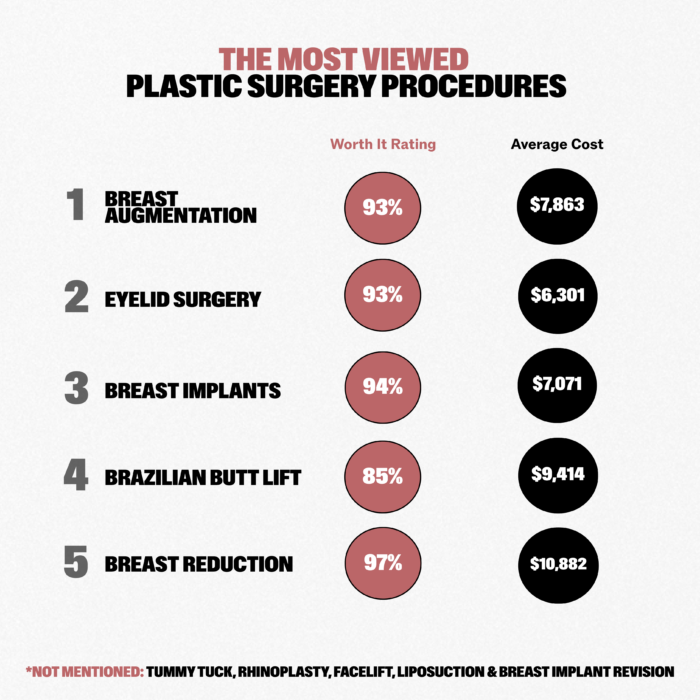
Most popular plastic surgery procedures
Breast augmentation held the #1 spot on RealSelf this past quarter, with pageviews up 45% compared to Q4 2025, a significant jump that reflects surging consumer interest heading into spring.
Breast implants pageviews climbed 44%. And in a sign that patients are increasingly revisiting and refining past decisions, breast implant revision surged 89%, one of the biggest leaps among all surgical procedures last quarter.
Even more telling, the fastest-growing searches were implant brands: Inspira (+284%), Nagor (+218%), Motiva (+214%), Sientra (+207%), Mentor (+202%), and Natrelle (+157%). Patients aren’t just browsing, they’re actively comparing and arriving at consultation appointments more informed than ever.
Brazilian butt lift interest bounced back with a 42% rise, while eyelid surgery (+17%), liposuction (+17%), and breast reduction (+18%) all showed strong momentum.
Most popular noninvasive procedures
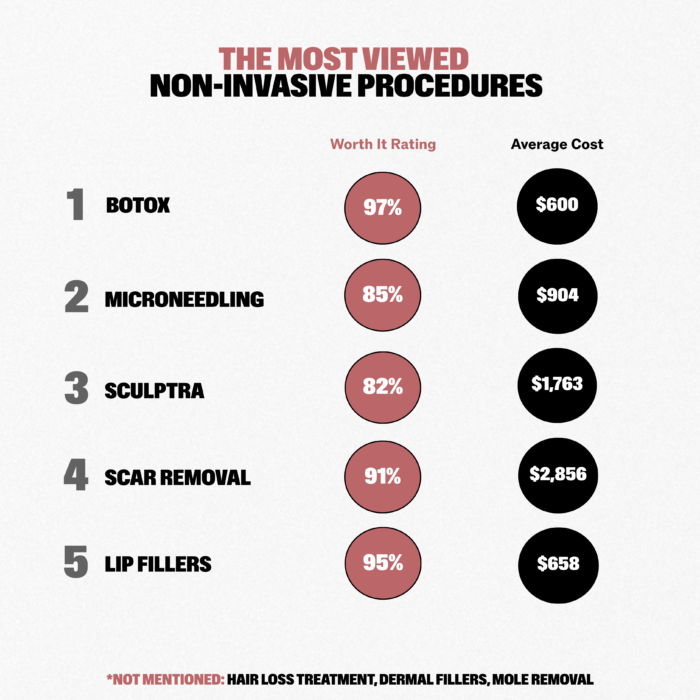
Botox remained the most-viewed noninvasive treatment on RealSelf by a wide margin, though it dipped 12% from Q4, a notable shift for a perennial chart-topper.
The bigger story is what gained ground in its wake: Sculptra interest climbed 25%, microneedling grew 9%, and lip fillers were up 10%. Patients aren’t abandoning injectables, they’re diversifying, gravitating toward treatments with longer-lasting and often regenerative effects.
Fastest-growing noninvasive procedures
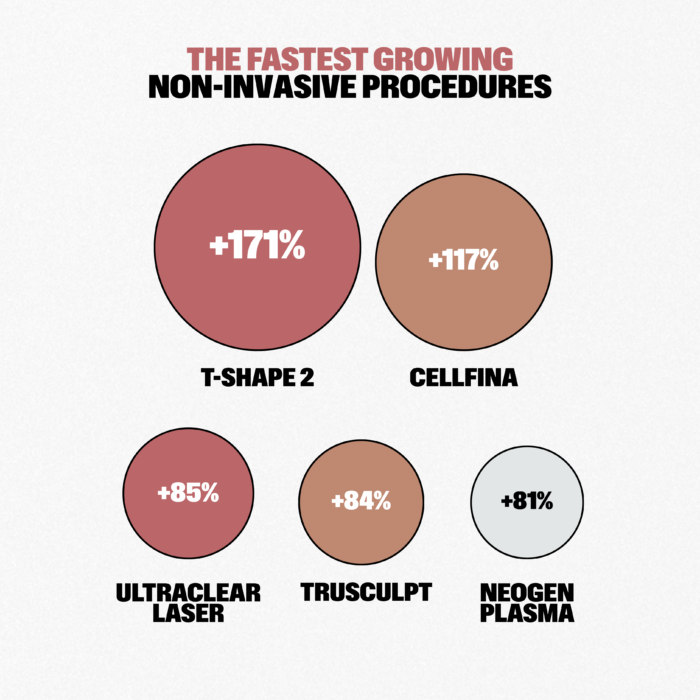
If there’s one treatment category that’s quietly exploding, it’s energy-based treatments. These are procedures that use forms of energy such as radiofrequency, ultrasound, laser, plasma, or electrical stimulation to remodel tissue, destroy fat cells, or stimulate collagen production, all without incisions or significant downtime.
Energy-based devices regenerate the skin and underlying tissue, making them increasingly attractive to patients who want structural, long-lasting results without going under the knife.
T-Shape 2 continued its breakout momentum, up 171% from Q4, solidifying its status as the hottest noninvasive body contouring treatment of the moment. UltraClear Laser (+85%), truSculpt (+84%), and NeoGen Plasma (+81%) also posted strong gains. Patients want results that look like better skin, not “work.”
Also worth a shout-out: consumer interest in cellulite treatment Cellfina surged 117% in Q1. This treatment was FDA cleared over a decade ago, but it’s a notable newcomer to the list of the fastest-growing treatments on RealSelf.
Defining aesthetic trends of Q1 2026
1. The breast implant renaissance
Breast surgery dominated Q1, surprising even the experts.
The breast implant revision surge deserves another mention: up 89% from Q4, it points to a generation of patients who got implants years ago and are now reconsidering whether to go smaller, upgrade to newer technology, or remove implants altogether. This isn’t first-time demand. It’s revision culture. Patients are treating their bodies like evolving decisions, not one-and-done choices.This is a generation that’s optimizing.
RealSelf Verified Dr. Urmen Desai, a board-certified plastic surgeon in Beverly Hills, CA, attributes this wave of interest to the effects of GLP-1 medications on breast surgeries, the “ballerina breast” trend, and advancements in implant technologies.
“One major factor is the widespread use of GLP-1 medications for weight loss, which has led to significant changes in overall body proportions,” explains Dr. Desai. “Many individuals are seeking a look that better aligns with their current physique—one that feels lighter, more athletic, and in harmony with their slimmer frame.”
He also points to the fact that “influencers and public figures are increasingly promoting a ‘ballerina breast’ aesthetic, favoring subtle, natural enhancements over more augmented looks. This shift has had a ripple effect on patient expectations… and revision procedures are often focused on achieving a more natural appearance rather than simply maintaining or increasing volume.” Finally, “advancements in implant technology are influencing patient decisions. Many individuals undergoing revision surgery are opting to switch to Motiva breast implants, which are known for their reduced rippling and softer, more natural feel. ”
2. GLP-1’s second act: the full-body contouring boom
The post-GLP-1 wave that reshaped the aesthetic industry in 2025 shows no signs of slowing.
Body lift pageviews surged 31% last quarter, a signal that people on GLP-1s aren’t just losing weight: they’re seeking solutions for all the extra skin that’s left behind.
Brazilian butt lift interest bounced back 42%, even as demand for post-weight-loss procedures like tummy tucks continued to climb.
RealSelf Verified Dr. S. Alexander Earle, a board-certified plastic surgeon in Miami, FL, explains the uptick in concerns about deflation, loose skin, and loss of shape, especially in the buttocks.
“What many people call ‘Ozempic butt’ is really a combination of volume loss and tissue laxity after rapid weight loss,” according to Dr. Earle. “In our practice, that trend pushed innovation. Dr. [Natalia] Vidal developed the V-Lift as a surgical butt lift with fat grafting to the glutes for patients who need more than a minor tweak and want a more comprehensive reshaping approach. ”
He points to a parallel trend: “increased interest in AlloClae injections, which have created another option for patients who need targeted volume restoration and are not ideal candidates for traditional fat transfer or do not want surgery.”
On the noninvasive side, the rising interest in T-Shape 2 (+171%) and Cellfina (+117%) pointed to patients approaching body contouring more comprehensively, addressing volume, contour, and skin quality together.
3. Skin quality is the new anti-aging focus
A quieter but meaningful trend: patient demand has evolved from just fixing wrinkles to improving the foundation. Searches for scar removal and Sculptra climbed 25%, while energy-based treatments like SmartXide (+109%), UltraClear Laser (+85%), and NeoGen Plasma (+81%) posted some of the strongest gains in the noninvasive category.
Dr. Tania Hassanzadeh, a board-eligible facial plastic surgeon in Beverly Hills, CA, says radiofrequency energy treatments can be an especially good option for patients in the midst of a weight loss journey. “Many of my patients are on GLP-1s and interested in a face and neck lift, but they aren’t ready for surgery as they haven’t reached their weight goal. As a bridge to surgery, I think radiofrequency treatments such as FaceTite are great. I explain to my patients that your skin will continuously tighten over 9-12 months, so you can stave off ‘Ozempic face’ while losing weight, and it leaves the door open to surgery when you’re ready.”
Additionally, Botox’s 12% dip in popularity from Q4 is less a sign of decline than of evolution. As patients grow more sophisticated about their noninvasive options, they’re complementing or replacing repeated Botox appointments with longer-lasting options: Sculptra for collagen stimulation, biostimulators, and energy-based treatments that create a more sustained, natural-looking change in skin quality.
Dr. Vu Ho, a board-certified facial plastic surgeon based in Plano, Texas, tells his patients that “improving tissue quality is paramount for achieving aesthetic anti-aging success because of the dynamic nature of these elements. Effective treatments need to actively integrate into and modulate biological tissue in order to bring about youthful changes.”
4. AI enters the consultation room
Artificial intelligence is quietly reshaping the aesthetics industry from the inside out.
AI-powered imaging and outcome simulation tools, once limited to high-end surgical practices, are increasingly part of the standard consultation experience. Platforms that let patients visualize surgical results before committing to a procedure are not only changing how surgeons communicate; they’re raising patient expectations for personalization and precision.
AI-driven skin analysis apps that assess skin tone, texture, fine lines, and pigmentation from a single smartphone photo are also helping patients prepare for consultations.
RealSelf Verified Dr. Johnny Franco, a board-certified plastic surgeon in Austin, TX, sees the benefits of this technology in his own practice. “Patients can now find highly specific information and connect with the right provider faster than ever. This elevates the consultation into a more strategic, personalized experience focused on achieving precise results.”
There is a flip side: AI is raising expectations faster than most providers can meet them. The same AI capabilities fueling smarter consultations are also powering a wave of face-scoring apps and “optimization” tools tied to looksmaxxing communities online (more on that below).
Board-certified physicians are increasingly fielding appointments where patients arrive with AI-generated treatment recommendations or facial symmetry analyses that reflect algorithmic ideals rather than clinical reality. Technology is a tool, and like any tool in aesthetics, its value depends entirely on the expertise and ethics of the hands using it.
What’s coming next: AI tools that can predict long-term aging outcomes, track treatment progress over time, and match patients with compatible providers based on review histories and procedural portfolios.
5. Regenerative wellness: treating the root, not just the surface
Among the most consequential shifts in aesthetics right now is the growing patient appetite for regenerative medicine treatments designed to work with the body’s own biology to stimulate healing, restore tissue quality, and extend youthful function over the long term.
PRP (platelet-rich plasma) and PRF (platelet-rich fibrin) searches have continued to climb on RealSelf this quarter, part of a broader pivot toward biostimulating treatments that address root-cause aging rather than simply masking its effects.
PRF in particular, a next-generation evolution of PRP that releases growth factors more gradually and is thought to produce a more sustained regenerative response, is gaining traction among practitioners for facial rejuvenation, under-eye treatment, and hair restoration.
Dr. Tania Hassanzadeh, a board-eligible facial plastic surgeon in Beverly Hills, CA, tells RealSelf “I’m seeing more and more patients asking me about PRP and PRF treatments, especially for treating the under-eye. In the era of filler fatigue, these treatments are my go-to’s as effective, evidence-based alternatives, but they are not true volumizers for those with a deep tear trough. It can take several sessions to reach your goal, and results are best in those who are young and lead a healthy lifestyle.”
Combined with microneedling, RF devices, or exosome therapies, these treatments are increasingly part of comprehensive skin health protocols rather than standalone services.
Dr. Ho adds PRP topically after laser skin resurfacing, noting that it “results in less side effects, including swelling, redness, and bruising.” The result? “My patients have a quicker recovery and improved outcomes.”
The broader regenerative wellness conversation extends beyond the treatment room. Stem cell science, cellular longevity research, and the emerging field of senolytics therapies that target aging “zombie” cells are moving from academic journals into patient conversations at an accelerating pace.
6. Rib remodeling: the procedure everyone is talking about
Few procedures have generated as much internet buzz, and as much confusion, as rib remodeling. Social media algorithms have discovered it, the headlines have been dramatic, and the comment sections are split between fascination and skepticism. So let’s clear the air.
At its core, rib remodeling is a surgical procedure designed to refine the waistline by reshaping the lower ribs to create a more hourglass silhouette. Unlike traditional waist-contouring methods that focus on fat removal alone, rib remodeling addresses the underlying structure that ultimately determines the waist-to-hip ratio. That’s where the conversation gets nuanced, because anytime you’re discussing structural change, the stakes feel higher.
As RealSelf Verified Dr. S. Alexander Earle, a board-certified plastic surgeon in Miami, FL, explains that it’s “not about removing ribs, and it should not be discussed as if all waist-narrowing procedures are the same. Rib remodeling is designed to reshape the lower rib area in a more controlled way to create a narrower, more tapered waistline in the right candidate. When performed thoughtfully, it can be a safe and effective option, but it is still real surgery and requires careful patient selection, surgical expertise, and a full understanding of recovery, limitations, and goals.” In his view, “What patients need most right now is not hype or fear, but clear education from surgeons who actually perform the procedure and understand both its potential and its boundaries.”
Social media tends to split this topic into two camps: fascination and skepticism. The headlines are dramatic, the opinions are strong, and there is very little expert clarity out there. What patients deserve, and what the RealSelf community has always stood for, is straight talk from board-certified plastic surgeons who have actually performed the procedure and can speak honestly about candidacy, outcomes, recovery, and risk.
7. AlloClae: a new frontier in natural-looking body contouring
AlloClae is a structural adipose (fat) filler derived from donor tissue, designed for nonsurgical body contouring, volume restoration, and smoothing skin irregularities. It can be used across a range of areas including the butt, breasts, and hip dips (one of the most talked-about applications this quarter).
For patients who want the natural feel of fat transfer without surgery, AlloClae offers something genuinely new: immediate, natural-looking results without needing to harvest fat from a donor site on your own body. FDA-approved in 2025, it’s one of the most innovative options to enter the market in recent memory, and practitioners are taking notice.
RealSelf Verified Dr. Johnny Franco, a board-certified plastic surgeon in Austin, TX, explains what sets it apart from other volumizing approaches. “The one really unique thing about AlloClae is that it’s stable over time, so you’re not going to see a lot of change.”
That stability is a meaningful clinical differentiator. AlloClae is designed to hold its shape and volume long term, making it a compelling option for patients looking for a durable, low-maintenance approach to body contouring without a fat transfer procedure.
In a recent two-part series, we follow Dr. Franco as he treats hip dips with AlloClae. Watch part one here and part two here.
8. The peptide surge
Peptides are having a moment, and not just in the skincare aisle.
From collagen-stimulating topicals to GLP-1 receptor agonists prescribed for weight management, the term “peptide” has entered mainstream wellness vocabulary with unusual speed. As with any rapidly popularized treatment category, the signal-to-noise ratio can be challenging for patients trying to understand what’s real.
RealSelf Verified Dr. Brandon Richland, a board-certified plastic surgeon in Newport Beach, CA, offers one of the clearest breakdowns we’ve seen, pointing out that “the benefit depends entirely on which peptide is being used.”
“For skin and anti-aging, some peptides are used to promote wound healing and stimulate collagen production. When used consistently, this can lead to improved skin elasticity, reduced appearance of fine lines, and an overall healthier skin texture.
Body composition and wellness is the category generating the most buzz. Peptides like Semaglutide or Tirzepatide are FDA-approved for weight management by signaling satiety to the brain and regulating blood sugar.
Other peptides work by stimulating the body’s own release of growth hormone, which can help support fat metabolism, lean muscle growth, and recovery.”
The key takeaway: not all peptides are the same, and the category spans everything from well-studied, FDA-approved medications to largely unregulated supplements with limited clinical data. Patients interested in peptide-based treatments should work with a board-certified physician to evaluate which options are appropriate for their specific goals, and to distinguish between what’s clinically supported and what’s marketing hype.

The most talked-about aesthetic moments of Q1 2026
Awards season delivered more than just fashion moments this quarter. For the RealSelf community, it was a masterclass in the art of looking refreshed and in the growing conversation around what that actually takes.
Emma Stone’s awards season glow had everyone talking
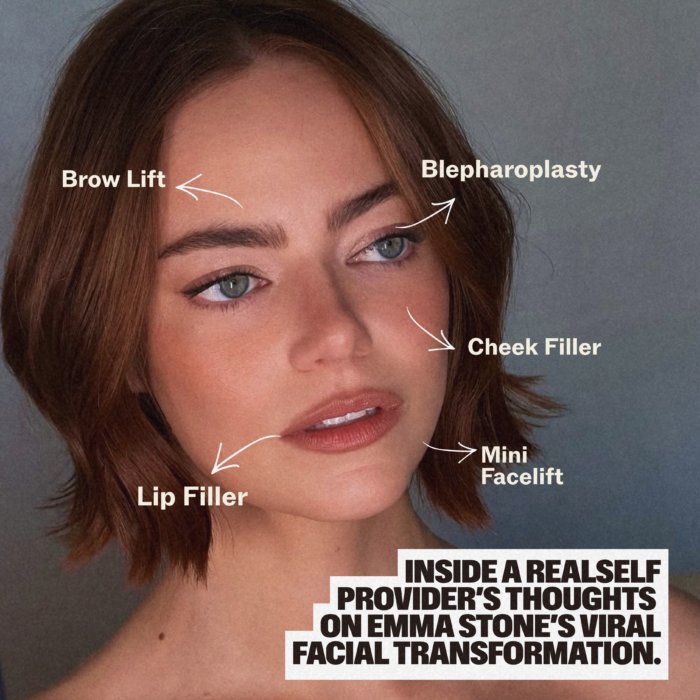
Emma Stone turned heads throughout awards season with a noticeably fresher appearance, prompting widespread speculation (and a lot of RealSelf searches) about what, if anything, she’s had done.
Experts who weighed in pointed to possible signs of a brow lift, blepharoplasty, cheek filler, a mini facelift, and lip filler, though nothing has been confirmed. Whatever the explanation, her look exemplifies the “refreshed, not done” aesthetic that patients across the board are asking for in 2026.
RealSelf Verified Dr. Konstantin Vasyukevich, a board-certified facial plastic surgeon in NYC, weighed in on the speculation with his professional opinion. “Her brow looks slightly higher and she has less skin on the upper eyelid, indicating that she might have had a lateral brow lift and blepharoplasty, or it could be just a very good, creative use of Botox to elevate the brow. Also, her jawline appears sharper and her cheek looks slightly higher. This could be the result of a mini facelift or a use of filler in the area.”
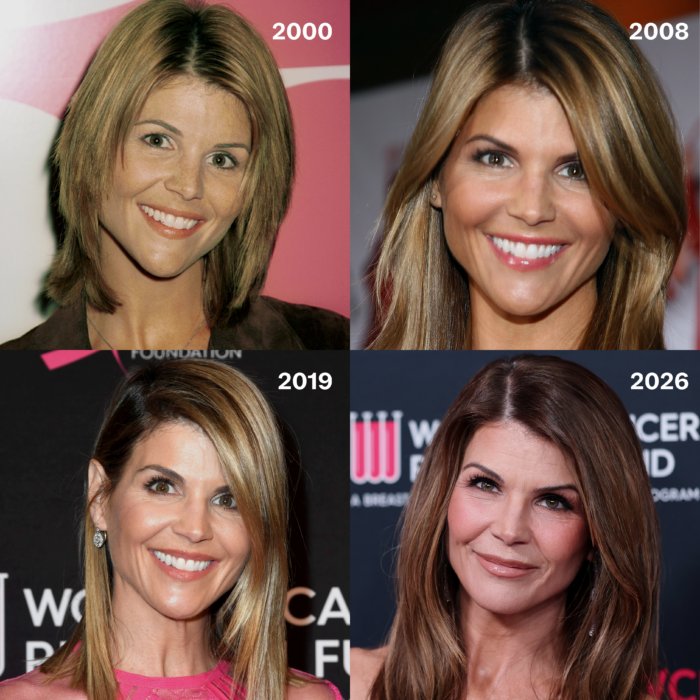
Lori Loughlin’s transformation sparked a facelift frenzy
When Lori Loughlin made her first red carpet appearance in early 2026, looking strikingly youthful at 60, the moment fueled one of RealSelf’s most popular Instagram posts of last quarter. Plastic surgeons who weighed in speculated that her dramatically tighter jawline and refreshed eyes could be the result of a deep plane facelift with facial fat grafting, upper and lower blepharoplasty, and possible skin resurfacing with CO2 laser or Ellacor.
Loughlin hasn’t confirmed anything, which only deepened the curiosity for many of her fans. Searches for deep plane facelifts and blepharoplasty climbed noticeably in the weeks following her appearance.
Denise Richards kept the transparency era going
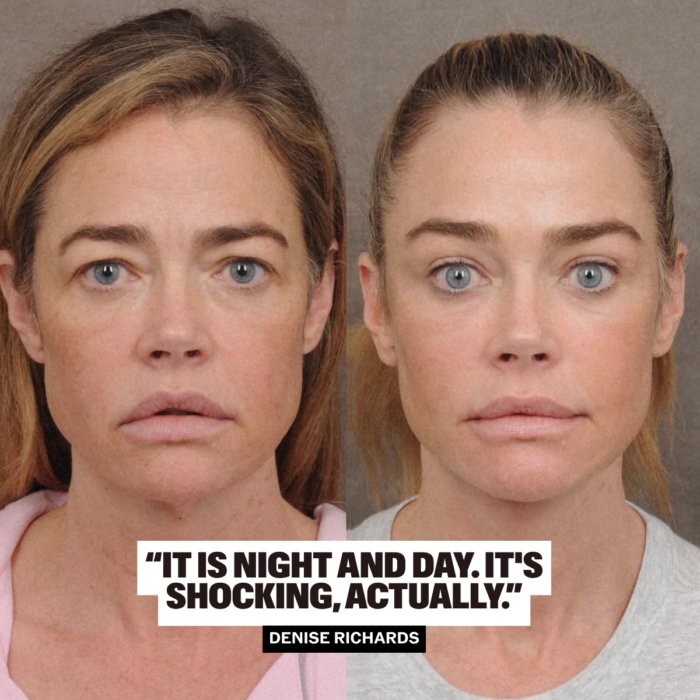
The celebrity openness that defined 2025 shows no signs of stopping this year. Denise Richards, 55, became the subject of one of RealSelf’s top 10 most-engaged posts of last quarter after sharing stunning before-and-after photos from her facelift, a comprehensive transformation that included a temporal brow lift, upper blepharoplasty, corner lip lift, and fat grafting using fat from her own thigh.
But it wasn’t just the results that resonated, it was her candor. “I wanted to put things back up, where they were before,” Richards quipped. Keeping the transparency trend alive, she reflected on the culture shift around aesthetic openness: “Back when I had my breast implants done in the 90s, we just weren’t open about that stuff. In a way, I think it’s good to be private. But in a way, I think it’s good to be open and honest.”
She also offered some of the most practical advice we’ve heard from a celebrity this cycle: “It’s very important to see before-and-afters from the doctor and understand your goals and what’s realistic. My biggest advice is that, no matter what kind of plastic surgery anyone gets, you have to have that time to recover.”
Penile enhancement procedures, a rising conversation
One of the more unexpected aesthetic conversations to break into the mainstream this quarter: penile Botox injections. The procedure stepped firmly into the public eye when Harry Jowsey, the Australian reality TV personality best known from Love Island Australia, spoke openly about getting the treatment on a recent red carpet, helping push a largely under-discussed category into broad cultural conversation.
The basics: penile enlargement can be achieved either through permanent surgical techniques or through non-surgical approaches using dermal fillers (such as Juvéderm or Restylane) and neurotoxins (Botox). These procedures primarily focus on increasing the length and girth of the male genitalia for cosmetic or functional purposes. The use of hyaluronic acid (HA) fillers took off during the 2010s, aimed at increasing penile girth; since then, male celebrities and public figures have steadily broadened awareness of what was once a niche aesthetic procedure.
Practitioners are candid about what patients can realistically expect. Dr. Tory P. Sullivan, a board-certified dermatologist in Fort Lauderdale, Florida offers a measured perspective, saying patients “may see a ¼ to ½ inch of improvement in flaccid length (at best), with no change in erect length. It can be helpful for men who ‘turtle’ or retract significantly, but that’s a very specific use case—not a game-changing enhancement. The hype is far outpacing the reality.”
Does he think penis Botox makes more of a difference? “Botox is one of the best and most popular treatments for facial aging, there’s no question about that. But when it comes to the penis, I think there is more hype than results.”
As with any emerging aesthetic procedure, the most important step is a consultation with a board-certified provider who can give an honest assessment of candidacy, realistic outcomes, and appropriate expectations, not a social media post.
A word on looksmaxxing
One trend that crossed our radar in Q1, and warrants a careful conversation, is looksmaxxing, the social media-driven practice of optimizing one’s appearance, often pushed to extremes by online communities.
While there’s nothing wrong with wanting to look and feel your best, the looksmaxxing movement online can blur the line between informed self-improvement and chasing unrealistic ideals sourced from filtered images and anonymous advice.
The concern isn’t enhancement, it’s the pressure to pursue aggressive or unproven procedures without proper medical guidance. Plastic surgeons and dermatologists are clear: the best outcomes come from thorough research, realistic goal-setting, and, critically, working with a board-certified, verified provider who has examined you in person.
If you’ve been exploring the world of looksmaxxing, the best next step is a consultation with a real doctor, not a Reddit thread. RealSelf’s verified provider network is a good place to start.
This report is based on consumer search and pageview data on RealSelf.com from January 1 through March 31, 2026.