Scars
A wound from trauma or a surgical incision often includes a scar, but that mark doesn’t have to be permanent. Compare the top treatment options to get rid or scars, ranging from topical skin-care solutions to in-office procedures.
A wound from trauma or a surgical incision often includes a scar, but that mark doesn’t have to be permanent. Compare the top treatment options to get rid or scars, ranging from topical skin-care solutions to in-office procedures.
Top treatments
Other options to consider
Are scars permanent?
Skin-care solutions
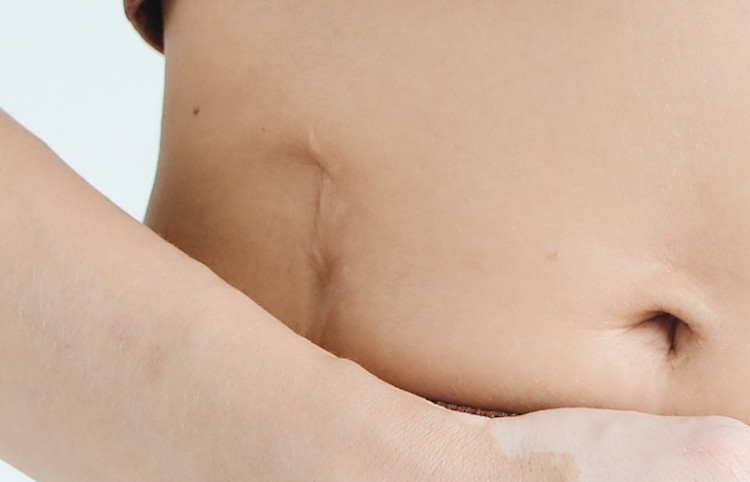
Scars are visible changes in skin that develop as it heals from an injury or surgery. They usually don’t blend in with the texture and tone of the surrounding skin—and, depending on their shape, size, and location, they can be noticeable.
The better your wound heals (meaning it remains clean and closed and heals evenly), the less likely it is that you’ll have a prominent scar. If the incision or wound is strained or widened during the healing process, scarring may be more severe.
Even when a wound heals well, it’s still possible to be left with a visible scar, which will fade over time.
A scar looks different from your normal skin because of its structure. Healthy skin is made up of both collagen and elastin fibers; the elastin offers flexibility, while collagen provides strength. But the body produces only collagen during wound healing.
Without the elastin, scars can feel tougher, look thicker, and differ in color from normal skin. According to the American Academy of Dermatology, you should have a dermatologist examine your scars ahead of any treatment, because sometimes skin cancer can look like a scar.
The type of scar and the extent of scarring depend on several factors, including genetics; your age (older skin heals with less scarring) and skin color (dark skin is more prone to raised scars called keloids); and the type, size, and location of the injury.
There are four common types of scars:
- Color or surface irregularities, or normotrophic scars, are subtle scars that may turn white and flatten out over time. They don’t usually impair movement or cause discomfort. Scars caused by small surgical incisions and minor injuries fall into this category.
- Atrophic scars are shallow indentations formed when healing takes place below the surface of the skin. They’re most commonly the result of severe acne, especially cystic acne. Chicken pox scars fall into this category too. There are three different kinds of atrophic scars, varying in depth and shape: icepick scars, boxcar scars, and rolling scars.
- Hypertrophic scars often appear as raised, thick clusters of scar tissue that form at the site of the wound. They can cause discomfort and may widen or change color over time, becoming either hyperpigmented (darkened) or hypopigmented (lightened).
- Keloid scars are larger than hypertrophic scars and usually extend beyond the wound site. These can be painful, itchy, prone to puckering, and stubborn to get rid of. Keloid scarring can appear anywhere on the body but is more common in areas with minimal fatty tissue. This form of scar is exceedingly rare on the face, though it's possible.
- Contracture scars restrict movement by pulling together and tightening skin and its underlying tissue during the healing process. Because there’s no elastin present, the new skin doesn’t flex. Contracture scar formation commonly happens when the wound involves significant tissue loss, such as from a burn, or when the skin heals around a joint.
All scars fade over time, but some need a little extra help in order to become less noticeable. Luckily, there are various treatment options on the market for reducing their appearance.
While undergoing any scar treatment, it’s vital to avoid sun exposure. The sun can darken scars permanently and undo all the success of your treatments. To prevent this, wear clothing that covers the scar while out in the sun and apply sunscreen to the area during every season—not just the summertime.
These are the treatments doctors and RealSelf members say deliver the best scar-reduction results.
- Laser scar removal directs laser energy at the scar, to heat up and damage the deeper layers of tissue. This triggers the body’s natural healing response, which produces new, healthy collagen. As is often the case with scar treatment, timing can be crucial. Clinical studies show that the earlier treatments are started, the better the results. There are two types of resurfacing laser treatments. Ablative lasers remove the surface layers of the skin, yielding significant improvements but requiring more recovery. Non-ablative lasers have a shorter recovery time but may require multiple sessions in order to get the best results. For scar treatment, both types of lasers are often used. Find doctors who offer laser scar removal
- Biocorneum is a silicone gel with SPF that can be used at home to minimize the appearance of scars. It dries to a breathable, flexible barrier over skin, to keep the area hydrated, prevent excess collagen production, and protect against movement that could widen or distress the incision area. Biocorneum is ideal for preventing hypertrophic scars or flattening those that have already formed. Often used during recovery from plastic surgery or reconstructive surgery, the treatment tends to work better on new scars than on those that are more than a year old. “I recommend starting Biocorneum after the wound has reepithelialized. This means once the scabs are gone and the area has a fresh pink color of new skin or granulation tissue,” says Dr. Mark Been, a plastic surgeon in Geneva, Illinois. “Treatment should be twice daily and continue for at least two to three months, to reap the full benefit.” Find doctors who offer Biocorneum
- Microneedling is an in-office treatment that involves piercing the skin with tiny needles, to create micro injuries that trigger the body’s natural healing response. This has a domino effect within the skin. “First, it releases cytokines and growth factors in the epidermis and dermis—the top and bottom layers of your skin,” says Brisbane, Australia, dermatologist Dr. Davin Lim. “This, in turn, remodels scars and the dermal layer of the skin. Additionally, needles can break up scars themselves. This leads to new collagen formation.” It’s especially good for acne scars and other discoloration or surface irregularities. The procedure is quick, cost-effective, and safe for all skin types and tones. Multiple treatments are required in order to see the most significant effects. Depending on the intensity level of your treatment, your skin may look sunburned, and recovery could take up to three days. Unfortunately, some RealSelf members have also reported additional scarring and the appearance of “pinpricks” across their skin. Find doctors who offer microneedling
- Embrace scar therapy is an at-home silicone adhesive dressing that’s applied to your incision in order to help prevent and minimize scarring during the healing process, such as during plastic surgery recovery. As Littleton, Colorado, plastic surgeon Dr. Nick Slenkovich explains, “It works by relieving tension created during the healing process.” It also seals in moisture, which is essential for proper wound care. It’s low-maintenance and comfortable, and each dressing application can last more than 10 days. However, one RealSelf member reported blistering from the strips, and some doctors say they've seen patients have similar reactions. If you experience this, leave them off until the irritation subsides. Find doctors who offer Embrace
- Subcision is a minor surgical procedure for treating depressed atrophic scars—typically, acne scars, such as rolling scars or boxcar scars. During treatment, the sharp edge of a needle is maneuvered under the scar, to break the fibers that tether the scar to the tissue beneath it. The blunt tip of a cannula can also be used, to minimize bruising, swelling, pain, and post-treatment lumpiness. One to five sessions may be required, to break up all the fibrous tissue, says Dr. Lim. “Think of a scar like branches of a tree,” he says. “To break all the bonds in one session, three-dimensionally, is difficult in complex scars—hence multiple treatments from all angles.” Find doctors who offer subcision
- Scar removal surgery literally cuts out scar tissue, closing the incision with a neater scar that blends in better. While the procedure can't erase a scar completely, a skilled surgeon can create a result both looks better and allows more freedom of movement. This technique is often used in combination with other treatment options.
- Scar removal surgery won’t eliminate a scar completely, but it can minimize its appearance significantly. In this surgical procedure, the scar is cut out (excised). The edges are then stitched together, so you’re basically replacing your old scar with a new, improved incision in order to minimize its appearance. This option is especially beneficial if you have a raised scar (particularly a keloid or contracture) or a deep, tethered scar. If deeper tissue needs to be taken out in order to remove the original scar, the surgery may require a skin graft or tissue expansion, to close the wound. The surgery can be done at any age and on any part of the body, though you should wait about a year after the wound heals before seeking this out (scars can change over time). Scar revision surgery comes with the risk of scarring poorly a second time. It can also be expensive, depending on your location and provider.
- Steroid injections are placed into raised scars, such as keloids and hypertrophic scars, to reduce inflammation and flatten them out. “Kenalog injections, or triamcinolone injections, are available in two common strengths and are injected intralesionally into keloid and hypertrophic scars,” says Dr. Raffy Karamanouk, a plastic surgeon in Santa Monica, California. “Kenalog is generally therapeutic and improves scar thickness and quality.” Patients have reported that the injections can be painful, but topical numbing creams may help. “I give my patients numbing medication in a topical cream prior to injection. This usually satisfies the requirement for pain control,” notes Dr. Karamanouk. There are also potential complications associated with steroid injections. Bleeding, bruising, infection, thinning of the skin, and hyperpigmentation are all possible.
- Botox isn’t just used for wrinkle reduction; it can also be used to help diminish the appearance of scars. A small study found that Botox can improve the appearance of new facial scars by preventing movement and taking tension off the scar. Movements can make scars widen, so the scar is able to heal without creating a worsened appearance. Botox cannot treat older scars—only new ones that are still malleable. Find doctors who offer Botox
- Z-plasty is a plastic surgery technique used to improve the aesthetic and functional abilities of a contracture scar. It can help lengthen a contracted scar; change the direction of a scar for better alignment with relaxed tension lines; or break up a scar, to improve camouflage with the skin. The process uses two triangle flaps that are then transposed to create the ideal result. Rare complications include flap necrosis, hematoma, or infection.
Certain types of treatment can target individual characteristics of a scar, but there’s no way to completely remove scars.
“Pigmented scars can be lightened, red and purple scars can be corrected, depressed scars can be raised, raised scars can be flattened, and scar texture can improve,” says Dr. Cameron Chesnut, a dermatologic surgeon in Spokane, Washington. “The reality is, it often takes multiple types of treatment to address each aspect of the scar—and even with great improvements, scars will never fully be gone.”
Doctors on RealSelf say you should consider scar treatment options only once your incision or injury has fully healed, with no open areas or scabs remaining. For some major procedures, like a scar revision surgery, you may need to wait a year for the scar to stop evolving before you can do it. The upside is that some scars may become less noticeable over time.
If your scar is hurting you physically, your insurance plan may cover the cost of treatment, according to the Cleveland Clinic. If the treatment is solely for cosmetic purposes, you’ll probably have to pay for it yourself.
Luckily, over-the-counter scar creams can help reduce the appearance of scars. While some patients swear by ingredients like cocoa butter, aloe vera, and pure vitamin E, “most have minimal benefit other than keeping the scar hydrated,” explains Newport Beach, California, plastic surgeon Dr. Larry Nichter. “Although hydration is important, there are better, scientifically studied products with greater efficacy. Most of the scientific articles written about this subject indicate that topical silicone gel or silicone sheets work best.”
The exception, says Dr. Nichter, is Mederma, which uses an active ingredient derived from onions. In a review article of scar treatments, Mederma (or its European counterpart, Contractubex) was shown to be effective in 16 studies.
Beyond that, silicone may be your best bet. Professional scar treatments, like Stratpharma Strataderm, use unique silicone technology to reduce redness and the elevation of scars. Another option, Skinuva Scar, pairs silicone with growth factors in order to reduce redness, pigmentation, and skin thickening in new and old scars.
Finally, one of the most important topical ingredients for scars—and your skin in general—is none other than SPF. It’s absolutely paramount to protect your scars from the sun to prevent them from darkening. Always use sunscreen with an SPF of 30 or higher while spending time outdoors.
Updated July 6, 2021