The Conversations Shaping the Future of Beauty and Aesthetics
Ten panels. Dozens of industry leaders. One thing nobody could stop talking about: the consumer is more informed, more skeptical, and more self-directed than the industry ever anticipated. From the treatment room to the founder’s journey, from AI to GLP-1s to regenerative science, here are the ideas that defined our 2026 Real Talk Summit.
1. The Best Work Is Work Nobody Can Prove You Had Done
The aesthetic ideal has quietly but completely flipped. For decades the industry sold visible results. Now the most coveted outcome is the undetectable refresh.
This is subtlety as a social contract, and it’s changing everything about how providers work. Charlotte Bickley, Editor at Large at Daily Front Row, captured the consumer mindset perfectly, describing her own breast augmentation as wanting to look like the best version of herself, just a little more enhanced. She didn’t want to go from nothing to a D cup.
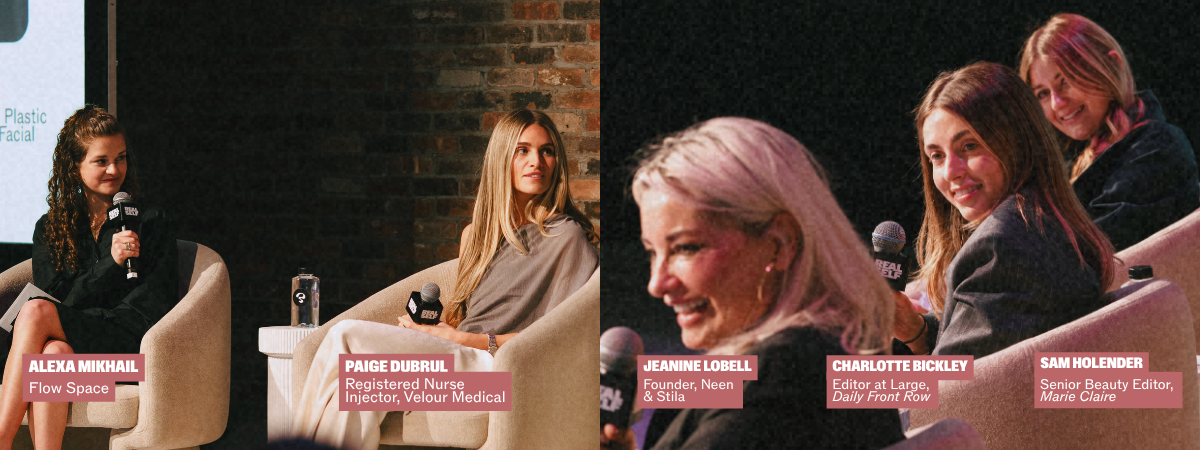
Right: Jeanine Lobell (panelist), Charlotte Bickley (panelist), and Sam Holender (moderator) at the Soft is the New Snatched panel
Dr. Dilip D. Madnani, double board-certified facial plastic surgeon, put the provider’s role plainly: the job now is to minimize the show of what was done and showcase the results.
Dr. Marnie Nussbaum, board-certified dermatologist, described patients arriving not with a list of procedures but with a feeling they want back: less tired, more themselves.
And nurse injector Paige DuBrul described her role less as an injector and more as the person who guides patients toward what will actually serve them rather than what they think they want.
The irony is that this demands more skill, not less. Restraint is harder than volume. The providers winning in this moment are the ones who know exactly where to stop.
2. An Entire Generation Is Opting Out of the “Fix It” Framework
It’s not just that younger patients want subtler results. They have rejected the premise of correction altogether. They’re coming in before there is anything to fix, a fundamentally different relationship with aging than any generation before them.

Nurse practitioner Christina Nalbone called this a clinical strategy, not a marketing trend. Dr. Darby Koh, board-certified family nurse practitioner, reframed the entire vocabulary around it, retiring “anti-aging” in favor of “well-aging.” This shift sounds small, but it carries enormous implications for how the industry positions everything from skincare to surgery. And both agreed that for this cohort, the focus is on skin quality, consistency, and patience.
The generation that grew up watching their parents fight aging has decided to delay it as long as they can. That changes the products, the conversations, and the entire arc of the patient-provider relationship.
3. Science + Trust Are the New Currency
Whether the topic was exosomes, GLP-1s, skincare formulation, or AI, one theme surfaced again and again: consumers are done being dazzled by marketing. They want proof.
Obagi Medical Senior Director of Commercial Strategy, Julia Silva challenged consumers to look beyond the marketing and ask what the clinical data actually says. Dr. Robert Finney, board-certified dermatologist, warned that in the exosome space, if a brand can’t provide clinical trial data and a track record, walk away.
DIBS Beauty CEO, Jeff Lee put it starkly for beauty brands: if you can’t compete within the LLMs, you will probably die on the floor. Consumers are running products through AI filters before they even reach the shelf.

Right: Dr. Robert Finney (panelist), Dr. Ruth Tedaldi (panelist), and Dr. Jason Bloom (panelist) at the Exosomes 101 panel powered by ( plated )
And in the GLP-1 space, where accessibility has outpaced oversight, Dr. Andrew Kibert described what responsible prescribing actually looks like: when someone asks him for a GLP-1, he takes a step back and works to understand what the patient is trying to achieve and what they’re trying to avoid. Science without that individualized context, he suggested, doesn’t actually serve the patient.
Michelle Larivee, Founder and CEO of WTHN articulated the new standard best: credibility and trust are table stakes. You build everything else on top of that foundation, not the other way around.
The brands and providers winning today are those who lead with science and let the experience follow.
4. The Consumer Has Taken the Wheel, and They’re Not Giving It Back
Across every panel, one thing was undeniable: the consumer has fundamentally changed. They are arriving at practices having already researched their provider through before and afters and technique videos online. They’re using ChatGPT in the aisle to make purchase decisions. The consideration journey no longer happens in the treatment room or at the retail shelf. It happens long before either.

Dr. Dilip D. Madnani described the dynamic in his practice: social media is where trust is built, and patients arrive having already made up their minds. His job in the consultation room is not to convince but to guide.
Jeff Lee echoed this for the beauty retail world: discovery no longer happens in store. The decision is made before they walk in the door, and if it hasn’t been made yet, the customer is making it on their phone right in front of the display.
This shift puts enormous pressure on both brands and providers to show up online with substance, authenticity, and specificity. Generic content will not cut through. What builds trust is expertise, transparency, and a genuine point of view.
5. Honesty Is Having a Moment, and the Industry Needs to Catch Up
One of the most consistent threads across the summit was a growing appetite for transparency, and a growing frustration with the gap between what people are actually doing and what they are willing to say publicly. The subtle work that is now so coveted has also made it easier than ever to deny, and that denial has consequences for everyone watching.
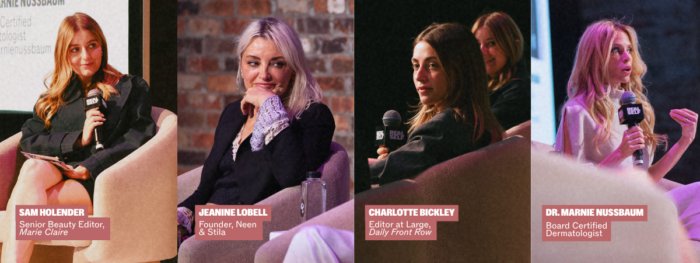
The antidote, panelists agreed, is community. Platforms and spaces where people share their experiences openly are filling a gap, and the more the industry can foster that honesty, the healthier the culture around aesthetics becomes. As Dr. Marnie Nussbaum put it: we are in this world together, so why not be honest and authentic together and help each other through these journeys?
Neen and Stila founder Jeanine Lobell pointed to RealSelf as a model for what that looks like in practice: a community built on vulnerability and women showing up for each other.
Transparency is not just a values conversation, it’s a trust conversation. And trust, as this summit made clear again and again, is currency that compounds.
6. Skin Quality Is the Foundation of Everything
From preventative aesthetics to GLP-1 recovery to post-procedure care, skin quality emerged as the connective tissue running through the entire summit. Every provider, in every context, came back to the same point: what you do to your skin every day matters as much as, and sometimes more than, what happens in the treatment room.
Dr. Marnie Nussbaum was emphatic about this in the context of injectables: skincare is just as important as in-office procedures, and people need to maintain their investment. Obagi Medical built an entire brand philosophy around it. As Justin Giouzepis, CMO of Obagi Medical put it, preparing the skin before you inject the face creates better results, and maintaining that quality post-procedure keeps those results going.
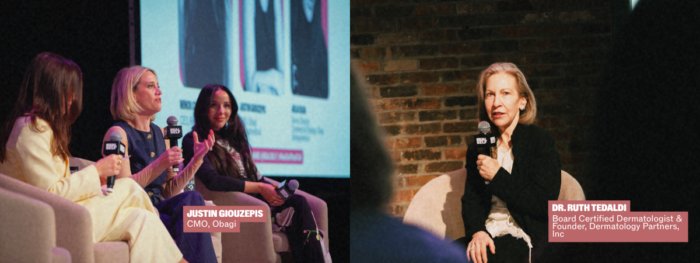
Right: Dr. Ruth Tedaldi (panelist) at the Exosomes 101 panel powered by ( plated )
In the regenerative beauty space, ( plated ) Skin Science is taking the category to another level. Platelet-derived exosomes, their hero ingredient, have serious science behind them. The panel shared how ( plated ) can completely renew the skin, create fuller and thicker-looking hair, and even prime the skin before cosmetic procedures.
Dr. Jason Bloom, double board-certified facial plastic and reconstructive surgeon, described a study in which ( plated ) exosomes used for four weeks prior to a treatment were shown to significantly decrease downtime and improve overall patient experience. The results were compelling enough that he has since started pre-treating his surgical patients with it too. As board-certified dermatologist Dr. Ruth Tedaldi explained, exosomes are nanoparticles small enough to effectively impact the skin, and ( plated ) has become a go-to for all of her patients looking to improve the visible signs of aging on skin and hair.
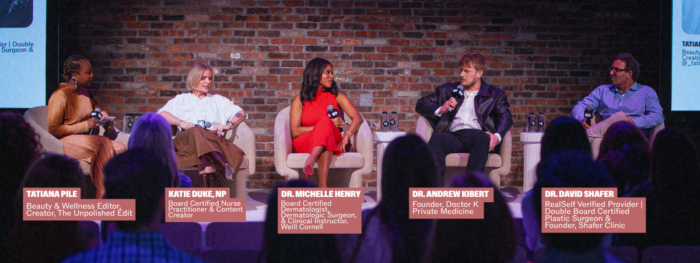
(panelist) at The GLP-1 Multiverse panel
In the context of GLP-1s, board-certified dermatologist Dr. Michelle Henry pointed to collagen stimulation and skin resilience as the key to navigating the very visible skin changes that can come with rapid weight loss.
Formulations have come a long way, too. As Roz Samimi, CEO and Founder of Banu put it: we used to strip our skin with harsh beads and alcohols. Now there are much better solutions.
The message to consumers is consistent: your skincare routine is not separate from your aesthetics journey. It’s the foundation.
7. The Body Is a System, and Beauty Cannot Be Separated from Health
The In Our Hormone Era panel made explicit what many in the industry have been circling around: skin cannot be treated in isolation from the body. Hormonal shifts, whether from fertility treatments, pregnancy, postpartum recovery, or simply the natural rhythms of the menstrual cycle, have profound and visible effects on the skin, and a skincare strategy that ignores them is incomplete.
Kristyn Hodgdon, co-founder and CCO of Rescripted put it as plainly as anyone could: going through IVF, she felt like she was wearing her infertility on her face. Skin is not just an aesthetic concern. It is a mirror of everything happening beneath the surface.
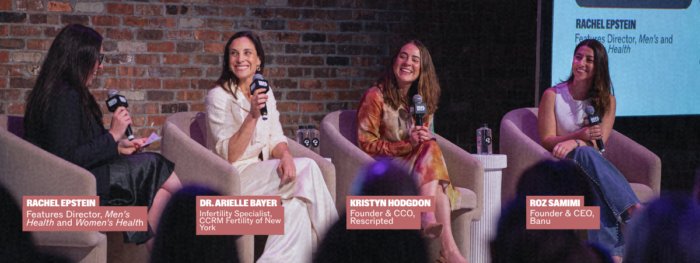
Infertility specialist Dr. Arielle Bayer mapped the connections with clarity: progesterone drives puffiness and fuller breakouts, androgens drive cystic acne, and a drop in estrogen brings dullness, dryness, and fine lines.
Coming off birth control, going through IVF, or navigating postpartum recovery all require an approach that accounts for where the body actually is hormonally. And the concept of “hormone balance,” so prevalent on social media, is more marketing than medicine. As Dr. Bayer put it, hormones are never supposed to be balanced. A natural cycle is a series of rises and falls, and chasing equilibrium with a supplement is unlikely to address the root cause of anything.
Providers and brands that understand the hormonal dimension of skin health are offering something genuinely more valuable. The consumer is increasingly aware of this, even if the industry has been slow to catch up.
8. GLP-1s Are Reshaping the Entire Aesthetics Landscape
No conversation about the state of aesthetics in 2026 would be complete without addressing GLP-1s. The data from Erik Haines, Managing Director at Guidepoint Qsight confirmed what providers are seeing firsthand: 6% of all nonsurgical aesthetic spend is now on GLP-1s, and 60% of patients beginning them at aesthetic practices are brand new to those practices.
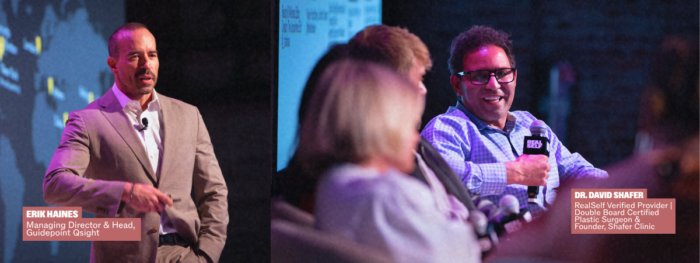
Right: Dr. David Shafer (panelist) at The GLP-1 Multiverse panel
But the panels went deeper than the numbers. Dr. Michelle Henry reframed GLP-1s as a genuinely empowering tool when used correctly and under appropriate medical supervision, while also naming the real skin consequences of rapid weight loss, including hollowing of the face (“Ozempic face”) and loss of skin resilience, that require their own aesthetic response.
Double-board-certified plastic surgeon Dr. David Shafer noted that once they have lost the weight, GLP-1 patients become deeply engaged aesthetics consumers, asking what else they can do. And nurse practitioner Katie Duke, who lost 80 pounds on GLP-1s herself, offered a grounded reminder: these have been socialized to feel like a multivitamin, but they are medications, and patients need a provider who takes their safety seriously above all else.
The opportunity for the aesthetics industry is significant. But so is the responsibility. Patients navigating GLP-1 journeys need guidance that is medically and emotionally informed, and providers who can offer that whole-person approach will be the ones who build thriving practices.
9. Technology Is Raising the Bar, and the Stakes
From AI-powered skin analysis to 3D surgical simulations to smart mirrors, technology is changing what is possible in beauty and aesthetics at a pace that is genuinely hard to track. The summit’s AI panel made clear that this is not a future conversation. It is happening now, and the question is not whether to engage but how to do it responsibly.
The risks are real. Doug Canfield, President at Canfield Scientific cautioned that at-home AI tools, used without the context a trained provider brings, can create unrealistic expectations that are hard to undo.
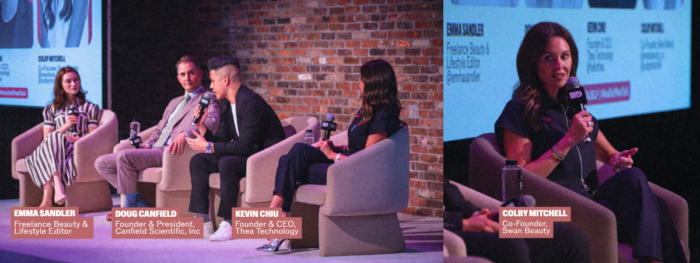
SWAN Beauty co-founder Colby Mitchell was candid about the effort required to train AI equitably across diverse skin types. And Thea Technology co-founder and CEO Kevin Chiu captured the consumer expectation with precision: they want the right answer, personalized to them, and they want it now.
The standard for responsible AI in this space is the same standard that ran through every panel at this summit: build on science, train it rigorously, and always prioritize the individual. Technology that does that is, as Chiu put it, definitely a friend. Technology that doesn’t is something else entirely.
10. Inclusion Is Not a Lane. It Is the Whole Road.
The Power Women of Modern Beauty panel brought into focus something that runs as a quiet undercurrent through the industry: beauty has historically been focused on a narrow slice of the population, and the founders and brands doing the most meaningful work right now are the ones correcting that, not as a mission statement but as a business model.
Ashlee Wisdom, founder and CEO of Health In Her HUE named the stakes plainly: there is deep distrust in the healthcare system among Black women and women of color, and that distrust is not unfounded. Finding a dermatologist who knows how to treat skin of color, or a laser provider who knows what settings to use, are not minor inconveniences but barriers to care. Brands that want to earn the trust of underserved communities need to demonstrate that commitment through clinical rigor and representation before they show up with a marketing campaign.
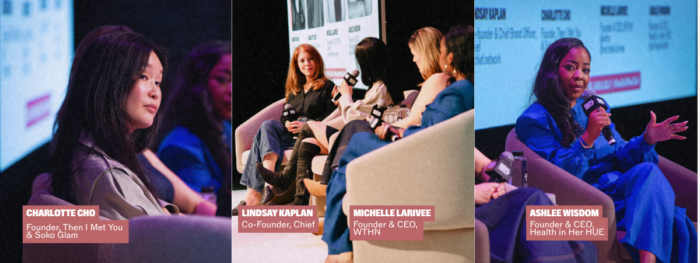
Charlotte Cho, founder of Soko Glam brought a different dimension to the same idea. When she started introducing Korean beauty to the US 15 years ago, she was told nobody would buy beauty products online and nobody would adopt a multi-step skincare routine. She proved those naysayers wrong on both counts. The lesson she carried out of that experience: when you build for a consumer the industry has overlooked or underestimated, and you do it with genuine passion and conviction, the market follows.
Authenticity cannot be manufactured. It has to be built in, from the team to the clinical testing to the communities you center. When that foundation is there, everything else follows.
The Bottom Line
The 2026 Real Talk Summit painted a portrait of an industry undergoing a significant transformation. The consumer is smarter, more skeptical, and more self-directed than ever before. The science is advancing faster than most people can track. And the old frameworks of fix it, fight aging, and look perfect are giving way to something more honest, more holistic, and ultimately more human.
Jeff Lee captured the zeitgeist perfectly: it doesn’t matter if you live in West Virginia or New York, there is a deep and universal human interest in transformation. Every person on the Real Talk Summit stage, he noted, is breaking down something that was previously inaccessible and making it easier to reach. And that, he said, is what RealSelf is about. Humans are obsessed with beauty, and there’s nothing wrong with that.
The brands, providers, and leaders who will define the next decade of beauty and aesthetics are the ones who understand that the real goals were always confidence, health, and feeling like the best version of yourself. And those lofty goals have never been more attainable.