Show more
I am a double board-certified and fellowship-trained Facial Plastic surgeon exclusively specializing in cosmetic procedures of the face and neck. My focus is on deep plane lower face and neck lift surgery as well as brow and eyelid surgery. I am well-known for
Asked By: Jgb46
ANSWER
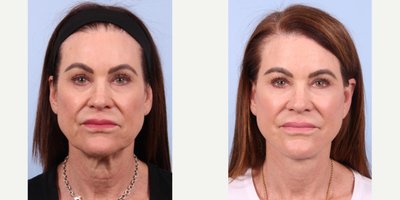
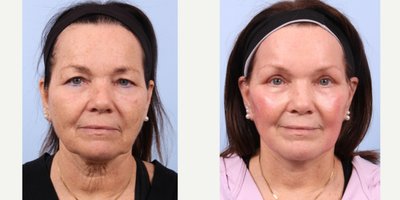
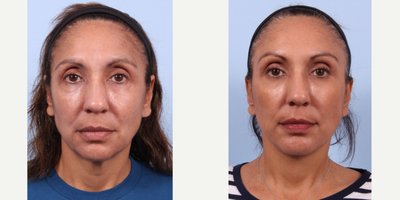
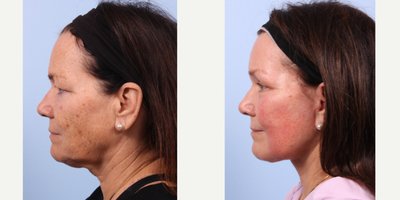
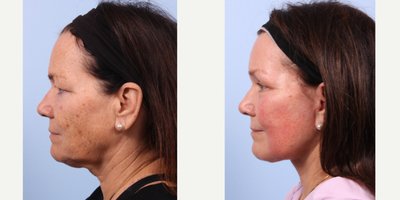
Based on your photos, your primary issue appears to be soft-tissue descent through the lower face with jowling and loss of jawline definition, along with some neck laxity. For meaningful and durable correction, I would favor a deep-plane lower facelift combined with a structural neck lift rather than relying on fillers, energy-based tightening, or other nonsurgical treatments. You also have a relatively thin face with some age-related volume loss, so I would consider conservative fat grafting at the same time to restore selected areas without making the face look overfilled. The goal would be to reposition the tissues, redefine the jawline and neck, and restore volume where appropriate—not simply tighten the skin.
Asked By: ange_jade
ANSWER
Based on your photos, I do think you are a reasonable candidate for lower facial and neck rejuvenation, provided you understand that your changes are relatively early and the result will therefore be refinement rather than a dramatic transformation. A properly performed lower facelift with upper-neck treatment could improve the early jowling, jawline definition and neck laxity, while the small submental fat pocket can be addressed at the same time. At 46, I would base the decision much more on your anatomy and goals than your age. The small perioral mound/pouch is a particularly difficult area to correct predictably, and I would be cautious about promising that a facelift will eliminate it. Buccal fat can sometimes contribute to fullness in this region, but from your photographs I do not think buccal fat is the most likely explanation in your particular case, and I would be hesitant to remove buccal fat simply to chase this asymmetry. A thoughtful combination of lower facial lifting, selective fat grafting to blend adjacent depressions, and fractional laser resurfacing can often improve the overall contour and skin quality, but some asymmetry or perioral fullness may remain. I would therefore make the jawline and neck your primary surgical goals and consider improvement of that small pouch a secondary benefit rather than the measure of whether the facelift was successful.
Asked By: lovinac
ANSWER
I agree with your instinct. A platelet count of 587,000 is significantly elevated, and since it has remained elevated over several months, I would want the cause clarified before proceeding with an elective facelift. Persistent thrombocytosis can be reactive—for example from iron deficiency or inflammation—or less commonly related to a bone-marrow disorder such as essential thrombocythemia, and those diagnoses carry very different implications for clotting and bleeding risk. I would complete the hematology evaluation first and obtain specific hematology clearance for surgery once the cause and your individual risk are understood. A platelet count of 587,000 does not necessarily mean that you cannot have a facelift, but for an elective procedure I would not proceed until we know why it is elevated and whether any treatment or special perioperative precautions are necessary.
Asked By: Cheerful471796
ANSWER
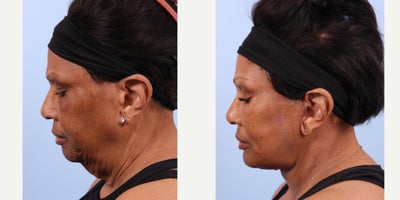
Based on your photos, you appear to be a very reasonable candidate for facial rejuvenation surgery. You have laxity through the lower face, jawline, and neck while maintaining good underlying facial structure. I would consider a deep-plane lower facelift combined with a structural neck lift to restore the jawline and neck, with conservative fat grafting if needed to address areas of volume loss. I would recommend consulting with a facial plastic surgeon who has significant experience performing deep-plane facelifts and advanced neck lifting techniques. Pricing varies considerably by surgeon and location, but for a comprehensive deep-plane face and neck lift, you can generally expect a range of approximately $30,000–$50,000, depending on the extent of surgery and what is included.
Asked By: Nurturing221002
ANSWER
At 41, age alone certainly does not determine whether you are ready for a facelift. From your photo, there appears to be a combination of midface volume loss and some soft-tissue descent, both of which can contribute to deeper or uneven nasolabial folds and a tired appearance. A properly performed facelift can reposition descended tissues and soften the nasolabial folds, but a facelift alone does not replace volume that has been lost. In patients with this combination, I often favor a deep-plane facelift combined with conservative facial fat grafting, particularly to the cheeks and other areas of deflation. The lift restores tissues closer to their previous position while the fat grafting restores lost volume, which can create a more natural result than trying to correct everything with either lifting or filling alone. An in-person examination would determine whether your degree of laxity warrants surgery yet or whether volume restoration alone could adequately address your concerns.
Asked By: IP6071
ANSWER
Based on your photos, I would think about this as a facial-balance problem rather than a chin-only problem. You have some relative chin underprojection, but there is also fullness beneath the chin and through the lower cheek. A small chin implant could strengthen the profile and improve chin-to-neck proportions. For the neck and jawline, I would assess whether the fullness is predominantly superficial fat that could respond to liposuction (potentially with Renuvion for additional skin tightening), or whether a submentoplasty/deep neck contouring procedure would provide substantially better definition. I would also evaluate the lower-cheek fullness separately. In the right patient, conservative buccal fat reduction can help decrease a bottom-heavy appearance and better define the transition from the cheek to jawline. I am selective with this procedure, however, because overly aggressive removal can create unwanted hollowing with age. Ultimately, I suspect the most meaningful improvement would come from the appropriate combination of chin augmentation and neck/lower-face contouring, rather than expecting one procedure to address everything.
Asked By: lorijune
ANSWER
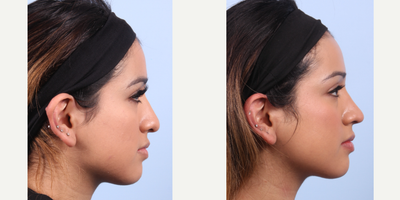
Based on your profile, chin augmentation could improve facial balance, as your chin appears somewhat underprojected relative to the rest of your profile. A properly sized implant can strengthen the chin and improve the transition into the jawline, but I would think of it more as a procedure for facial proportion and structural support rather than an anti-aging procedure by itself. If your goal is also rejuvenation, the best treatment depends on what else is bothering you. A chin implant will not significantly correct jowling, skin laxity, or neck aging. In patients with early lower-face changes, I often evaluate whether chin augmentation alone or in combination with a lower-face/neck procedure would provide the most harmonious result. From a single profile photograph, I would not recommend adding surgery without an examination.
Asked By: gmoroney
ANSWER
From your photos, I would consider chin augmentation in addition to addressing the neck, as increasing chin projection can improve the overall balance of your profile and the appearance of the cervicomental angle. I would not assume that liposuction alone will give you the result you are looking for. Submental fullness can come from superficial fat, but also from deeper fat, the platysma and deeper neck structures, and skeletal anatomy—none of which are corrected by liposuction alone. Depending on your examination, I would consider a chin implant combined with a submentoplasty or, if deeper structures are contributing, a deep neck lift. For someone wanting a less invasive approach, submental liposuction combined with Renuvion skin tightening is another option, although it will not address deeper neck anatomy. A true genioplasty is another way to augment the chin, but whether that is preferable to an implant depends on your skeletal anatomy and the amount and direction of advancement needed.
Asked By: hair.question
ANSWER
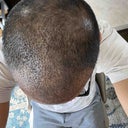
Dysport injections to the forehead, frown lines, or crow’s feet should not affect the transplanted grafts or your hair transplant results. The main reason to wait is if you still have residual forehead or facial swelling, which can temporarily alter the tissues and potentially dilute the neuromodulator or contribute to unwanted diffusion, making the result less predictable. I typically recommend waiting about 3–6 weeks after a hair transplant, or until the postoperative swelling has completely resolved, before resuming neuromodulator injections. At that point, I would be comfortable treating these areas normally.
Asked By: ppolisky
ANSWER
Based on your photos and your description of a stable, naturally high hairline, you could potentially be a very good candidate for hair transplantation specifically for hairline lowering. Hair transplantation is not limited to treating male-pattern hair loss—it can also be used to reshape a congenitally high hairline and reduce the apparent height of the forehead. The key is confirming that there is no significant miniaturization or evolving androgenetic hair loss and that you have adequate donor density. I would also be conservative with how far the hairline is lowered and design it specifically for your facial proportions and anticipated aging. Careful placement of fine single-hair grafts along the leading edge is particularly important for creating a soft, natural-looking hairline. Another option worth considering is surgical hairline lowering (forehead reduction), which physically advances the existing hair-bearing scalp and can provide a significant reduction in forehead height in a single procedure. Candidacy depends on factors such as scalp laxity, hair density, hairline stability, and your willingness to accept a fine scar along the hairline. In selected patients, hair transplantation can also be used afterward to further soften or refine that scar and hairline.
Dr. Sudeep Roy consistently delivers exceptional, natural-looking results with meticulous attention to detail and outstanding patient communication. Patients praise his artistic skill, precision, and ability to create subtle, refreshed appearances that align with their goals. His calm, patient-centered approach and transparent guidance through every step foster confidence and comfort, leading to high satisfaction across a range of cosmetic and reconstructive procedures.