Show more
Show more
Show more
Dr. Matthew Richardson is a double board-certified plastic surgeon based in Frisco, Texas. He is one of only a handful of surgeons who are dual fellowship-trained in facial plastic surgery and hair restoration surgery. His philosophy is that patients should al
Asked By: Greta.S
ANSWER
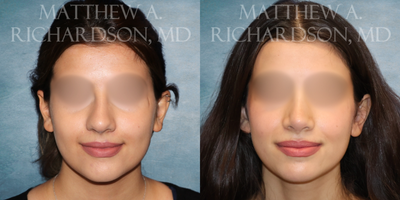
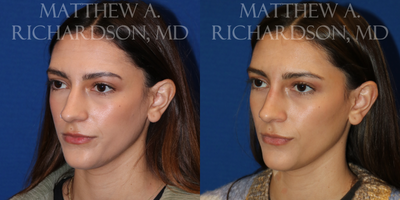
Forehead reduction surgery is a good option for reducing the forehead size in a patient with a longer face and a large forehead, as long as proper facial proportions are maintained. I would not recommend having any surgery performed in order to improve any personal or professional life situations. I encourage my patients to have surgery only if they desire to do the procedure for themselves (not for anyone else) and have the resources (such as adequate friend/family support, time off work, financial resources, etc) to have the procedure comfortably and without undue stress. All the best,
Asked By: mari27hurni
ANSWER
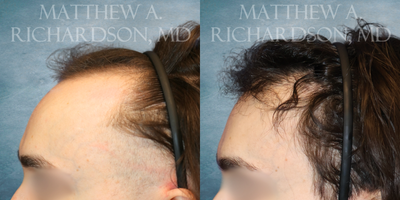
Every face (including the shape, volume, and dimensions) is slightly different. Some faces are more elongated while others are more compact or round. The hairline can be lowered with forehead reduction surgery, and patients with good hair density are the best candidates for forehead reduction surgery. Hair transplantation is another hairline lowering option, but usually requires multiple sessions and is a longer, more involved process. Best,
Asked By: katheryn92
ANSWER
Hair loss after forehead reduction surgery is very uncommon. Some patients may report some temporary shedding, but this is not something that is usually visible to an outside observer. I've never seen any issues with permanent hair loss other than the occasional slightly widened scar that is easily corrected. Shock loss is a rare occurrence and is temporary hair loss that will eventually recover. All the best,
Asked By: yesyesokok
ANSWER
Reversing hairline lowering is very difficult, if not impossible. There will most likely be scars and other undesirable cosmetic changes. This is why I commonly tell patients that I simply will not take the hairline beyond a certain point, and frequently turn away patients that may have unrealistic expectations or desire unnatural results. Removing 2 inches of forehead is an extremely dramatic change, and reversing that amount would be extremely difficult. 2 centimeters is a much more common amount of hairline lowering and might be easier to reverse.
Asked By: Michelle Vasquez
ANSWER
Hair transplants and forehead reduction surgery can both lower a hairline effectively. For patients who are satisfied with the shape of the hairline, I think forehead reduction is generally a better option because it has faster results and a more natural-appearing hairline. Hair transplants are most useful for changing the shape of the hairline. They can also be used for lowering the hairline, but the hair density will not be as good as the natural hairline, at least not without multiple transplant sessions. Best,
Asked By: TxNYNJ
ANSWER
Forehead reduction surgery typically only brings the hairline down and not "in from the sides" ... this can vary depending on the patient's individual anatomy. In most cases, patients need hair transplants if they want to change the shape of the hairline or the corners/edges of the hairline. In my practice, patients need to be a minimum of 18 for forehead reduction surgery. Best,
Asked By: samb55
ANSWER
I tell every forehead reduction patient that the scalp will be numb in the hair-bearing portions along the front for several months postoperatively. While long-term or permanent numbness is a risk, I've not had any patients complain about this beyond about 6 months after surgery. Most patients will report some occasional itching, tingling, "electric" sensations, etc in the scalp while the nerves recover. That being said, most patients do not complain about the scalp numbness at all postop. All the best,
Asked By: e.ceasar
ANSWER
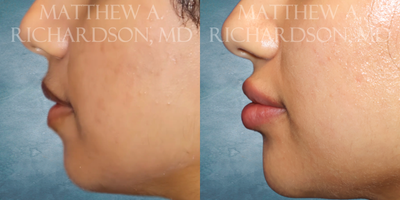
Facial proportions are commonly discussed in textbooks and social media. While they are relevant and important, each person's face is unique, and most of the surgeries that I perform are more art and less math (meaning I don't get too fixated on measurements). If a patient has a high hairline with good hair density and some concerns about the size of the forehead, then a forehead reduction surgery is usually acceptable, as long as the hairline is not lowered too much (based on generally accepted aesthetic norms and facial proportions). The same goes for a lip lift. If a patient has an overly long upper lip, or needs improvement in red lip show, tooth show, or upper lip shape, then they are likely a candidate for a lip lift. The facial proportions may help us determine how aggressive to get with each procedure (for instance, shortening the lip more or less due to facial proportions, etc). Patients should of course be good candidates for elective plastic surgery procedures such as these in other ways as well, such as good health, no medications that conflict with surgery, etc. All the best,
Asked By: Alyssatay56
ANSWER
Patients will often feel like the forehead protrudes less once they lower the hairline because they will have less of the "horizontal" component of the forehead without hair covering it (the forehead will look more vertical). Patients who do need or want more reduction of the curvature of the forehead may need to look into surgery on the bone to change this even further, which is a bigger operation and not something that many surgeons perform. I try not to get too worried about hairline symmetry because every hairline is unique and most are asymmetric and irregular in some way. The natural irregularity of the hairline is something that aesthetically looks normal, natural, and pleasing to the eye. If patients want to change the hairline shape, the best way to do this is with hair transplants, either as a second stage procedure, or as an alternative to forehead reduction surgery. Patients should see an expert who offers all of these options to review them in detail.
Asked By: secret260
ANSWER
Patients that are actively losing significant amounts of hair should not entertain scalp surgery procedures until the hair loss has stopped. A primary care doctor, dermatologist, or hair transplant expert can usually help with medical treatments for hair loss. Once hair loss is stabilized, forehead reduction surgery and hair transplant procedures can be considered. All the best,
Mention RealSelf to redeem.
10% off injectable treatments, skin care products, and microneedling. One FREE aesthetic service each month (like a HydraFacial, chemical peel, microdermabrasion, signature facial, IPL treatment, vascular lesion treatment). Monthly membership and 6 month commitment required. Early cancellation fee applies.
Dr. Matthew Richardson is highly regarded for his expertise in facial aesthetic and reconstructive procedures. His patients consistently praise his professionalism, attentiveness, and the natural results he achieves. Dr. Richardson is known for his thorough consultations, where he takes the time to listen to patients' concerns and explain procedures in detail. His staff is also frequently commended for their kindness and efficiency. Dr. Richardson's surgical skills are exceptional, with many patients reporting minimal scarring and excellent healing. Despite the complexity of some procedures, many patients report feeling comfortable and well-cared for throughout their treatment journey with Dr. Richardson.