
Show more
Show more
Dr. John A. Millard and the staff at Millard Plastic Surgery Center are committed to you, our patient. Our goal is not just to obtain beautiful cosmetic surgery results, but also to provide you with an excellent overall experience. Our number one priority is y
Asked By: Warmhearted463041
ANSWER
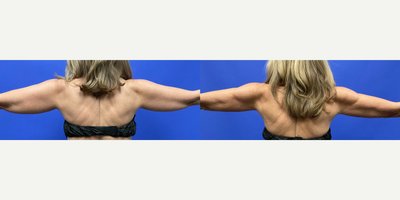
For arm contouring, my preferred technology is VASER liposuction. It allows me to address fat in both the deeper and more superficial layers, giving me greater control when sculpting the arms and creating more athletic definition. Based on your photographs, I think you could be a very good candidate for VASER Hi-Def arm contouring. In my practice, I would use VASER to reduce the excess fat, refine the shape of the arms, and create some definition where appropriate. VASER also offers the potential for skin retraction, which is particularly valuable when treating the upper arms. The degree of tightening depends on the quality and elasticity of the skin. Of course, a physical examination would be necessary to confirm the best approach, but based on your photographs, VASER Hi-Def liposuction would be my recommendation.
Asked By: UnityUnicorn
ANSWER
When performing abdominal liposuction, I generally prefer to evaluate and contour the abdomen as a complete aesthetic unit rather than treating only the lower portion. If the lower abdomen is significantly reduced while the upper abdomen is left untreated, the difference between the two areas can become more noticeable. Looking at your photographs, I see some residual upper abdominal fullness, but my greater concern is the apparent skin laxity above your belly button. Additional liposuction alone could potentially make that loose skin more apparent. I understand why patients prefer to avoid a tummy tuck. The longer incision and additional recovery are important considerations. However, one of the things we try to avoid is removing fat without adequately addressing skin laxity, which can leave the abdomen looking irregular. I would evaluate whether the remaining fullness could be improved with VASER liposuction combined with skin tightening, potentially using a technology such as Renuvion. If the skin laxity is significant, a surgical skin-removal procedure might provide a better result. The best approach depends on how much of the concern is residual fat versus loose skin, which cannot be determined reliably from photographs alone.
Asked By: vvnessa27
ANSWER
I can certainly see the abdominal bulge you're concerned about. Following liposuction, contour irregularities can sometimes result from uneven residual fat, scar tissue or fibrosis, skin laxity, or a combination of these factors. In my practice, I frequently use VASER liposuction for revision contouring because it is particularly useful when working through fibrous tissue from a previous procedure. If the bulge is caused by residual fat and fibrosis, additional liposuction may be able to improve the contour and create a smoother result. I would also assess the quality and elasticity of the overlying skin. Removing additional fat without addressing significant skin laxity can sometimes make an irregularity more noticeable. The first step would be determining exactly what is causing the bulge. Based on your photographs, revision contouring may be an option, but a physical examination would be necessary to determine whether additional liposuction, skin tightening, or another approach would provide the best improvement.
Asked By: Sociable826122
ANSWER
I would be hesitant to recommend CoolSculpting for the concerns you're describing. After three pregnancies, abdominal fullness can result from several factors, including excess fat, skin laxity, and separation of the abdominal muscles, known as diastasis recti. If muscle separation is contributing significantly to your lower abdominal bulge, neither CoolSculpting nor liposuction will correct that problem. Surgical muscle repair, typically performed during a tummy tuck, may be necessary. I also notice what appears to be some skin laxity around and above your belly button. The slightly downward appearance of the belly button can sometimes be a clue that the surrounding skin has loosened. Based on your photographs, I understand why your surgeon recommended a tummy tuck. If the primary concern is the lower abdominal bulge, I would want to determine how much is caused by muscle separation rather than fat. Liposuction could potentially improve the flanks and areas of localized fat, but it would not correct significant muscle separation or remove excess skin. I would want those issues evaluated carefully before choosing a nonsurgical treatment that may not address your main concern.
Asked By: Sfloridamommy
ANSWER
When deciding between a tummy tuck and liposuction, I look at three primary concerns: excess fat, loose skin, and separation of the abdominal muscles. A tummy tuck can address all three, while liposuction primarily addresses fat and improves contour. Based on your photographs, I don't see an obvious amount of excess skin that would make me immediately recommend a full tummy tuck. What stands out to me are the abdominal contour irregularities. VASER liposuction can be particularly useful in these situations because it allows me to work in both the deeper and more superficial fat layers to refine the contour. I would also evaluate whether additional skin tightening would be beneficial. Depending on the examination, this might be addressed with VASER alone or with an additional technology such as Renuvion. A mini tummy tuck is another possibility if there is localized skin excess. My recommendation would be to choose a surgeon experienced in advanced abdominal contouring who can evaluate all three components rather than focusing exclusively on fat removal. Based on your photographs, I would certainly explore VASER liposuction before committing to a full tummy tuck, although an examination is necessary to determine the best option.
Asked By: ooom416354
ANSWER
It sounds as though your surgeon may be listing gland removal and liposuction as separate items on your surgical quote. That isn't necessarily unusual. In my practice, gynecomastia correction typically combines three components: removal of the glandular tissue, liposuction to contour the chest, and skin tightening when appropriate. We generally perform these components together during one operation and include them in one surgical fee. Other practices may itemize the components separately, and there is nothing inherently wrong with that approach. The important distinction is whether your surgeon is proposing two separate operations or simply listing two procedures that will be performed during the same surgery. I would clarify that point and make sure you understand whether both the glandular tissue and surrounding fatty tissue will be addressed.
Asked By: Exuberant917998
ANSWER
I can see the residual fullness you're concerned about. One possibility is that glandular tissue was left behind during your original procedure. Some gynecomastia surgeries involve liposuction without adequately addressing the glandular tissue beneath the nipple. I also notice fullness extending toward the axillary area, which is an important consideration when contouring the entire chest. My approach to a revision would be to evaluate whether residual glandular tissue needs to be removed, whether additional liposuction could improve the chest contour, and whether the surrounding areas would benefit from more comprehensive sculpting. Scar tissue is expected following a previous operation. I prefer VASER liposuction for these revisions because it can be useful when working through fibrous and previously operated tissue. Revision surgery can be more challenging and uncomfortable than a primary procedure. For that reason, I sometimes recommend performing these cases in the operating room rather than under local anesthesia in a minor procedure room. A physical examination and review of your previous operative details would help determine the best approach.
Asked By: Powerful347008
ANSWER
Based on your photographs, the appearance of your chest is consistent with gynecomastia. However, photographs alone cannot tell us how much of the fullness is glandular tissue versus fat. True gynecomastia involves glandular breast tissue, which generally does not disappear with weight loss. It often develops during puberty and can persist into adulthood. One question I would ask is whether you've lost weight previously and, if so, whether your chest improved. I would recommend getting your BMI below 30 before considering surgery to help optimize your results and reduce surgical risks. In my practice, gynecomastia surgery typically combines removal of the glandular tissue, VASER liposuction to contour the chest, and skin tightening. More significant skin excess may require surgical removal, although your photographs do not suggest that would necessarily be required. An examination would be needed to determine the exact composition of the tissue and the best surgical approach.
Asked By: Sharondo
ANSWER
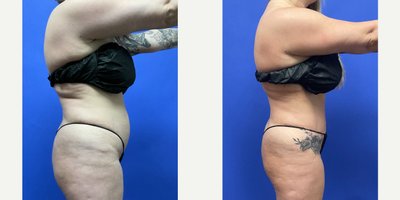
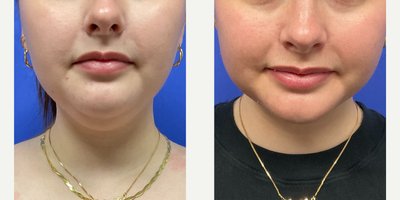
When evaluating someone for body contouring, I assess the amount of fat and loose skin, along with the skin’s quality, texture, and elasticity. Photographs provide a starting point, but an examination, including a pinch test, helps me assess how well the skin may retract. VASER allows treatment of both deep and superficial fat. Superficial treatment can also produce some skin contraction. Based on your photographs, my initial impression is that VASER could provide a very good improvement without significant additional loose skin being my main concern. An examination would be necessary to confirm that, particularly because skin quality can differ between treatment areas. The small access incisions leave permanent scars that generally fade over time. I would review how previous cuts or incisions have healed, including any dark or raised scars, before discussing your individual scarring risk.
Asked By: Enthusiastic8931
ANSWER
VASER is my preferred liposuction technology for most areas of the body. It is still tumescent liposuction; the additional step is ultrasound energy, which emulsifies the fat before suction removes it. In my hands, this allows more comprehensive removal and precise contouring in both the deep and superficial fat layers. Having used different technologies over the past 25 years, including laser-assisted liposuction, I consider VASER the best option for most of the liposuction I perform. I use it approximately 95% of the time, often combined with power-assisted liposuction. For you, I would assess the remaining fat, skin quality, and scar tissue from your previous procedures before recommending a plan. The additional buttock fat transfer would require its own safety assessment.
Dr. John A. Millard is widely praised for his attentive care and compassionate approach, particularly with procedures. Patients consistently highlight his skill in achieving natural-looking results and his commitment to careful, personal follow-up care. His holistic focus on supporting patients' health and lifestyle is appreciated. Recovery experiences are generally positive, with many patients reporting manageable discomfort and satisfaction with outcomes.