Cellulite
Starting in the teenage years, people at almost any body weight can develop cellulite—but that doesn’t mean you have to live with it. Find out how to diminish the dimples for smoother skin.
Starting in the teenage years, people at almost any body weight can develop cellulite—but that doesn’t mean you have to live with it. Find out how to diminish the dimples for smoother skin.


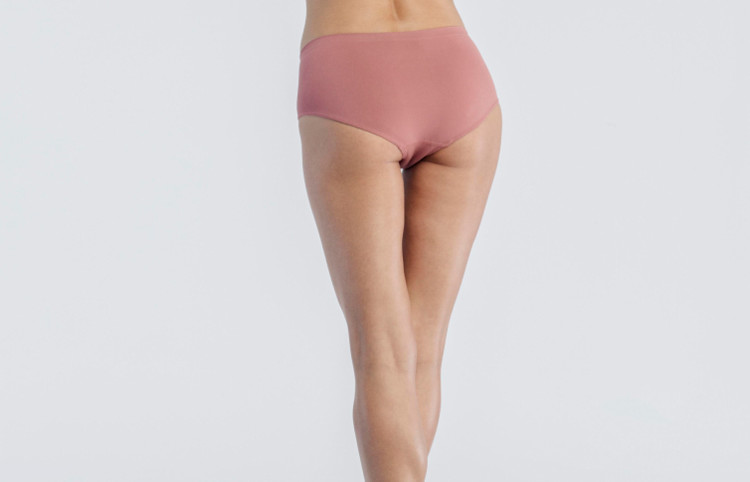
Cellulite is most common in people over age 25 who have excess body fat. However, even young, fit people can have cellulite: 80% to 90% of all women and 10% of men have it.
Dimples usually appears on the thighs or butt, though they can also show up on the arms or abdomen.
Surprisingly, cellulite isn’t caused by excess fat. According to the American Academy of Dermatology, even fat removal treatments like liposuction often have no effect on cellulite. Weight loss and a healthy lifestyle can improve the appearance of cellulite, but they don't eliminate it, in most cases.
Cellulite’s root cause lies in the structure of the tissue beneath the skin, in the layer of fat overlying a sheet of fascia, the fibrous connective tissue that covers the muscles.
Women have fibrous tissue bands called septa, which run vertically between the skin and fascia, bundling fat into honeycomb-like compartments. (Men’s tissue has criss-crossing rather than vertical bands—a more tightly woven structure that makes fat less likely to protrude.)
When hormone levels surge in response to pregnancy or aging, these connective bands stiffen, tugging the skin down and compressing the fat until it bulges out of its compartments.
Cellulite can also form or worsen as women head into menopause. Lower estrogen levels decrease collagen production, which makes skin thinner and less elastic while enlarging fat cells. All of this conspires to make lumps more obvious.
A slower metabolism and lower circulation can also play a role, along with other genetic factors.
Cellulite is often ranked on this severity scale:
- Grade 1: Mild cellulite, sometimes dubbed "orange-peel cellulite," has one to four superficial dimples and slightly sagging skin.
- Grade 2: Moderate cellulite, commonly described as "cottage cheese cellulite,” shows five to nine deeper dimples, with more skin sagging.
- Grade 3: Severe cellulite has what’s known as a "mattress" look, from 10 or more deeper dimples. It’s usually accompanied by more significant skin sagging.
Doctors don’t yet have a permanent solution for cellulite. However, cellulite reduction treatments can improve its appearance.
The newest cellulite treatments include injectable enzymes or energy waves, to soften the connective bands, or subcision surgery, to cut them. Other options ramp up collagen production, firming and thickening skin and reducing the look of bulging.
In most cases, you’ll need follow-up sessions in order to keep the lumps at bay.
These are the treatments that doctors and patient reviews on RealSelf say deliver the best cellulite reduction results.
- Avéli is an FDA-cleared, minimally invasive surgical procedure that treats cellulite on the thighs and buttocks. This uniquely precise, effective new treatment option uses a thin, lighted instrument with a hook and a retractable blade, which allows your provider to identify and sever the septa that create cellulite dimples. Find doctors who offer Avéli.
- Sculptra Aesthetic is an injectable filler that’s approved by the U.S. Food and Drug Administration (FDA) for reducing the appearance of facial wrinkles, but some doctors use it off label, to fill in cellulite dimples. The poly-L-lactic acid (PLLA) in Sculptra stimulates collagen production, so your results improve over time. Most patients require a series of treatments. You’ll see optimal results within four to six months, with benefits lasting up to three years. Dr. Kimberly Butterwick, a dermatologic surgeon in San Diego, recommends a combination of Cellfina (more on that later) and Sculptra. “After a Cellfina treatment, you can use Sculptra to further smooth out the skin and build volume, to help treat looseness or laxity of the skin,” she says. Find doctors who offer Sculptra Aesthetic
- BodyFX is a noninvasive device that’s FDA-approved for the temporary reduction of cellulite as well as for body contouring. In clinical trials, patients reported a 68% reduction in cellulite. Dr. Kenneth Hughes, a plastic surgeon in Los Angeles, explains that BodyFX combines “radiofrequency energy, deep tissue heating, and suction-coupled negative pressure to distribute heat to the skin and underlying fat, causing the tissues to contract.” He recommends a series of eight weekly sessions for cellulite reduction. You should see optimal results six months after your final treatment. Find doctors who offer BodyFx.
- Subcision, which is mainly used to improve the appearance of rolling scars, is another popular cellulite treatment. The procedure uses a needle to cut the fibrous bands beneath the skin, releasing the cellulite-causing tension. It is recommended solely for cellulite that creates visible dimpling when standing or sitting—not when the muscle contracts. While studies have shown that this is a safe and effective procedure for the reduction of cellulite, it does come with some slight side effects, most commonly tenderness, swelling, and bruising. Also, subcision is not a permanent solution for cellulite—many patients notice that the dimples may return a few years post-procedure. Find doctors who offer subcision.
- Endermologie is a deep-tissue cellulite massage that breaks up and releases pockets of fat from the fibrous connective tissue with a vacuum-like device. It was the first FDA-approved cellulite treatment and requires 8–10 sessions, for optimal results. Published studies are scant, and those that do exist show mixed results. A 2009 trial noted a “significant circumference loss at every measured body site” but found that the treatment improved the appearance of cellulite in only 15% of subjects. In a larger, 2013 study, 99% of subjects had a reduction in body circumference and 69% reported high satisfaction.
- Venus Legacy uses a combination of radiofrequency energy and electromagnetic pulses to boost collagen production, which can reduce the appearance of cellulite, tighten loose skin, and smooth wrinkles. You’ll need an initial series of six to eight weekly treatments, for best results—which you should see within three to four months of your last treatment. To maintain your results, you’ll also need follow-up treatments three or four times a year.
- Cellfina has been cleared by the U.S. Food and Drug Administration (FDA) for treating cellulite on the thighs and buttocks via vacuum-assisted precise tissue release. “The most tried-and-true method of removing cellulite is Cellfina,” according to Dr. Johnson C. Lee, a plastic surgeon in Beverly Hills, California. Much like manual subcision, which this technology is based on, “Cellfina addresses the core problem with cellulite by releasing the bands that tether your skin down and create the dimples.” Dr. Rigo Mendoza, a plastic surgeon in Brandon, Florida, agrees that Cellfina is the most effective cellulite treatment. “Studies show that results can last for five years,” he says. For this minimally invasive surgery, the surgeon first marks the dimples to be treated and then applies a vacuum-assisted handpiece, through which a needle is guided under the surface of the skin, to deliver local anesthetic. Once you’re fully numb, the doctor uses the suction handpiece and a motorized microblade to cut the septal bands. You can expect about a day of serious soreness, with bruising and swelling for up to four weeks afterward. Results last up to five years.
- Carboxytherapy infuses carbon dioxide gas under the skin, to increase blood flow and collagen production. It’s popular internationally, but it’s not yet FDA-approved or widespread in the U.S. One small pilot study of eight weekly carboxytherapy sessions for treating cellulite found that it reduced severity, but on RealSelf, the jury’s still out: most members who’ve reviewed it so far were treated for stretch marks.
- Cellulaze is an FDA-cleared laser device that uses thermal energy—rather than the microblade used in Cellfina—to sever the septa. Your provider starts the procedure by making a small incision and inserting a cannula under the skin. Then the Cellulaze laser fiber enters the cannula and heats the targeted bands, destroying them. The whole process takes about two hours, and patients typically experience minimal downtime, with bruising, swelling, and soreness being the most common side effects. As an added bonus, the laser technology used in Cellulaze is known to boost collagen production and improve skin tightness.
- Emtone (from the makers of the muscle-toning procedure Emsculpt) is FDA-cleared to reduce the appearance of cellulite through a combination of radiofrequency (RF) and targeted-pressure acoustic energy waves. The heat from the radiofrequency energy remodels existing collagen fibers and boosts new collagen production, making skin firmer and more elastic, while the pressure of acoustic waves boost circulation and help release retained fluid that can contribute to cellulite dimples. Four to six treatments are recommended, and results develop over the next three months. Find doctors who offer Emtone.
Cellulite creams can’t penetrate into the deep tissue to address the root causes, but they may temporarily offer some skin-smoothing effects, if you have mild cellulite.
Retinol creams can gradually thicken skin, which may make fat less likely to protrude. You’ll need to apply it daily, for at least six months, to see any improvement.
Cellulite creams with caffeine, like Brazilian Bum Bum Cream, can dehydrate fat cells and boost circulation, which may give skin a smoother look. Daily use is key, and results will be less dramatic than those you’d get from an in-office procedure.
Updated July 2, 2021