Led by Dr. Steven Williams, President Emeritus, American Society of Plastic Surgeons, and Dr. Philip Wasicek, Double Board-Certified Plastic Surgeon, we serve patients throughout the Bay Area who seek elevated care and refined, natural results.
1827 Posts14128 Followers
Asked By: Adventurous369475
ANSWER
Hello, This is a great question. Not all patients need a brow lift at the same time as a deep plane facelift. It depends on individual anatomy, including how much skin laxity and descent is present and the position of the brows. In general, patients with more mild features of facial aging are less likely to have temporal bunching and less likely to be recommended a brow lift to offset this bunching. I would suggest an in-person consultation with a board certified plastic surgeon who specializes in deep plane facelifts. Hope this helps.
Asked By: Modest389886
ANSWER
Hello, I'm sorry to hear that you've been disappointed with your results, particularly after undergoing both an initial neck lift and a revision. Persistent neck laxity following surgery can have several underlying causes, and identifying exactly what is contributing to your concerns is essential before considering another procedure. The appearance of the neck is influenced not only by skin laxity, but also by the underlying platysma muscle, subcutaneous fat, digastric muscles, submandibular glands, and the position of the deeper neck structures. In some patients, particularly those with a history of significant weight fluctuations, the skin may have reduced elasticity and reduced tissue quality and this may result in more tissue and skin relaxation following surgery. However, persistent fullness or an inadequately defined neck contour may also reflect deeper anatomical structures that were not fully addressed during the previous operations. A comprehensive structural neck lift may provide additional improvement in appropriately selected patients, particularly if the previous procedures primarily addressed the skin or superficial tissues. However, after two operations, scar tissue and altered anatomy make further revision more challenging, and the potential benefits must be carefully weighed against the risks. I would recommend an in-person evaluation with a board-certified plastic surgeon who has significant experience in revision neck surgery. Reviewing your previous operative reports and examining the underlying anatomy would help determine whether another revision could meaningfully improve your result or whether further surgery would offer limited benefit. The goal should be to identify the specific cause of your persistent concerns rather than simply repeating the same procedure. Hope this helps.
Asked By: feeling_hopeless
ANSWER
Hello, A “cobra neck” deformity following a face/neck lift can be challenging to correct, but meaningful improvement is often possible. This appearance can result from excessive removal of fat beneath the chin, inadequate support of the underlying platysma muscle, or a combination of factors. The appropriate treatment depends on the underlying anatomy. In patients with excessive fat removal, carefully placed fat grafting may help restore volume and create a smoother, more natural contour. If the deformity is related to platysmal separation, banding, or inadequate muscle support, revision neck lift surgery with repositioning and tightening of the platysma may be necessary. It is also important to evaluate the deeper structures of the neck, particularly the submandibular glands and digastric muscles. If these structures were not addressed during the original surgery and contribute to fullness or contour irregularities, they may warrant consideration during revision surgery. However, not every patient requires modification of these structures, and any intervention must be carefully weighed against the additional risks. Revision neck surgery requires a thoughtful approach because of scar tissue, altered anatomy, and the importance of restoring natural contours rather than simply tightening the skin further. I generally recommend allowing adequate time for healing, often at least 6–12 months, before considering revision surgery. An in-person examination with a board-certified plastic surgeon experienced in revision facial and structural neck surgery is essential to identify the underlying causes and determine the most appropriate approach. Hope this helps.
Asked By: themenopausemidwife
ANSWER
You are asking some excellent questions, particularly about achieving natural-looking results and addressing the nasolabial folds. A well-performed deep plane facelift can provide significant improvement in the jowls, jawline, neck, and even the midface. However, it is important to understand that nasolabial folds are a normal part of facial anatomy, even in younger individuals. While a deep plane facelift can soften these folds by releasing the facial retaining ligaments (especially the zygomaticocutaneous ligament) and repositioning descended cheek tissues, it generally will not eliminate them completely. In some patients, additional volume restoration with fat grafting may be beneficial. Regarding the "pulled" appearance, this is something I specifically try to avoid in my practice. One of the advantages of a properly performed deep plane facelift is that we reposition the deeper facial tissues rather than relying on excessive tension on the skin. This allows us to achieve significant rejuvenation while maintaining a natural appearance. When researching surgeons, I would recommend looking carefully at their before-and-after photographs, particularly patients with facial anatomy and aging changes similar to yours. Look at the jawline, neck, nasolabial folds, and also the temples, sideburns, and ears. Pay attention to whether patients still look like themselves, just more refreshed. During your consultations, I would specifically ask how the surgeon addresses the midface and nasolabial folds, what techniques they use to avoid an overly pulled appearance, and whether they routinely perform fat grafting when volume loss contributes to facial aging. Regarding anesthesia, some facelifts can be performed under local anesthesia with sedation, although this depends on the extent of surgery, your medical history, and the surgeon's approach. General anesthesia is also a very reasonable option and can be performed safely in an appropriately equipped facility. Ultimately, the best facelift is one that addresses your specific concerns while preserving the features that make you look like yourself. Hope this helps.
Asked By: 16374
ANSWER
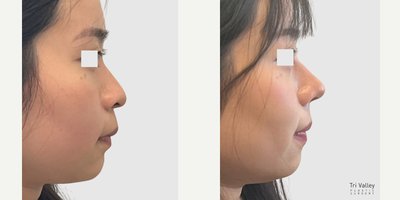
Your concerns and aesthetic goals are reasonable, and many of the changes you describe can potentially be addressed through rhinoplasty while maintaining a natural appearance. Rhinoplasty can improve the straightness of the nose, smooth a dorsal hump, refine a bulbous nasal tip, and address a hanging columella when present. The goal is not simply to correct each feature individually, but to create a balanced, harmonious nose that complements your other facial features. An in-person consultation is particularly important because photographs alone cannot fully demonstrate your underlying nasal anatomy, skin thickness, cartilage structure, or the factors contributing to the appearance of your nasal tip and columella. These details are essential for determining which changes are achievable and what results you can realistically expect. Regarding a subnasal lip lift, I generally would not recommend combining this procedure with rhinoplasty. Both procedures involve the tissues around the base of the nose, and performing them together can introduce additional considerations related to healing, scarring, and changes in the relationship between the nose and upper lip. I am also relatively conservative about recommending lip lifts in younger patients. The scar at the base of the nose can sometimes be more noticeable in younger individuals, particularly when there is little age-related upper lip elongation. Additionally, changes to the nasal tip and columella during rhinoplasty may alter the perceived relationship between the nose and upper lip. My recommendation would be to start with an in-person rhinoplasty consultation, establish a surgical plan based on your anatomy and goals, and then reassess whether a lip lift would provide any additional benefit after healing. Hope this helps