Philip Wasicek, MD
Board Certified Plastic Surgeon, Board Certified General Surgeon
Board Certified Plastic Surgeon, Board Certified General Surgeon
Dr. Philip Wasicek is a double board-certified plastic surgeon with a practice focused on achieving natural, refined, and long-lasting aesthetic results. He is widely sought after for his expertise in facial rejuvenation, particularly deep plane facelift techn
Asked By: Modest389886
ANSWER
Hello, I'm sorry to hear that you've been disappointed with your results, particularly after undergoing both an initial neck lift and a revision. Persistent neck laxity following surgery can have several underlying causes, and identifying exactly what is contributing to your concerns is essential before considering another procedure. The appearance of the neck is influenced not only by skin laxity, but also by the underlying platysma muscle, subcutaneous fat, digastric muscles, submandibular glands, and the position of the deeper neck structures. In some patients, particularly those with a history of significant weight fluctuations, the skin may have reduced elasticity and reduced tissue quality and this may result in more tissue and skin relaxation following surgery. However, persistent fullness or an inadequately defined neck contour may also reflect deeper anatomical structures that were not fully addressed during the previous operations. A comprehensive structural neck lift may provide additional improvement in appropriately selected patients, particularly if the previous procedures primarily addressed the skin or superficial tissues. However, after two operations, scar tissue and altered anatomy make further revision more challenging, and the potential benefits must be carefully weighed against the risks. I would recommend an in-person evaluation with a board-certified plastic surgeon who has significant experience in revision neck surgery. Reviewing your previous operative reports and examining the underlying anatomy would help determine whether another revision could meaningfully improve your result or whether further surgery would offer limited benefit. The goal should be to identify the specific cause of your persistent concerns rather than simply repeating the same procedure. Hope this helps.
Asked By: feeling_hopeless
ANSWER
Hello, A “cobra neck” deformity following a face/neck lift can be challenging to correct, but meaningful improvement is often possible. This appearance can result from excessive removal of fat beneath the chin, inadequate support of the underlying platysma muscle, or a combination of factors. The appropriate treatment depends on the underlying anatomy. In patients with excessive fat removal, carefully placed fat grafting may help restore volume and create a smoother, more natural contour. If the deformity is related to platysmal separation, banding, or inadequate muscle support, revision neck lift surgery with repositioning and tightening of the platysma may be necessary. It is also important to evaluate the deeper structures of the neck, particularly the submandibular glands and digastric muscles. If these structures were not addressed during the original surgery and contribute to fullness or contour irregularities, they may warrant consideration during revision surgery. However, not every patient requires modification of these structures, and any intervention must be carefully weighed against the additional risks. Revision neck surgery requires a thoughtful approach because of scar tissue, altered anatomy, and the importance of restoring natural contours rather than simply tightening the skin further. I generally recommend allowing adequate time for healing, often at least 6–12 months, before considering revision surgery. An in-person examination with a board-certified plastic surgeon experienced in revision facial and structural neck surgery is essential to identify the underlying causes and determine the most appropriate approach. Hope this helps.
Asked By: themenopausemidwife
ANSWER
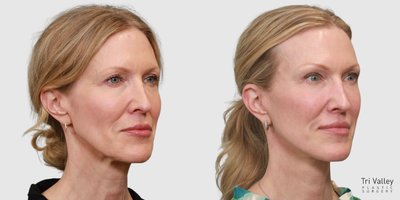
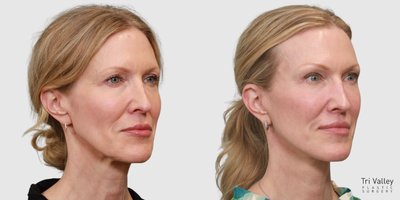
You are asking some excellent questions, particularly about achieving natural-looking results and addressing the nasolabial folds. A well-performed deep plane facelift can provide significant improvement in the jowls, jawline, neck, and even the midface. However, it is important to understand that nasolabial folds are a normal part of facial anatomy, even in younger individuals. While a deep plane facelift can soften these folds by releasing the facial retaining ligaments (especially the zygomaticocutaneous ligament) and repositioning descended cheek tissues, it generally will not eliminate them completely. In some patients, additional volume restoration with fat grafting may be beneficial. Regarding the "pulled" appearance, this is something I specifically try to avoid in my practice. One of the advantages of a properly performed deep plane facelift is that we reposition the deeper facial tissues rather than relying on excessive tension on the skin. This allows us to achieve significant rejuvenation while maintaining a natural appearance. When researching surgeons, I would recommend looking carefully at their before-and-after photographs, particularly patients with facial anatomy and aging changes similar to yours. Look at the jawline, neck, nasolabial folds, and also the temples, sideburns, and ears. Pay attention to whether patients still look like themselves, just more refreshed. During your consultations, I would specifically ask how the surgeon addresses the midface and nasolabial folds, what techniques they use to avoid an overly pulled appearance, and whether they routinely perform fat grafting when volume loss contributes to facial aging. Regarding anesthesia, some facelifts can be performed under local anesthesia with sedation, although this depends on the extent of surgery, your medical history, and the surgeon's approach. General anesthesia is also a very reasonable option and can be performed safely in an appropriately equipped facility. Ultimately, the best facelift is one that addresses your specific concerns while preserving the features that make you look like yourself. Hope this helps.
Asked By: 16374
ANSWER
Your concerns and aesthetic goals are reasonable, and many of the changes you describe can potentially be addressed through rhinoplasty while maintaining a natural appearance. Rhinoplasty can improve the straightness of the nose, smooth a dorsal hump, refine a bulbous nasal tip, and address a hanging columella when present. The goal is not simply to correct each feature individually, but to create a balanced, harmonious nose that complements your other facial features. An in-person consultation is particularly important because photographs alone cannot fully demonstrate your underlying nasal anatomy, skin thickness, cartilage structure, or the factors contributing to the appearance of your nasal tip and columella. These details are essential for determining which changes are achievable and what results you can realistically expect. Regarding a subnasal lip lift, I generally would not recommend combining this procedure with rhinoplasty. Both procedures involve the tissues around the base of the nose, and performing them together can introduce additional considerations related to healing, scarring, and changes in the relationship between the nose and upper lip. I am also relatively conservative about recommending lip lifts in younger patients. The scar at the base of the nose can sometimes be more noticeable in younger individuals, particularly when there is little age-related upper lip elongation. Additionally, changes to the nasal tip and columella during rhinoplasty may alter the perceived relationship between the nose and upper lip. My recommendation would be to start with an in-person rhinoplasty consultation, establish a surgical plan based on your anatomy and goals, and then reassess whether a lip lift would provide any additional benefit after healing. Hope this helps
Asked By: schoenj
ANSWER
Both surgeons are describing reasonable approaches to neck rejuvenation, but they address the underlying anatomy differently. When evaluating the neck, I think it is important to distinguish between three separate concerns: medial platysmal banding, lateral platysmal banding, and skin laxity. The best surgical approach depends on which of these is most prominent and what is contributing to each. A submental approach with a medial corset platysmaplasty and platysma myotomy can be very effective for prominent medial platysmal bands. However, this approach does not directly remove excess skin or provide the same degree of lateral tissue repositioning as a traditional neck lift. A lateral approach, particularly with deep plane dissection and platysmal suspension, can improve neck contour and address skin laxity without necessarily requiring a submental incision. However, prominent medial bands may not always be adequately corrected through lateral suspension alone. Importantly, platysma myotomy can help reduce recurrent banding, but it does not eliminate the possibility of recurrence. Similarly, neither approach guarantees permanent correction, as the neck continues to age. Hope this helps.
Asked By: cauliflowerisaflower
ANSWER
There is no specific limit to how many facelifts you can have in your lifetime and still look natural. Some patients undergo two or even three facelifts over several decades and maintain beautiful, natural-looking results. However, each subsequent facelift becomes more technically challenging. Previous surgery creates scar tissue, changes the underlying anatomy, and can affect the quality and elasticity of the tissues. This makes surgical technique and experience particularly important. In my practice, I focus on deep plane facelift techniques that reposition the deeper facial tissues rather than relying on excessive tension on the skin. This helps create natural-looking results while avoiding the overly tight or "pulled" appearance that many patients fear. A well-performed facelift can provide meaningful rejuvenation for 10–15 years or longer, although the aging process continues. Many patients may never feel the need for another facelift, while others may benefit from a secondary procedure as they age. Ultimately, the goal should not be to have as many facelifts as possible, but to achieve a natural, long-lasting result that allows you to continue looking like yourself—just refreshed and rejuvenated. Hope this helps.
Asked By: Inventive950961
ANSWER
Hello, The answer to your question is: it might be possible--but there are many different factors and considerations--its complicated. There are multiple techniques to achieve tip deprojection, some can also rotate the tip up, others can rotate the tip downward, and others affect small change. Revision rhinoplasty is a complicated surgery and manuevers such as de-projection and de-rotation may require multiple techniques including possibly multiple grafts. My recommendation would be to have an in-person consultation with board certified plastic surgeon who specializes in rhinoplasty, especially revision rhinoplasty. Hope this helps.
Asked By: AskaQuestionToYou
ANSWER
Hello, Unfortunately, like any other type of surgery, a rhinoplasty makes permanent changes. There are things that can be done to further change someones nose, but it is impossible to go back to exactly how it was beforehand. There may be things that could be done to become more similar to your prior nose, but serious consideration should be placed into what is actually desired/goals. I would recommend an in-person consultation with a board certified plastic surgeon who specializes in rhinoplasty and revision rhinoplasty. Hope this helps.
Asked By: Lily_Sabbath_H
ANSWER
Hello, This is an excellent question. Hyoid positioning is an important consideration with deep plane structural neck contouring. If there is a low hyoid and all of the deep neck structures are aggressively reduced, then the hyoid/an "adams apple" can be exposed. More restraint and more conservative deep plane structural neck contouring can achieve good results without this happening but the change will be more incremental--which, in my opinion, is perfectly acceptable. I would recommend having an in-person consultation with a board certified plastic surgeon who specializes in deep plane facelift/necklifting. Hope this helps. Hope this helps.
Asked By: ange_jade
ANSWER
Hello, A risk of liposuction is worsening excess/redundant skin (in any location). This is certainly possible. In addition, especially for the neck and submental area, reducing the amount of subcutaneous fat in the submental region can unmask or reveal platysmal bands and skin bands in the area--thereby potentially making someone look even older/worse. There is a role for some subcutaneous fat in the submental region in having a youthful appearance. I would recommend being seen by a board certified plastic surgeon who specializes in facial and neck rejuvenation for an in-person consultation. Hope this helps. Hope this helps.
Dr. Philip Wasicek has received outstanding reviews for his exceptional surgical skills and patient care. Patients praise his attention to detail, passion for his work, and ability to understand and meet their specific needs. His expertise in procedures such as , , , , and is highly regarded. Patients appreciate his thorough explanations, attentive care, and the positive results they have experienced.