
What patients say
Dr. Rodger Shortt excels in

Show more
Show more
Show more
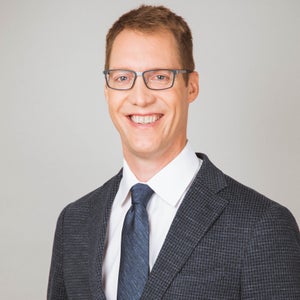
Dr. Rodger Shortt is the Chief of Plastic Surgery at Oakville Trafalgar Memorial Hospital and a leading authority in cosmetic and reconstructive surgery. With over 16 years of specialist experience and nearly a decade as a Lead Plastic Surgeon, Dr. Shortt is r
Asked By: Powerful4295
ANSWER
I have never really understood the advantage to patients in having them overeat to make them eligible for breast fat transfer. It may increase their weight, and allow for the procedure to happer. However, once surgery is over and they return to their normal eating and exercise habits their will will likely settle back to what it was originally. The size of their breasts will decrease as well. This is quite likely to lead to an unhappy patient. I think the better advice is to have patients at a stable weight and determine if they are a good candidate or not. It is pretty rare to not be able to do breast fat transfer for a patient, but it may require harvesting fat from multiple sites. This is much more likely to lead to long term stable results and a happy patient.
Asked By: Plucky613106
ANSWER
The typical scar is a few mm at the fold at the bottom of the breast. It heals exceptionally well and is barely visible with time. A needle is used to make a second one at the edge of the areola that is essentially imperceptible. Placing incisions elsewhere, such as the armpit, is likely possible. Because of the angle, an additional needle incision at the areola may be needed. Scars are one of the great advantages of breast fat transfer. It is very rare to need to do scar touchups.
Asked By: realbooty98
ANSWER
Breast fat transfer is an excellent procedure that delivers beautiful, natural results for the right candidate. But what exactly makes someone an ideal patient? 1. Adequate Donor Fat: You must have enough harvestable fat for a successful transfer. While very lean patients may lack the necessary volume, typically liposuction across multiple areas can gather enough fat for the procedure. 2. Existing Breast Tissue: There must be enough "space" to safely receive the fat. As a rough estimate, one can double the breast volume during surgery, but expect about 40% of that volume to be absorbed by the body in the first few months. Patients starting with very small breasts may choose to undergo the procedure more than once to reach their goal. 3. Appreciation for Natural Shape: Fat transfer excels at enhancing your existing shape rather than fundamentally altering it. 4. Modest Size Goals: This procedure is ideal for those seeking a subtle, natural increase—typically around one cup size. 5. Preference for No Implants: Although final volume is not certain, it is a great choice for someone looking to avoid foreign bodies. Managing Expectations and Results While most patients see their size stabilize after the first month, I recommend waiting a full three months to see your final results—provided your weight remains stable. Factors That Influence Success 1. Weight Stability: I advise against "bulking up" before surgery. If you gain weight just for the procedure, you will likely lose that volume once you return to your natural weight. It is best to be at a weight you plan to maintain for years to come. 2. Surgical Technique: Because there is no single "universal" method, technique matters. A careful, conservative approach is required; over-injecting fat can actually lead to higher rates of fat loss (necrosis). 3. Clear Communication: Success starts with honest expectations. Your surgeon should provide a realistic outlook rather than over-promising results. 4. Comprehensive Care: Decisions made before, during, and after surgery all impact your final look. Ensure you discuss the entire timeline with your surgeon. The bottom line is that breast fat transfer is one of the most rewarding procedures in plastic surgery. Providing a patient with fuller breasts and a more contoured body through liposuction—all without an implant—is a true win-win-win. Dr. Rodger Shortt, Oakville, Ontario
Asked By: gouldk1
ANSWER
Breast fat transfer can be a great procedure for the right person. As with all surgery, it needs to be done as safely as possible. For someone that has malignant hyperthermia or someone that could potentially have it, they need trigger free anaesthesia. In hospitals, this usually means having anaesthesia first case of the day. The room would be set up to prevent any exposure to anaesthesia drugs that cause MH. Many clinics use TIVA (total intravanous aneasthesia), and avoid all drugs that may trigger MH. Private clinics that do not provide TIVA, would have all the necessary drugs (including dantrolene) in the off chance someone developed it. However, if there is a known risk for it, may just offer surgery in the hospital instead.
Asked By: Fearless91112
ANSWER
Breast fat transfer can help thicken the tissue to provide more concealment to an implant. It can provide a softer more natural looking transition to the chest wall as well. However, it needs to be done subtly, as too much fat can lead to contour irregularities or change the volume distribution of the breast; which can make the nipple position appear lower on the breast.
Asked By: Poppie11
ANSWER
The edge of an implant becomes visible with there is a mismatch between the size of the implant and the thickness of the tissue. The simplest options for improving that ratio is to place a slightly smaller implant or put the implant under the muscle if not already in that position. The alternative method is to thicken the tissue with fat grafting. It can work very well to provide more concealment of the implant as well as any bony prominences of the ribs or sternum, giving a softer overall look. Fat grafting can be done with the implant in place. Alternatively the implant can be removed during surgery, fat grafting performed and the implant reinserted. There are pros and cons to all options and your surgeon can go over those with you. The key thing to avoid is contour irregularities, lumps and cysts. A really smooth even placement of fat is needed. Small cannula techniques will help. Ideally your surgeon would do a lot of fat grafting to give you the best likelihood for an amazing result.
Asked By: Persistent14467
ANSWER
Fat transfer can work great for breast asymmetry, especially for a more subtle difference. It would be my preferred technique for a subtle asymmetry. I typically will put enough fat to make the two breasts symmetric, then overgraft that breast with the expectation that some fat will be lost. It is always possible that the breast is a little smaller or bigger than the opposite breast after surgery. Some patients choose to have fat grafting to both sides. So they are better matched then both sides are made larger. If there is a really notable difference in the breast, including: size, shape, tissue tightness, etc, other options may be necessary. A surgeon that does a lot of breast fat transfer is always recommended to get the best result from fat transfer. For more complex breast asymmetry your surgeon should also do all manner of breast surgery (cosmetic and reconstructive) to offer the best options.
Asked By: trubrowninsoul2026
ANSWER
An ideal candidate is near their healthy weight, or at least at a stable weight. They have laxity to the skin. They may have prominence in the abdomen from muscle separation. They have realistic goals about changes and ideally done with family planning. Their are many goals to surgery: remove the lax skin; thin out the remaining fat layer; tighen the muscles; hide the scar below the bikini; and create a natural looking belly button. The belly button is probably the most variable part of the surgery, so make sure you are pleased with the belly button your surgeon makes.
Asked By: job47
ANSWER
Fat can be injected as often as there is available fat to liposuction. Most patients in my practise have 1 or 2 surgeries. The rare person with a small breast to begin with may have it a third time. When I consider the people having it more than once, most of them are doing it because they are really pleased with how the first surgery went and just want more of the same. I counsel my patients to clearly understand the limitations of breast fat transfer. Essentially, you can double the volume of the breast at the time of surgery, but will lose about 40% over the first couple months. I do not do secondary fat grafting until about 3 months after the first. If you wonder why we don't just put more fat in the first time, it comes down to how the fat survival works. Beyond doubling the volume, the transferred fat cells get further away from local blood supply and the risks of fat necrosis increases. It is a meticulous surgery and not all surgeons perform it. I suggest finding a surgeon that does do it as a frequent part of their practise. OHIP typically covers breast fat transfer in the setting of breast oncology care. Dr. Rodger Shortt, plastic surgeon in Oakville, Ontario.
Asked By: Sjose
ANSWER
Fat is a great option for a modest augmentation. Oftentimes people choose breast fat transfer, because: 1. they want to avoid an implant. 2. they want to replace some lost volume from implant removal 3. they want to replace lost volume from weight change 4. they have developed increased skin laxity from weight change or age Fat can work great. The two main factors: is there a place to put it (in the person looking to fill lax skin that is usually not an issue) and do they have enough fat for liposuction harvesting. Fat transfer can at most safely double the volume of the breast at the time of surgery, with the expectation of losing around 40%, give or take. Over grafting the breast will result in an increased risk of cysts or fat necrosis. Selecting a surgeon that does frequent fat transfer is suggested as it requires meticulous technique to get the best outcomes. An in person consultation is a good way for your surgeon to go over the expectations and limitations of the procedure. Dr. Rodger Shortt, plastic surgeon, Oakville, Ontario.
Dr. Rodger Shortt excels in