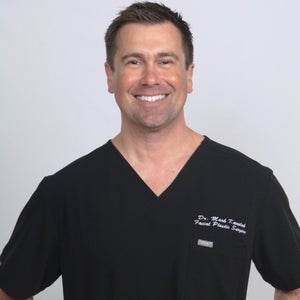
Mark Karolak, DO, FAOCO
Facial Plastic Surgeon, Board Certified in Otolaryngology – Head and Neck Surgery
Facial Plastic Surgeon, Board Certified in Otolaryngology – Head and Neck Surgery
Show more
Dr. Mark Karolak has been a facial plastic surgeon in Wall Township, New Jersey for over a decade. Board certified in both otolaryngology and facial plastic surgery, he has performed over 3,000 facelifts under local anesthesia, as well as thousands of other fa
Asked By: eyes54321
ANSWER
Facial rejuvenation is a way to help restore and repair the components that contribute to each patient's unique aging pattern. The three components include loss of skin elasticity, loss of volume (bone and fat), and muscle looseness. A facelift will help address the muscle looseness and excess skin. Fat transfer or fillers will help restore volume. A surgeon who performs fat transfer on a regular basis will know whether an "overfill" technique or a "treat to visible improvement" approach works best in their practice. While a facelift without fat transfer will still give an excellent result in most cases, fat transfer will help treat a part of aging that a facelift cannot. The best way to know how to proceed is to speak with the surgeon who will be performing your procedure and look at a lot of their before and after photos to make sure that the results they consistently achieve for their patients are in line with your goals.
Asked By: Shawnap8177
ANSWER
I think that you are on the right track. You are getting a lot of good feedback here from plenty of excellent surgeons. It will get overwhelming at some point. Use this as a place to start. I think that you will find it helpful to see 3 surgeons for a consultation, or more if needed. You will find that the terminology and types of procedures that are being performed will vary based on the technique each surgeon uses and their experience. After seeing thousands of patients in consultation, I have found that each surgeons definition of facelift, mini-lift, weekend lift, lower facelift, full face lift, deep plane facelift, modified deep plane facelift, mini deep plane facelift, short scar facelift, ligament lift, and other "named facelifts" can vary. What's important is how frequently they perform these, that they perform more than just one type of facelift, and how consistent the results are that they achieve. Speak to friends, previous patients, look at reviews ( but be objective ) look at plenty of before and after photos, and meet and speak with the surgeons that you are considering for your procedure. They should be performing these at least every week. I suggest researching and exploring a facelift (most facelifts these days are lower facelifts, a platysmaplasty, neck contouring with liposuction (liposcultping), volume replacement (including the chin) with fat, implants or filler. m
Asked By: imaupser
ANSWER
I allow my patients to eat whatever they feel comfortable chewing after a facelift. Most patients do best with soft foods immediately after the procedure. Food that is high in salt can increase and prolong swelling. Speak to your surgeon to see what he or she recommends.
Asked By: jelllyb
ANSWER
Always follow the instructions of the surgeon who performed your procedure. You trusted them enough to choose them, it is important that you trust them enough to get you through recovery. Hopefully, your surgeon has a lot of experience in these procedures. He or she should be your best guide through the healing time. Silicone gel is helpful for patients who develop more scar tissue than normal or for thickened scar tissue. It helps soften the scars by trapping moisture. Usually, it is completely unnecessary, but in certain cases, it is very useful. Fraxel helps to remodel the scars and can help move healing along. Again, this is usually unnecessary. Scars in most cases do not need help healing. They will continue to improve over the course of one year. It is important to follow your surgeons instructions on what to do to get the scars to heal nicely.
Asked By: carchung
ANSWER
Absorbable sutures will be gone by one year, more likely sooner depending on the type and thickness of the suture. If a surgeon uses permanent sutures for muscle tightening under the skin, those sutures can get pushed out of the body even many years after the procedure.
Asked By: belybely
ANSWER
There are a variety of incision locations and techniques that are used for facelifts. Each surgeon knows what works best in their hands. As a facial plastic surgeon who specializes in facelifts, I vary my incision placement based on what I feel will heal best in each patient. It is not always necessary to hide the incision in the ear canal. This is something that should be discussed during the initial consult and confirmed prior to surgery. Surgeons who perform these procedures on a daily/weekly basis will have plenty of photos of incisions to show. This should help you to feel comfortable before choosing your surgeon. Once the procedure is done, the incisions will go through several healing stages. At 5 weeks, your incisions are still healing and will continue to fade over the course of a year. Sometimes topical silicone, vbeam laser, fraxel, CO2 fractional laser, and kenalogue may be used to help move the process along. It may make you feel more comfortable and reassure you to look at your surgeon's before and after photos to see how well their patients' incisions usually heal. If you have any concerns, follow up with the doctor who you trusted to perform your surgery. He or she will be the best resource to help you through recovery.
Asked By: sheysa1
ANSWER
Without before/after pictures and an in person exam, it is difficult to determine. Swelling and bruising vary from patient to patient. I find that in most patients, it peaks around day 3 or 4. It’s normal to have more bruising or swelling on one side than the other. Lumps and bumps are normal and will usually improve over the course of 1-2 weeks. I find that on average 70-80% of the signs of surgery improve in the first week and 90% by the second week. The face will still feel firm and start to soften around 6-8 weeks after the procedure. Gentle massage, lymphatic massage, and or facials can help move this normal process along, but you must speak with your surgeon to get approval first. Sometimes ultrasound treatments may be helpful. Usually by 3 months, the majority if not all of the firmness has resolved. There is still healing that will continue under the skin (which is not visible) for another 8-9 months. That being said, be sure to stay in touch with your surgeon. He or She is the one who performed your procedure and is the only one who knows what is normal and what is not when it comes to how you are expected to heal after the procedures that were performed.
Asked By: jelllyb
ANSWER
Without pictures, it is difficult to determine. Swelling and bruising vary from patient to patient. I find that in most patients, it peaks around day 3 or 4. It’s normal to have more bruising or swelling on one side than the other. Lumps and bumps are normal and will usually improve over the course of 1-2 weeks. I find that on average 70-80% of the signs of surgery improve in the first week and 90% by the second week. Depending on what other procedures are performed at the same time, most of my patients feel comfortable out in public with makeup at about 7-14 days. The face will still feel firm and start to soften around 6-8 weeks after the procedure. Gentle massage, lymphatic massage, and or facials can help move this normal process along, but you must speak with your surgeon to get approval first. Usually by 3 months, the majority if not all of the firmness has resolved. There is still healing that will continue under the skin (which is not visible) for another 8-9 months. That being said, be sure to stay in touch with your surgeon. He or She is the one who performed your procedure and is the only one who knows what is normal and what is not when it comes to how you are expected to heal after the procedures that were performed.
Asked By: Hedgehog25
ANSWER
Most likely some form of lower lid surgery that “tightens the lower lid” will be required if you have what is called “ectropion”. A facelift may help in some ways cosmetically, especially when combined with fat transfer. You will have to be seen in person to answer this.
Asked By: jelllyb
ANSWER
What you will find is that you are going to get very different answers to this question depending on what each surgeon finds that works best for their own patients. Some surgeons make their patients wear a wrap for one month, while other surgeons don’t have them wear one at all. For my patients, I require that they wear a special head wrap that I put on them for 2 days. I see them the next day, take it off for them, and put a new one on. They take that off the following day, shower, and then wear a special ace bandage with padding between the wrap and their skin for 5 more nights.
Dr. Mark Karolak is highly regarded for his expertise in facial plastic surgery, including , face and , and . Patients consistently praise his professionalism, skill, and compassionate care throughout the entire process, from initial consultation to post-operative follow-up. His ability to achieve natural-looking results that enhance patients' confidence and satisfaction is frequently highlighted.