
What patients say
Dr. Julia Spears is highly regarded for her expertise in various plastic and cosmetic procedures, including

Board Certified Plastic Surgeon
Show more
Show more
Show more
Dr. Spears, MD is a plastic surgeon with significant teaching experience. She is certified by the American Board of Plastic Surgery. In 1987, Dr. Spears completed her Bachelor of Science and graduated Summa Cum Laude at Temple University in Philadelphia, PA. S
Asked By: RealSelf Admin
ANSWER
Hello, and thank you for your question. It is completely understandable to feel anxious about discomfort during a procedure. Avéli is typically performed in the office using local anesthesia to numb the treatment areas. You may experience some brief stinging or burning during the anesthetic injections, but once the area is numb, most patients tolerate the procedure very well. You may still feel some pressure, pulling, or movement, but significant pain is not expected. For patients who are particularly anxious, additional options such as oral sedation or nitrous oxide may be available, depending on the practice. I recommend discussing your concerns with a board-certified plastic surgeon experienced with Avéli so they can explain the anesthesia options and develop a plan to keep you comfortable throughout the procedure.
Asked By: psurgery51
ANSWER
Hello, and thank you for your question. Yes, areola reduction can often be performed without replacing or disturbing your existing breast implants, even several years after a breast lift. The procedure typically involves removing a small ring of skin around the areola, often utilizing the existing scar from your previous surgery. However, the amount of reduction possible depends on your skin elasticity, breast anatomy, and the tension on the surrounding tissue. It is important to understand that the areolas may stretch again over time, particularly if there is significant tension from the implants. An in-person examination with a board-certified plastic surgeon is necessary to evaluate your previous scars, skin quality, and desired areola size to determine whether a standalone reduction would provide a satisfactory result.
Asked By: HBert99
ANSWER
Hello, and thank you for your question. I understand how frustrating it can be to experience contour irregularities following gynecomastia surgery. The good news is that crater deformities can often be improved with revision surgery. Fat grafting may be an option to restore volume and smooth the depressed areas. However, successful fat transfer depends on having adequate donor fat, healthy surrounding tissue, and sufficient blood supply. In some cases, scar tissue release or additional contouring may also be necessary. Since you are only six months postoperative, I would generally recommend waiting closer to one year before considering revision surgery to allow the tissues to fully heal and settle. Although photographs can provide helpful information, they are not sufficient to determine the extent of tissue loss or the best corrective approach. I recommend an in-person evaluation with a board-certified plastic surgeon experienced in revision gynecomastia surgery to discuss your options and realistic expectations.
Asked By: Brave427239
ANSWER
Hello, and congratulations on your 100-pound weight loss! That is a wonderful accomplishment. Following significant weight loss, the skin often loses elasticity, making it difficult to achieve adequate tightening with a periareolar or “donut” lift alone. While this technique minimizes scarring, it can only remove a limited amount of excess skin and may result in residual looseness or stretching around the areolas. Depending on the amount of excess skin and the position of your nipples, a more extensive male chest lift with skin removal, possibly including nipple repositioning, may provide a better contour and more predictable results. Although this involves longer incisions, achieving the best chest shape is often more important than minimizing scars at the expense of the final result. Although photographs are helpful, they are not sufficient to determine the most appropriate procedure. I recommend an in-person consultation with a board-certified plastic surgeon experienced in post-weight-loss body contouring to discuss your options and realistic expectations.
Asked By: zxcvbnm9876
ANSWER
Hello, and thank you for your question. I understand your frustration with the results of your previous areola reduction, particularly the stretching and scarring following removal of the permanent sutures. At nearly one year after surgery, a revision may be an option to improve the size, shape, and appearance of the areolas. However, areola reduction alone can sometimes result in recurrent stretching, especially when there is tension on the surrounding skin. If excess glandular tissue, fat, or skin laxity is contributing to the appearance of your chest, gynecomastia surgery or a chest lift may provide a more comprehensive correction. The decision to use permanent sutures or additional incisions depends on your anatomy and the amount of correction needed. Although photographs are helpful, they cannot determine the most appropriate surgical approach. I recommend an in-person consultation with a board-certified plastic surgeon experienced in male chest contouring and revision surgery to evaluate your existing scars and discuss realistic expectations.
Asked By: jaiuni
ANSWER
Hello, and thank you for your question. A static glabellar crease can be challenging to treat because it is often caused by a combination of repeated muscle movement and an established indentation in the skin. Fractional CO2 laser resurfacing may help improve skin texture and soften the appearance of the crease by stimulating collagen production. However, a deeper, established line may not respond significantly to laser treatment alone. Botox or Dysport may help reduce the muscle activity that continues to deepen the crease, while other treatments may be considered to address the remaining indentation. Filler is sometimes an option, although the glabellar area carries significant vascular risks and requires particular caution. I recommend an in-person evaluation with a board-certified plastic surgeon or dermatologist experienced in facial rejuvenation to determine which treatment, or combination of treatments, would provide the safest and most effective improvement.
Asked By: RealSelf Admin
ANSWER
Hello, and thank you for your question. Age alone is not the determining factor for Avéli treatment. The most important considerations are your skin quality, degree of laxity, and the type of cellulite you have. At 35 years old with minimal skin laxity, you may be an excellent candidate for Avéli. The procedure works by releasing the fibrous bands responsible for cellulite dimples, but it does not tighten loose skin. Patients with good skin elasticity and distinct cellulite dimples often achieve the most noticeable improvement. I recommend an in-person consultation with a board-certified plastic surgeon experienced with Avéli to evaluate your skin and determine whether the treatment would be appropriate for you.
Asked By: sscanadass
ANSWER
Hello, and thank you for your question. A history of keloid scarring does not automatically disqualify you from Avéli, but it is an important consideration before undergoing treatment. Avéli uses very small incisions to release the fibrous bands responsible for cellulite dimples. Although these incisions typically heal with minimal visible scarring, patients with a history of keloids may have an increased risk of developing raised or thickened scars. Preventive measures, such as silicone gel or silicone sheeting and careful wound care, may help minimize scarring, although they cannot eliminate the risk entirely. I recommend an in-person consultation with a board-certified plastic surgeon experienced with Avéli to evaluate your scarring history, discuss the potential risks, and determine whether the procedure is appropriate for you.
Asked By: Dbbarber
ANSWER
Hello, and congratulations on your incredible weight loss! Losing over 220 pounds is a tremendous accomplishment. Following significant weight loss, the remaining loose skin on the chest and abdomen often requires surgical removal, as exercise and additional weight loss will not adequately tighten stretched skin. For your chest, a male breast lift with removal of excess skin and possibly residual glandular tissue may provide the best improvement. For your abdomen, an extended tummy tuck, fleur-de-lis abdominoplasty, or lower body lift may be appropriate depending on the amount and distribution of excess skin. Ideally, your weight should be stable before proceeding with surgery. Although photographs can provide helpful information, they are not sufficient to determine the most appropriate surgical approach. I recommend an in-person consultation with a board-certified plastic surgeon experienced in post-weight-loss body contouring to evaluate your anatomy and determine whether these procedures should be performed together or in stages.
Asked By: timdoco4
ANSWER
Hello, and thank you for your question. Fat grafting can be helpful for correcting contour irregularities following gynecomastia surgery. However, transferring a larger volume of fat does not necessarily mean a higher percentage will survive. Fat survival depends on several factors, including the quality of the recipient tissue, blood supply, surgical technique, and how the fat is distributed. Placing too much fat in one area can actually reduce survival because the transferred fat needs adequate blood supply to remain viable. Since you have already undergone two unsuccessful fat transfers, I would recommend carefully evaluating the underlying cause of the contour irregularity before proceeding with another procedure. Scar tissue, limited tissue capacity, or residual skin laxity may also be contributing to your concerns. An in-person evaluation with a board-certified plastic surgeon experienced in revision gynecomastia surgery would be beneficial to determine whether additional fat grafting or another corrective approach would offer the most predictable improvement.
Mention RealSelf to redeem.
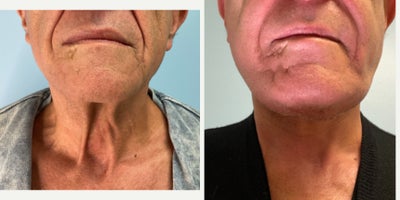
This minimally invasive one time treatment offers natural, long-lasting results! Perfect for those seeking rejuvenation without extensive downtime, MyEllevate® can be easily done .
Dr. Julia Spears is highly regarded for her expertise in various plastic and cosmetic procedures, including


