Artiste Plastic Surgery - Account Suspended
Suite 3, Level 2, 300 Oxford St, Bondi Junction, New South Wales, 2027
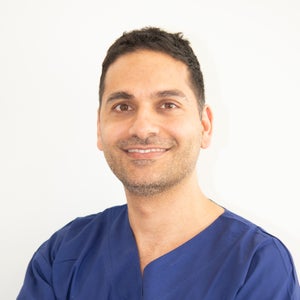
Specialist Plastic Surgeon
Show more
Show more
Dr. Jack Zoumaras is a specialist plastic surgeon practicing in the Darling Point area of Sydney, Australia. In over a decade in practice, he has become internationally known for his work as a facial plastic surgeon, with 100% of his practice consisting of fac
Asked By: Generous152886
ANSWER
Thanks for your question. It is not unusual to have swelling 2 years after surgery because the lymphatics have been disturbed and take time to adjust. A neck lift compeltely detaches the skin from the muscle layer and the muscle layer is then lifted so the physiological burden is significant. I often leave drains in for a up to a week. I have had pateints still have swelling after 12 months. The best therapy is lympphatic drainage massage for 4-6 weeks and this shouold resolve most of your symoptoms.
Asked By: kelz108
ANSWER
Great option. There are some non surgical management options such as cheek bone filler and threads. But as a facelift expert I would the cause of the heaviness is anatomical variant of your pre jowl and jowl area. This has resulted in a slight heaviness in the massetric space (Jowl) which is essentially a weak ligament and drooping of tissue. The best way to resolve this is release the ligament and lift the space with a Facelife. I have operated on many patients under the age of 40 and the Facelift is to correct what you are seeing with teh jowl and is nit necessarily anti ageing. Thee advantages of doing a Facelift when younger is your recovery is quicker and no one will know why you look so good.
Asked By: Honeybird1978
ANSWER
It all comes down to vector and what you are trying to do. In essence a Facelift will lift the lower jawline, cheek and in particular jowl area (just lateral to the lips which inckudes the marionette lines). The only way to lift the anagtomy in thhis area is to approach it from above and the side and subsequently lift it. The physics of this vector means you must place an incision in front of the ear.An incision behind the ear only allows access to the lateral neck and lower jawline and none of the jowl. But there is no need to worry about scarring as a goof Facelift surgeon will conceal the incisions in the ear and you will not see anything.
Asked By: SophiePbz
ANSWER
I would do all at the same time by the appropriate surgeon.Performing a High SMAS Facelift or Deep Plane facelift will address the naso labial folds and cheek and lower eyelid and jowls. You can add a lip lift at the same time for the best result.Performing total facial rejuvenation together works really well.
Asked By: Doryblue92
ANSWER
Your concerns are valid. First I would say discuss with your surgeon as he/she will know what they have done and I am sure would be happy to consider a revision or re do neck lift. Having a look at the before photos could help.In saying that, the area of your concerns appear to be the submental area under the chin. The neck lift works on a number of areas-skin, fat, muscle-deep (digastric) and superficial (plastyma) as well as the submandibular glands. If all these areas were not worked on then there is room for improvement.
Asked By: Expensive Peach
ANSWER
Liposuction is a great plastic surgery tool to remove fat and sculpt and area like the hips, thighs and abdomen. Because suction is used to remove fat some of the fat that is disrupted and left behind can form lumps. The best thing to mitigate this is being as meticuoulsy with the technique as possible during surgery and then good after care. After care consists of using compression garments for up to 6 weeks, regularly massaging the areas and receiving lymphatic drainage techniques.
Asked By: ElizabethP8
ANSWER
This is a great question. We know that Ultrasound energy devices such as Ulthera and Thermage can cause damage and scarring to the SMAS that make a facelift harder. As for RF needling the devices are often only skin deep and maximum penetration 3.5mm. They do not penetrate the deeper layers of the face and as such don't affect Facial surgery.
Asked By: tintiniii
ANSWER
This is a great question and really lies in the philosophy and training of your surgeon. Most advanced Rhinoplasty surgeons today perform an Open approach as this gets unlimted access to the tip that is unimpeded. The main drawback being swelling that can take up to 18 dissipate 100%. A closed rhinoplasty in the right hands can be used to adjust the tip. Having said that if your surgeon does not do a lot of closed approached then he/she will be better for a open approach.
Asked By: Doriaeva
ANSWER
That is a great question and one I see a lot in Sydney, Australia. I have performed many facelifts on patients who have threads, filler and other internal sutures that were placed non surgically. My advice would be it depends on your surgeon and how much filler you have. I would dissolve it before but it is also possible to mechanically remove during a facelift. Please understand that sometimes the filler integrated into the tissue and is in a plane that cannot be accessed. As a surgeon I dissolve the HA wants you are asleep.
Asked By: Modest2962
ANSWER
Great question. The subtle skin and cartilage changes you are referring to can be treated non surgically. I would advise seeing your surgeon first. In my patients I do not inject filler till at least 9-12 months post primary rhinoplasty. A revision rhinoplasty for what you are describing can be considered after 18-24 months as the nose may still change, especially with your thin supple skin.
Mr. Jack Zoumaras is praised for his attentive listening, clear communication, and skilled results across a range of procedures, particularly , , and . Patients highlight his ability to understand individual goals and deliver natural-looking outcomes, with many noting improved breathing and quality of life post-surgery. His team, especially Carmen, Cassandra, Ashlee, Bridie, and Sophia, is commended for their professionalism, responsiveness, and supportive care throughout the process.