

What patients say
Dr. Brian May is consistently praised for his attentive care, skill, and compassionate approach. Patients highlight his thorough explanations, realistic expectations, and personalized attention, particularly for

Show more
Show more
Dr. Brian May is a board-certified plastic surgeon known for his meticulous technique and natural, refined results. After advanced training at Duke University and the UT Southwestern Medical Center, he developed a passion for facial and aesthetic surgery that
Asked By: jlcrad
ANSWER
Without photographs, it is difficult to say with certainty what procedure would be optimal to treat the hooding of your brows. However, in general there are multiple different surgical approaches to achieve a brow lift - many of which target the lateral brow specifically. I would recommend you consult with a board-certified plastic surgeon who will be able to assess your brow position and will be able to give you surgical recommendations based off your physical exam and your specific goals.
Asked By: Gregarious477981
ANSWER
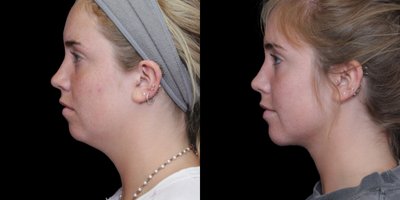
Thank you for your question as this topic frequently comes up. Both neck lift and submental liposuction are options that can address the contour of the neck but choosing the right treatment is dependent on multiple factors. In general, submental liposuction is ideal for younger patients that still have great skin elasticity with minimal laxity, have minimal banding of the muscles (platysma) of the neck, and who have mild to moderate excess fat. For patients who are older and have begun to lose skin elasticity or who have other attributes contributing the aging appearance of their neck, more thorough surgical intervention through a neck lift is generally preferred. From your photographs alone and based on your age, submental liposuction may be a good option for you but it is difficult to say with certainty. I would consult with a board-certified plastic surgeon who will perform a thorough evaluation of your neck and discuss your goals with you in order to provide you with the best option to meet those goals. Best of luck in your surgical journey!
Asked By: Humorous376845
ANSWER
Hi and thank you for your question. Unfortunately, nasal asymmetry or changes in the appearance of your nose can be common after trauma. From the photographs you provided, you may benefit from a a rhinoplasty to correct the asymmetry and dorsal hump that is present. I generally tell my patients to wait at least 6-12 months following trauma prior to undergoing operative correction. I recommend you seek out a board-certified plastic surgeon who specializes in rhinoplasty. After a thorough consultation, they will be able to help guide you to the right treatment option for you. Best of luck!
Asked By: rselfrms
ANSWER
This is a common question we encounter in plastic surgery. In your photos, it does appear that the relationship between your chin position and nose produces the appearance of retrusive chin. A chin implant is one option that can address this. Regarding your neck, it is difficult to give an accurate assessment based on your photos alone without performing a physical exam. However, submental liposuction can routinely be performed simultaneously with a chin implant and works synergistically to enhance the appearance of your side profile. I recommend you consult with a board-certified plastic surgeon who will perform a physical exam and talk with you with you in order to help you figure out the best way to meet your goals!
Asked By: Tawnyplatis
ANSWER
This is a great question! While there is no right or wrong age to have a facelift, 34 is on the younger end of the spectrum. A facelift and neck lift would indeed address some of the signs of aging you're discussing (including early bowling, some skin laxity in the neck, and deflation/descent of your cheeks), and may be the right option for you. Alternatively, there are also multiple ways to address these issues that do not require surgical intervention. These options include HA fillers for volume, skincare to improve skin tone and health, and even minimally invasive skin tightening options to address some of the laxity. I recommend you consult with a board-certified plastic surgeon who specializes in facial aesthetics to discuss all of your options. They will help guide you to the option best suited for you based on your goals and their findings on your physical exam. Best of luck to you on your journey!
Asked By: Diligent564279
ANSWER
Based on the picture you've provided, it does appear that you have some descent of your brows (and some asymmetry as well with the left brow slightly lower). This is likely contributing to the heaviness you are describing, and correction would improve the amount of excess skin that there appears to be on your upper eyelids. You may still benefit from surgery on your upper eyelids as well to fully address your concerns. I would recommend you consult with a board-certified plastic surgeon who can more accurately assess the position and relationships of your brows and eyelids in person. They will be able to discuss both surgical procedures with you and help you decide what is right for you. Best of luck in your surgical journey!
Asked By: Reliable737231
ANSWER
This is an excellent question. Also congratulation on your weight loss! While a breast augmentation alone is an option, this will not address any of the asymmetry or ptosis of your breasts. Additionally, the weight of the implant has the potential to create more sagging of your breasts - even at a more accelerated rate I believe an augmentation with a lift would help address both the asymmetry and nipple position while also providing additional breast shaping and tissue to support your implant. You may even benefit from mesh/internal bra support for the implant given your weight loss and its effect on your tissue elasticity. I recommend consulting with a board-certified plastic surgeon. After they perform a physical exam and discuss your goals, they will be able to go over pros & cons of all surgical options available to you and help you find the right surgery to reach your goals. Best of luck on your journey!
Asked By: Ally233
ANSWER
This far out from surgery it mostly likely is related to muscle, nerve, or the capsule. Given that your pain is worsening and causing you anxiety and distress, I would recommend you go and see your surgeon. They should be able to help you determine the cause of your pain as well as help reassure you that it will improve or discuss what needs to be done to improve/alleviate your pain. Best of luck! - Brian May, MD
Asked By: helenexo
ANSWER
Hi helenexo, without performing a physical exam, it is difficult to say exactly what exactly went wrong. However it does appear that your implants are beginning to bottom out - where the implant begins to sit below the natural breast crease and a large portion of the implant is below the nipple. I recommend you follow-up with your surgeon to discuss your concerns and your options for addressing your concerns. This may include implant exchange/downsizing, tightening the pocket the implants sit in, and possibly even adding additional tissue support like GalaFLEX internal bra. I wish you the best of luck!
Asked By: mainemom
ANSWER
Hi mainemom, this is a fantastic question. Given that you're over 10 years out from your initial breast surgery, I would recommend consultation with a board-certified plastic surgeon to have your implants evaluated to ensure no signs of rupture, capsular contracture, or other issues which can occur over time. Additionally, it does appear that you are having some tissue atrophy and laxity surrounding your current implants causing the change in cosmetic appearance. You and your surgeon will have a thorough discussion of your goals in order to help guide you in the direction of the correct procedure. This could range anywhere from a simple implant removal all the way to breast lift revision with implant exchange, etc. I would recommend seeking out a board-certified plastic surgeon with an expertise in revision breast surgery who will be able to guide you through all of your options!
Dr. Brian May is consistently praised for his attentive care, skill, and compassionate approach. Patients highlight his thorough explanations, realistic expectations, and personalized attention, particularly for