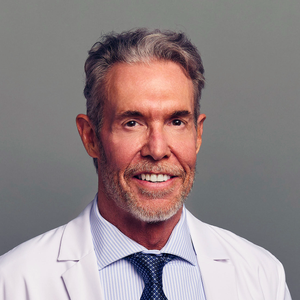
Ken Anderson, MD, FAACS, FISHRS
Verified
Board Certified Hair Restoration Surgeon
Board Certified Hair Restoration Surgeon
Show more
Dr. Ken Anderson is a globally recognized hair transplant surgeon and pioneer in modern FUE hair restoration. In 2004, he became the first surgeon to publish a complete FUE hair transplant case in the worldwide medical literature, helping advance a technique t
Asked By: Reserved954436
ANSWER
Hello and thank you for posting this question. The simple answer is that it's not possible to tell because your hair is dry and we are not able to see the extent of the thinning. As presented it could be as little as 400 grafts, or as much as 1200 grafts, depending on how much actual loss is present. I hope this information is helpful to you. Kind Regards, Ken Anderson, MD, FISHRS, ABHRS Board Certified by the American Board of Hair Restoration Surgery
Asked By: Andreti24
ANSWER
Thank you for posting this question. The short answer is that if you don't have hair loss, you don't need to be using Rogaine. I'm not certain why you started in the first place since you say you don't have any hair loss. Rogaine is used to treat male- and female-pattern hair loss, it is not indicated to attempt to lower a hairline in a person without male- or female-pattern hair loss. I hope this information is helpful to you.Ken Anderson, MD, FISHRS, ABHRSBoard Certified Hair Restoration Surgeon
Asked By: George S.
ANSWER
We ask our patients to continue using finasteride before and after their surgery date, taking it as normal. I don't feel there is a need to stop the medication for the procedure. I hope this information is helpful to you.Ken Anderson, MD, FISHRS, ABHRSBoard Certified Hair Restoration Surgeon
Asked By: misterpete
ANSWER
Thank you for posting this question. The short answer is yes, of course you can perform an FUE surgery without shaving down the recipient area. It's called a "long hair FUE" and it is helpful for people who don't want to have to trim down all of their hair as it might be a disruption to their lifestyle or work. And don't worry; you're not going to make a hairline look unnatural with too much density...it's the linear nature of a hairline that looks unnatural, not hair that is "too dense" as that's not really possible unless a surgeon is using plugs, which went out of fashion last century. I hope this information is helpful to you.Ken Anderson, MD, FISHRS, ABHRSBoard Certified Hair Restoration Surgeon
Asked By: jimss
ANSWER
Thank you for posting this question. The simple fact is that your hair has not had enough time to fully grow in. I would wait until at least 10 months before considering the look to be "final" and all the hairs to have grown in. So, I would give it another 5 months and then meet with your surgeon if you're not happy with the density.Ken Anderson, MD, FISHRS, ABHRSBoard Certified Hair Restoration Surgeon
Asked By: ADJ83
ANSWER
Thank you for posting this question. You cannot "damage" hair follicles with PRP, but it can induce a brief period of shedding. Really any and all treatments that are significantly effective in treating hair loss can cause a brief shedding period when starting the treatment. I would follow up with your doctor and have a look at the photographs that were taken prior to surgery. I hope this information is helpful to you. Kind Regards,Ken Anderson, MD, FISHRS, ABHRSBoard Certified Hair Restoration Surgeon
Asked By: ga1911
ANSWER
Thank you for posting this question. FUE procedures don't require general anesthesia, and I've not heard of general anesthesia being used for hair restoration procedures. If you're talking about the local anesthesia shots being too painful, that's a function of how fast the anesthesia is injected, and whether any vibration was used. I use a vibrator with needle local anesthesia, as per the gating theory of anesthesia, the non-painful vibratory stimuli will mask a lot of the painful stimuli from the injections of anesthesia. How much discomfort is felt during the administration of the anesthesia is dependent on the skill and experience of the doctor doing the injections. My patients generally tell me it's a "1 or 2" on a scale of 1 to 10, where 10 is the most painful, and 1 is the least. It should not be a difficult process. I hope this information is helpful to you.Kind Regards,Ken Anderson, MD, FISHRS, ABHRSBoard Certified Hair Restoration Surgeon
Asked By: CrisF
ANSWER
The short answer is yes. Doctors who have taken the time to study and many different aspects of surgical and non-surgical hair transplant surgery are obviously going to be far more skilled than a physician who decided to buy an FUE device and go to a weekend course. It's the highest level of distinction a hair restoration surgeon can achieve, and it's not easy. Physicians who pass the board exam are Board Certified by the American Board of Hair Restoration Surgery. Currently about 200 doctors world-wide are certified, and there are 88 in the USA. It costs about $1000 for the application to take the test, which is consistent for the fees charged in other specialties. The test is 8 hours long. The first portion consists of a 4-hour written exam that’s 81 pages long (I took the text last October...it was a massive test with hundreds of multiple choice questions, including clinical scenarios, and patient photographs.) In addition to the written exam, there is an oral-exam portion of the exam, which is 4 hours in length. In this portion, which is usually held in a large hotel with meeting rooms, there are tables set up in large rooms, with 3 chairs on 1 side, and 1 chair on the opposite side. The board exam candidate spends 30 minutes in each room, moving from room-to-room as the different modules are completed. Each module consists of a 30 minute block where the candidate sits in the lone seat on one side of a large table, and 3 doctors who have already passed the ABHRS exam are on the other side of the table. The candidate is presented with various clinical questions and problems, including photographs, and is tested by the 3 doctors on the other side of the table. It’s a serious undertaking, and takes 8 hours in total. It took a great deal of effort to successfully prepare to take and pass that exam. Many experienced doctors, including some who have answered this question, are not willing to put in the effort to study that hard to earn the ABHRS achievement and get board certified. These doctors often downplay the significance of the ABHRS, but in reality it is the world’s ONLY certifying board in the specialty of hair restoration surgery. Doctors who earn a board certificate in Hair Restoration Surgery often add “ABHRS” to their formal title to signify the accomplishment. At all the international education meetings around the world about hair restoration surgery, doctors who hold an ABHRS certificate are even given special tags for their meeting credentials badge to let others know that they are board certified; it’s that important.Kind Regards, Ken Anderson, MD, FISHRS, ABHRS Board Certified Hair Restoration Surgeon
Asked By: ricardwe
ANSWER
Thank you for posting this question. There is a huge difference between the two organizations. The ISHRS stands for the International Society of Hair Restoration Surgery. ABHRS stands for American Board of Hair Restoration Surgery. The ISHRS is comprised of physicians and technicians who practice hair restoration surgery. They hold educational meetings around the world on topics related to hair restoration surgery. Any physician in good-standing may join; it’s about $800, which is very much in line with similar medical societies in other specialties. Doctors who are involved over many years and have contributed to the Society may apply for Fellowship status. A Fellow of the ISHRS has achieved the maximum level of participation in the society, and physicians with this designation have a “FISHRS” as a part of their formal title, which stands for “Fellow, International Society of Hair Restoration Surgery.” It takes years of participation and dedication to the specialty to earn the FISHRS distinction. There are many experienced physicians (some of whom even answered this question) who do not have the FISHRS designation. I takes a lot of effort on the physicians applying for this designation, and some prefer not to go through the process. The ABHRS is the American Board of Hair Restoration Surgery. It was formed in 1996, around the same time as the ISHRS. It is a certifying board in both surgical (hair restoration surgery) and non-surgical hair treatments for hair loss. Physicians who pass the board exam are Board Certified by the American Board of Hair Restoration Surgery. Currently about 200 doctors world-wide are certified, and there are 88 in the USA. It costs about $1000 for the application to take the test. The text consists of a 4-hour written exam that’s 81 pages long (I took the text last October...it was a massive test with hundreds of multiple choice questions, including clinical scenarios, and patient photographs.) In addition to the written exam, there is an oral-exam portion of the exam, which is 4 hours in length. In this portion, which is usually held in a large hotel with meeting rooms, there are tables set up in large rooms, with 3 chairs on 1 side, and 1 chair on the opposite side. The board exam candidate spends 30 minutes in each room, moving from room-to-room as the different modules are completed. Each module consists of a 30 minute block where the candidate sits in the lone seat on one side of a large table, and 3 doctors who have already passed the ABHRS exam are on the other side of the table. The candidate is presented with various clinical questions and problems, including photographs, and is tested by the 3 doctors on the other side of the table. It’s a serious undertaking, and takes 8 hours in total. It took a great deal of effort to successfully prepare to take and pass that exam. Many experienced doctors, including some who have answered this question, are not willing to put in the effort to study that hard to earn the ABHRS achievement and get board certified. These doctors often downplay the significance of the ABHRS, but in reality it is the world’s ONLY certifying board in the specialty of hair restoration surgery. Doctors who earn a board certificate in Hair Restoration Surgery often add “ABHRS” to their formal title to signify the accomplishment. At all the ISHRS meetings, doctors who hold an ABHRS certificate are even given special tags for their meeting credentials badge to let others know that they are board certified; it’s that important. That’s a long answer to a short question but I felt all this needed to be added to the other answers given by other doctors. I hope this information is helpful to you. Kind Regards, Ken Anderson, MD, FISHRS, ABHRS Board Certified Hair Restoration Surgeon
Asked By: Terrific4264
ANSWER
Hello,Yes, the ABHRS certification indicates that the surgeon took the time and energy to sit for an 8 hour exam; 4 hours of written exam, and 4 hours of oral examination by other hair transplant doctors. It's not easy to pass. Doctors that say otherwise very likely did not do the work, and did not take the exam. It's a very serious deal, and it means "American Board of Hair Restoration Surgery", and it means your doctor cares enough about the specialty of hair restoration surgery to put in the effort to become board certified. It's not required to offer hair restoration surgery to the public, but it's not a bad way to differentiate the doctors doing this just for the money from the doctors who are actually serious about the specialty and the treatment of hair loss patients. No exam or set of letters after someone's name can guarantee skills, but it's a serious designation that is acquired by doctors in this specialty who are serious about hair restoration surgery. I hope this information is helpful to you.Ken Anderson, MD, FISHRS, ABHRSBoard Certified Hair Restoration Surgeon
Mention RealSelf to redeem.
- Free PRP procedure included with every surgery
Dr. Ken Anderson has received overwhelmingly positive reviews for his expertise in procedures, including and . Patients consistently praise his professionalism, the natural results of his work, and the supportive, knowledgeable staff. Many patients highlight the minimal discomfort experienced during and after the procedures, as well as the quick recovery times. Dr. Anderson's ability to boost patients' confidence and satisfaction with their appearance is a common theme in the reviews.