
David Amron, MD
Dermatologic Surgeon, Board Certified in Dermatology
Show more
For over 25 years, Dr. David Amron has earned an international reputation as a leading lipedema, liposculpture, and revision liposuction surgery specialist. Dr. David Amron is the founder and medical director of The Roxbury Institute with locations in Beverly

Asked By: lpash
ANSWER
To begin with, lipedema surgery is very particular and should ideally be done by a surgeon with extensive experience in lipedema for numerous reasons. These are complicated areas, there is a lot of fibrotic scar tissue that must be understood in terms of completely decongesting and releasing properly. The treatment of the calf and ankle area in particular needs to be done in a completely circumferential manner, covering every millimeter to not only get the best treatment off the disease itself but to truly optimize cosmetic results especially in Stage 1 patents where it has to be done perfectly cosmetically. For years I have emphasized the importance of trusting the surgeon rather than trusting a tool or modality. That is by far the most important thing. In regard to that, there are so many important considerations in how the area is designed, where axis points are strategically placed to not only create the smallest scar but to perfectly sculpt the area staying in what I call the “safe plane” and finally the ability to position the patient by ideally avoiding general anesthesia which is very important. Airsculpt is simply a tool that is another type of cannula. All those other things that I previously mentioned are what is truly important to getting the best result. Personally, I find a very systematic multistep approach the best in terms of insuring optimal cosmetic results. Even though I said that tools are of less importance, I do use a variety in my way of sculpting. Step 1, I properly prepare the tissue completely with tumescent anesthesia. Step 2, especially with lipedema, I remove the deeper layer of fat and mechanically release the fibrosis tissue. Step 3, I use Vaser to further emulsify fat and further release fibrosis to create a smooth skin undersurface. Step 4, is fine sculpting in certain areas. Step 5, I use a final skin tightening step of either Renuvion or bodytite radio frequency.
Asked By: be47125
ANSWER
I am so happy to hear that other physicians are becoming aware of lipedema and correctly diagnosing patients. Your vascular surgeon correctly diagnosed you with lipedema as I can appreciate simply based on the characteristic shape and distribution of fat and swelling of your legs, both upper and lower. Your legs are forming more of a column like shape with distribution of fat and swelling. Your torso which was previously done with liposuction created a lot of the irregularities in my opinion and should not have been done first. Not only because it is creating irregularities but because it is not properly treating balance and proportion in your body and is creating more disproportion. Your legs should have been considered as part of the overall approach to creating balance and proportion with liposuction surgery. I strongly feel that it is important to have the lipedema in your legs properly treated by an experience lipedema surgeon. As time goes on, this will only continue to get worse and can begin to affect your lymphatic circulation potentially leading to lipolymphedema. In addition to that, the skin elasticity will also begin to decrease, becoming more difficult for well-done liposuction to achieve uniform and even skin retraction. It does look as though from the photographs that what might be necessary to improve the irregularities in your abdomen is a well done abdominoplasty procedure but personally I would not make this a priority right now but rather focus on your legs. It could be possible under further evaluation that I would maybe consider revision liposuction surgery to your abdomen involving a multistep approach with emulsification, release of fibrosis and scarring from the previous liposuction surgery and using a modality such as Renuvion J-plasma to get skin tightening but I would have to make that determination when seeing you in person.
Asked By: Bright970254
ANSWER
While each surgeon is different in terms of their approach to surgery and pre-operative preparation, Lipedema surgery itself is even more particular. I can only comment about what I do in my practice with lipedema patients. It is my protocol to have every patient have medical clearance. Especially any patient over the age of 55 or with ongoing medical problems. In your case, you are younger at 40 years of age and it is not unreasonable that your surgeon may not want a medical clearance. I do have every patient undergo preoperative blood tests including CBC as well as what is called a PT/PTT to evaluate any propensity for bleeding. Urinalysis is not generally needed unless a patient has a particular medical problem. This gets into a longer and different discussion but personally I prefer to avoid general anesthesia in my approach to lipedema patients for a number of reasons, safety being one, faster recovery and primarily optimizing results from both disease treatment and cosmetic improvement.
Asked By: jwhee
ANSWER
Hi jwee, I am Dr. David Amron, Founder and Medical Director of The Roxbury Institute. I believe you may be referring to Dr. Stutz, in Germany. While he is an excellent surgeon with his own method of treating lipedema, I was not trained by him or anyone in Germany. For the past 24 years, I’ve spent my entire professional career specializing in liposuction and body contouring procedures. My practice has been specifically focused on treating patients from across the globe who suffer from very complicated cases most surgeons aren’t willing to treat. These cases typically include revision liposuction surgery, liposuction on difficult areas of the body (such as the calves and ankles) and patients with poor skin elasticity and cellulite. Because of this, I have created my own method of treatment (The Amron Method*) and I am the only surgeon in the U.S. using this method. I use a unique “three-dimensional contouring” approach to treat lipedema, and view each body part in a complete, comprehensive three-dimensional fashion. I approach each cosmetic unit one at a time, rather than breaking it up into different procedures and surgeries. This allows me to remove the diseased fat from a particular body part in one single surgery.I also employ a multi-system and multi-step approach using:
Asked By: bananabread200
ANSWER
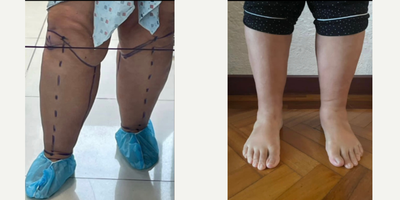
Hello,It does appear that you have a column-like look to your calves and ankles and if I can see in these photographs, it even looks like you have a little bit of early cuffing of the lateral aspect of the calves and ankles. If you also have symptoms of either pain or swelling, then this is definitely lipedema. Typically, it would not only be expected to occur in the calf and ankle area, but it usually involves the entire leg area that goes up to the groin area in a circumferential pattern. Calf and ankle liposuction itself is a very particular type of liposuction procedure that should be done in a highly specialized fashion. The way I go about doing it is to do the entire calf and ankle area as a unit three-dimensionally, all the way from the knee area down to the ankle to create the right type of three-dimensional shape. I do not believe it should be done in a piece-mail fashion in bits and pieces and corrected later on. That’s only from just a cosmetic standpoint, and from a lipedema treatment standpoint also, it needs to be done in a circumferential pattern, because with lipedema, there is almost always involvement in the anterior area of the calf and ankle too that must be done at the same time in one surgery. My recommendation to you is to find a specialist and a surgeon that has extensive experience with not only calf and ankle liposuction, but with lipedema too. It is important to pay attention to the pre care and post care and the surgery itself and to ensure it is done in a lymphatic sparing way. I wish you the best of luck in your care. Please contact my practice if you feel you have any further questions, thank you.
Asked By: Jennifer.chou
ANSWER
Hello Jennifer, I don’t feel that SculpSure really has any role in lipedema patients. Once a person is diagnosed with lipedema, it should be treated by other modalities rather than non-surgical fat reduction. I have SculpSure in my practice, but I would never utilize it for my lipedema patients. It is not the proper therapy. To begin with, I don’t think it will do much in terms of improvement. Secondly, it’s really going to miss a lot of areas in terms of the proper treatment of lipedema. Lipedema should be treated with proper comprehensive lymphatic-sparing liposuction by a specialist and expert. To conclude, I don’t think SculpSure is going to do anything harmful, but on the other hand, I also don’t feel it plays any role in the therapy for lipedema patients. I wish you the best of luck with your care. If you have any questions, please contact my practice.
Asked By: lorabell
ANSWER
Dear Lora,Smart Lipo is a tool that we use in liposuction and I use it myself in a specific way. Rather than paying so much attention to the tools that are being used, more importantly is the evaluation of the patient with lipedema. My experience with lipedema is almost always a circumferential pattern of distribution that goes all the way around. My feelings are just to focus on the hips, outer and inner thighs is not going to correct lipedema, number one from a disease treatment standpoint, secondly from a cosmetic standpoint. Lipedema really encircles the entire thigh, at least then goes down to the lateral thigh, anterior thigh and posterior thighs. I do a lot of revision surgery for lipedema, where it was targeted in certain areas such as inner or outer thighs, but it’s not the right approach because all of this lipedema fat is left behind and disproportion is created from a cosmetic standpoint. My preference is to approach it circumferentially. Is the doctor approaching it in a circumferential fashion? Secondly, lipedema is a complex disease, the surgeon needs to understand the pre and post care and also done in a lymphatic sparing way. Lymph sparing liposuction means to not damage the lymphatics. I strongly prefer to avoid general anesthesia, because the advantages including safety, recovery and more importantly, the results. General anesthesia can be done, it is not my preference for a number of reasons. General versus local does not guarantee that it is lymphatic sparing or not, it is where the surgeon stays in terms of the safe plane in the subcutaneous layer of fat. In terms of devices, there is a lot of discussion of this. We all know that the WAL (Water-assisted liposuction) has become very common with lipedema patients and has lymphatic sparing attached to it. I use the WAL as the first step in surgery, to put the fluid in, to hydro dissect and to numb the area. I then use an emulsification step, which is either VASER or a Laser (Smart Lipo) or sometimes both. I’ve used it for years in hundreds of patients and believe it’s safe to use in the right hands. Finally, I use PAL (power-assisted liposuction) as my primary sculpting tool, which mechanically further helps to release things. So, yes Smart Lipo can be used, but it is not what to focus on as the most important factor in the best result in a lipedema patient. I wish you the best of luck with your care. If you have any questions, I encourage you to contact my practice.
Asked By: debbi41
ANSWER
Hello Debbi,Lipedema is a very under-recognized fat storage condition that was identified in the 1940’s at the Mayo Clinic. It is among several fat storage diseases that we do learn about in medical school such as Dercum’s disease and Madlungs disease. Lipedema, however has been unfortunately ignored for many years, although with increased awareness that has started to change. It usually presents in puberty during teenage years and commonly runs in families. It tends to progressively gets worse throughout a person’s lifetime, usually very slowly. Although, many times it increases in activity of the condition itself with hormonal changes such as pregnancy, menopause or OB/GYN surgery. It is not responsive to diet or exercise. Common symptoms are usually pain, swelling, increased bruisability. There is a typical pattern to lipedema, a column like look to the legs from the groin area all the way down to the ankle area. The upper buttocks and hip area are often times involved as well as the upper arms and forearm area. It is non-responsive to diet and exercise and there seems to be an increased activity of it with certain dietary components such as gluten. Typically, gluten-free diets are recommended for lipedema patients along with either ketogenic of paleo diets. Compression therapy helps with the swelling, but doesn’t change the underlying process of the condition. As time goes on, there is an increased inflammation, increased scar tissue we call fibrosis that can eventually lead into later stages of lipedema and cause damage to the lymphatics, lipo-lymphedema. Properly done lymphatic sparing liposuction by someone that is extremely experienced with lipedema is the only real treatment that sets back lipedema. It gives an improvement not only in a cosmetic result, but actually symptom improvement and disease prevention. The current approach of using a form of liposuction is a safer and a better way to approach lipedema, but the proper surgery and technique is much more about the skills and understanding of the surgeon rather than exactly what particular device the surgeon is using. I wish you the best of luck with your care. If you have any questions, please contact my practice.
Asked By: sss920
ANSWER
Hello there,To diagnose lipedema, there are two factors that are most important. It is a clinical diagnosis and there are no blood tests for lipedema. It is based on two things, the pattern of distribution of the fat and secondly, the symptoms that go along with it. The pattern of distribution tends to be a circumferential pattern that goes all the way around and gives a column-like looks to the legs, that goes from the groin all the way to the ankles even to the calves and ankles. It also can be in the upper arms. The more important component is the symptoms that comes along with that which is pain, swelling and easily bruised. We look for family history as well, we call is autosomal dominant, an inheritance pattern which is passed on from parents to their children. In your particular case, you do have mild fullness of the entire leg from the groin area to the ankle area. It does look like this fat circles the entire legs all the way around. Your thighs are full as well as the anterior thighs as well as some cellulitic changes to the posterior thigh compartment. Your calves and ankles look like they have fullness all the way down also. The pattern of distribution of fat does seem consistent with lipedema and you would have very mild, early stage 1 lipedema. If you do have any of the symptoms, then it looks like you have stage 1 lipedema. I wish you the best of luck with your care. If you have any questions, please contact my practice.
Asked By: ThickGirl37
ANSWER
Hello and thank you for your question. It is a little difficult to tell from the photos you provided to determine if you have lipedema. There is more information that would be necessary to obtain. To begin with, I’d like to see better photographs of you that show the entire ankle area. Secondly, I’d like to understand the symptoms that you may or may not be having such as pain, swelling or increased bruisability. Third, do the types of legs you have tend to run in your family? Based on the photographs I am seeing, at a minimum, you have profound disproportion primarily in your outer thigh and buttock area. If I saw better photographs, I could get a better sense of whether that area itself should be targeted by itself or whether you should have the entire thigh area done circumferentially. If this is lipedema, that would be my preference as I have developed a circumferential approach to the legs in lipedema patients that I believe is better for a disease treatment standpoint as well as a cosmetic standpoint. If you don’t have lipedema and your primary disproportion is your outer thigh area, then that is the area to focus on with liposuction. My own fees are based on how long each surgery takes me. When I do an area of the outer thigh and buttocks, it is approximately is one hour surgery that is $5,000 surgeon’s fee. If I am doing the entire circumferential thigh area, one must understand that this is a very complicated way of approaching it as well as a long surgery, because of the surface area involved. This surgery typically takes me 4 hours and my fee for the surgery is currently $15,000. Please remember to seek a board-certified surgeon for your medical needs, especially when seeking treatment for this disease. I wish you the best of luck and please feel free to contact us for more information. Thank you.
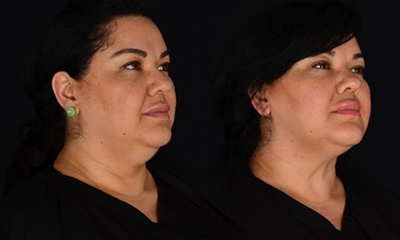
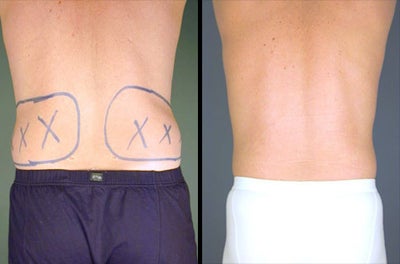
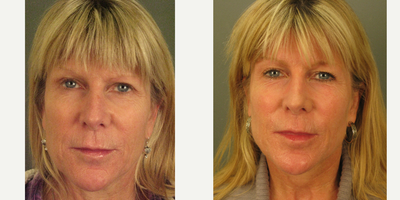
Dr. David Amron consistently delivers exceptional results in and revision procedures, with patients praising his attentive care, natural-looking outcomes, and transformative effects on their confidence and body image. His expertise in tumescent and traditional techniques enables him to address complex cases and correct prior surgical errors, restoring patients' self-esteem and satisfaction.