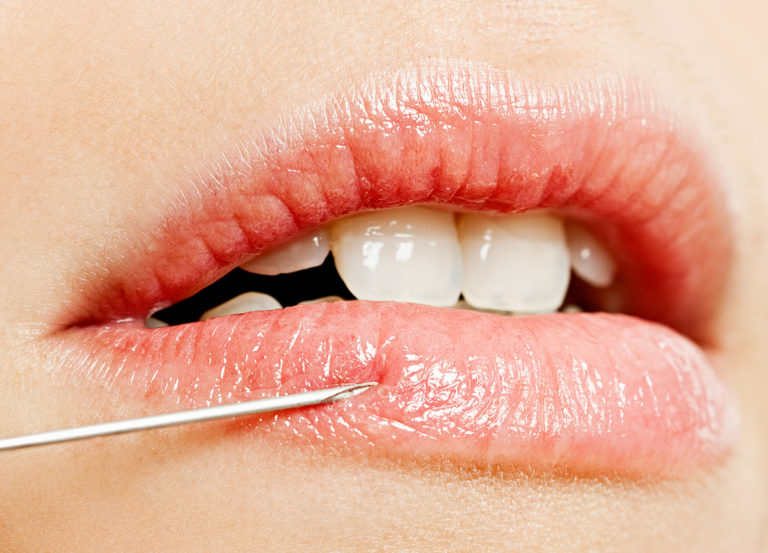
A pattern we see --and wish would go away-- is the self-injection of illegal, inappropriate or unknown materials used to plump lips, butt, or face.
We've read terrible butt augmentation stories, received pleas for help to remove injectable substances and seen requests for advice on self-administering Restylane. This week a site visitor posted the veritable icing on the cake: "I injected a L'oreal skin product into my face".
Why are people self-injecting?
It's hard to explain. Perhaps we're seeing a sign of the down economy, where self-injecting is viewed as a money saver. Greater accessibility is another theory; it's getting easier for contaminated materials to get into the public's hands (with disasterous side effects). This theory has merit:
Despite the down economy, cosmetic procedures continue to be a hot topic across the country as people research various treatments they may consider in the future. But does where people live affect what’s hot and what’s not in cosmetic makeovers? Our geographic based search data suggests the answer is “yes.”
Here are some highlights:
Did Victoria Beckham set off a new fashion trend in designer nipples? That's right, rather than cover or hide protruding nipples, the idea is to make them really stand out.
Posh Spice's outward display has the UK press speculating whether she has indeed enhanced her nipples.
Some suggest her protruding nipples are stick on nipples (inspired by Samantha from Sex and the City) vs. surgical augmentation.
We're wondering (yes, channeling Carrie Bradshaw here): are women who choose to accentuate their areolas making a sexy, liberating statement, or simply a fashion faux pas?
Plastic surgery trade shows are an eclectic mix of fascinating technology, mundane text books, and unusual items to decorate the doctor's office like brass figurines (that make the physician look....well, a bit intimidating!). 
The main theme for these events is to sell doctors on the latest products and services that attract new patients.
And given the consumer demand for plastic surgery before and after photos, it's fitting that the show floors have a number of companies offering “computer morphing” to depict before and after results.
Visualize your "after" cosmetic procedure
Morphing software has evolved to what are now highly realistic looking "afters" of yourself in 3-D such as a hump-free nose, smaller breasts, or higher cheekbones. Just like an architect can "fly" you through their design for your home addition, the surgeon now has the means to show you a highly realistic looking perspective of your body, post-surgery.
60 years ago, before we had cosmetic procedures like Botox, women wouldn't dream of openly discussing the latest beauty treatment: hair coloring.
That changed with the runaway success of home hair coloring kits:
In 1950 only seven out of every one hundred women colored their hair...In 1956, however, the introduction of a dyeing product called Miss Clairol brought hair coloring into the mainstream. Accompanied by a well-known advertising campaign that said "Does she or doesn't she? Hair color so natural only her hairdresser knows for sure!" source
With celeb confessions and greater usage, Botox stigma erodes
With over 90% of celebrities undergoing some form of cosmetic treatment, "confessions" to cosmetic treatments represent a vehicle to broader acceptance of procedures. Celebrities openly sharing their use of Botox include:.jpg)
The Associated Press recently released a poll regarding women's perceptions of their bodies and health in general. The survey found that approximately 50% of women in America have negative feelings about both their weight and their figure.
One of the more interesting results from the survey found that 25% have considered getting some type of cosmetic surgery, with a tummy tuck as the most desired treatment. Breast augmentations come in second.
Women appear to be looking for a quick fix instead of committing to long-term changes.
But is cosmetic surgery worth it?
Women want c-cup breasts, as suggested by a new survey of plastic surgeons who routinely conduct breast surgery. The majority (80%) of breast implants used in cosmetic surgery are 300 to 400cc in size, or, a small to full c-cup bra.
Breast implants: many more options than just breast size
While the size of the breast implant is of critical importance to a woman opting for breast implant surgery, there are a number of other decisions prior to surgery, such as the breast implant type or the placement of the breast implant.
Plastic surgeons responding to the survey, and reported in the March/April issue of Aesthetic Surgery Journal, reveal a number of breast implant surgery preferences by patients and doctors.
Breast augmentation options and preferences
The Mayo Clinic is famous for its cancer care as well as the architectural splendor of its 20 story Gonda Building.
Why spend so much on the building vs. patient care and cancer research? In the case of the Mayo Clinic, the architect's motive was for "the patients to feel a little better before they see their doctors."
A Harvard study found that indeed design matters to reducing patient stress—with one patient explaining, "It did not seem like a doctor's office when we went to Mayo. There was no tension." In fact, there is a lot of science that goes into the design of medical offices.
An article in the current issue (4/6) of Newsweek by Jessica Bennett discusses the increasingly young age at which girls are now starting to get into beauty products, and how this could potentially result in increasing interest in plastic surgery and/or other cosmetic treatments in their future. The most common cosmetic procedure for this age group today is laser hair removal, and according to the article, it’s safe to assume that additional treatments will be a given down the road.
It's not news that celebs like Debbie Harry (before, at right) admit to having plastic surgery for "business reasons". The may hold true for job seekers. Youthful looks might make the difference between employment and sitting at home in your PJs. But why?
The perception is that while employers are looking for experience, they're also looking for flexibility, new out-of-the-box thinking and that can-do attitude—traits that for some reason must just vanish with the onset of collagen loss and discolored skin. As a colleague recently said, "Well, I need to look on-trend—like I get what's going on".