Show more
Show more
Show more
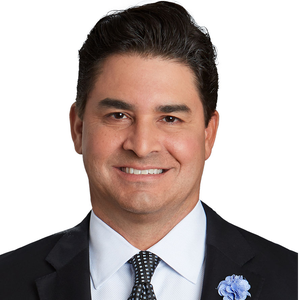
With a remarkable career spanning more than two decades in South Florida, Dr. Max Polo is a distinguished board-certified plastic surgeon, renowned for his commitment to enhancing individuals' natural beauty. His journey to becoming a prominent figure in Miami
Asked By: Reserved2111
ANSWER
This is an excellent but complicated question! Gardner syndrome is not an absolute contraindication to breast augmentation. However, certain patients with Gardner syndrome have an increased predisposition to desmoid tumors, which are believed to be potentially induced by surgical trauma, including in a few documented cases following breast augmentation. I would recommend that you consult with a geneticist or a specialist familiar with FAP-associated desmoid disease. Patients at high risk for developing desmoid tumors should probably avoid undergoing elective surgery. If you do not have an APC genetic mutation, a personal or family history of desmoid tumors or desmoid-type fibromatosis or any abnormalities on breast exam or imaging, then you likely would have very low risk. In such a case, if you elect to undergo breast augmentation, the Preserve' technique would be an excellent option because of its minimal tissue trauma.
Asked By: luna_moon7
ANSWER
When you've had a previous breast augmentation with implants above the muscle and subsequent explantation, it is not advisable to have a secondary augmentation using the Preserve' technique. There would be little benefit to doing a secondary augmentation with Preserve' because many of the structures designed to be preserved with this technique have been cut through with your primary procedure and do not regenerate. Also, the scar tissue from your primary procedure is in the same plane where the implant will be positioned with Preserve' and would likely cause complications with creating a precise pocket, which is critical to achieving an excellent long term result. The only benefit of doing a secondary Preserve' procedure in this case would be potentially avoiding general anesthesia. The safest approach for you would be to have a standard augmentation through your original incision, either above or below the muscle.
Asked By: Thoughtful191265
ANSWER
Radio frequency (RF) devices can effectively tighten skin by stimulating collagen production and promoting tissue remodeling. These non-invasive treatments use RF energy to heat the deep layers of the skin, encouraging a natural tightening effect over time. While results can vary depending on individual factors such as skin type and the severity of laxity, many patients experience noticeable improvements. However, for more significant sagging, surgical options like facelifts may be necessary to achieve desired outcomes.
Asked By: wrightylondon
ANSWER
A deep plane facelift is an advanced surgical technique that targets deeper facial structures for more natural and long-lasting results. Unlike simpler and less modern facelifts that primarily tighten the skin, the deep plane approach repositions the underlying muscles and tissues, addressing sagging and volume loss more efficiently. This technique provides a more youthful and refreshed appearance without the "pulled" look often associated with facelifts. Recovery time is comparable to other facelift methods, but the results are typically more enduring and harmonious.
Asked By: ani6767
ANSWER
A deep plane facelift is an advanced surgical technique that targets deeper facial structures for more natural and long-lasting results. Unlike simpler and less modern facelifts that primarily tighten the skin, the deep plane approach repositions the underlying muscles and tissues, addressing sagging and volume loss more efficiently. This technique provides a more youthful and refreshed appearance without the "pulled" look often associated with facelifts. Recovery time is comparable to other facelift methods, but the results are typically more enduring and harmonious.
Asked By: RealSelf Admin
ANSWER
Facelifts a generally not considered painful due to modern surgical techniques and effective pain management. During the procedure, patients are under anesthesia, so they feel no pain. Post-operatively, any discomfort is usually manageable with prescribed pain medication and subsides within a few days. Most patients describe the sensation as more of a tightness or soreness rather than significant pain. Our priority is to ensure your comfort throughout the process.
Asked By: Prettyboyroy
ANSWER
Facelifts a generally not considered painful due to modern surgical techniques and effective pain management. During the procedure, patients are under anesthesia, so they feel no pain. Post-operatively, any discomfort is usually manageable with prescribed pain medication and subsides within a few days. Most patients describe the sensation as more of a tightness or soreness rather than significant pain. Our priority is to ensure your comfort throughout the process.
Asked By: mngirl2024
ANSWER
The best way to turn your frown upside down is with filler injections. Another option is Botox; however, that has a potential complication of causing a crooked smile. If you want a more permanent solution, we can also improve marionette lines with fat transfer during a surgical procedure.
Asked By: Cute749923
ANSWER
The best way to turn your frown upside down is with filler injections. Another option is Botox; however, that has a potential complication of causing a crooked smile. If you want a more permanent solution, we can also improve marionette lines with fat transfer during a surgical procedure.
Asked By: creampuff123
ANSWER
When a tummy tuck includes muscle plication or repair of the rectus diastasis it is more painful than a simple skin excision procedure. Dr. Polo does a "Painless Drainless Tummy Tuck". He places two small catheters through the skin and beneath the two layers of muscle sutures. The two catheters attach to an On-Q pump filled with local anesthesia which automatically drips into the site, making the patient more comfortable.
Dr. Max Polo continues to receive overwhelmingly positive reviews for his expertise in various breast procedures, including , , , and . Patients consistently praise his professionalism, attentiveness, and the natural results he achieves. His procedures also receive high marks for minimal pain and quick recovery. Dr. Polo's staff is frequently mentioned for their friendliness and support.