
Steven A. Curti, MD, is a double board-certified, fellowship-trained facial plastic and reconstructive surgeon specializing in deep plane facelift and neck lift surgery, rhinoplasty, eyelid surgery, and comprehensive facial rejuvenation. He practices at L&
Asked By: peakdog
ANSWER
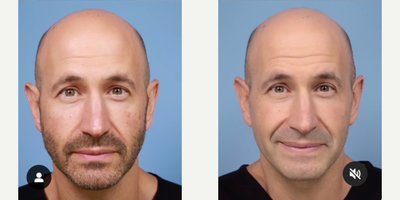
The answer to your question will depend on who you talk to and what they offer. In my opinion you would be unhappy with the results of non surgical treatments and are a great candidate for a lower face and neck lift. Given the signs of laxity and your anatomy I would recommend a deep plane face and neck lift which can be done under general anesthesia or twilight pending the anesthesiologist and your overall health. While this forum can help start the discovery process I would highly recommend setting up 2-3 consults with surgeons to get opinions and explore options.
Asked By: klatte
ANSWER
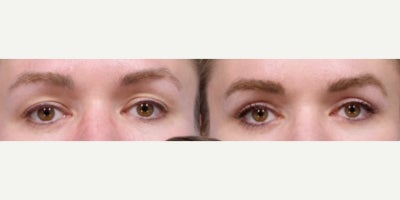
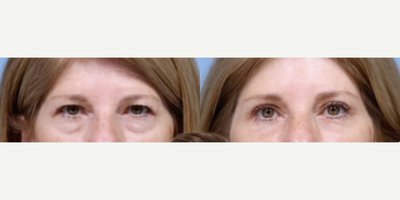
It is quite common to combine multiple procedures like a rhinoplasty, lower bleph and lip lift in one surgery. Depending on the complexity of the nasal surgery there are times when I would recommend separating the lip lift from the rhinoplasty but they can typically be done together. The reasons you listed - one downtime, less anesthesia/facility costs and shorter operating time are all advantages to that approach. I would recommend going on a few consultations to find a surgeon you are comfortable with.
Asked By: Jgb46
ANSWER
Based on the photos and limited information, it looks like you have thin skin laxity and facial volume loss. I have had good success with patients who have similar anatomy employing a combination of a deep plane facelift with some volume support, ideally through a fat transfer. This potentially may be an option for you, pending a thorough history and exam. Best start would be an in person consultation to see if you are indeed a good candidate.
Asked By: X_O_X_O
ANSWER
Generally, a facelift softens rather than eliminates the nasolabial folds. A deep-plane, extended-SMAS, or midface lift, when done well, with proper midface release, can make a meaningful impact on the NL folds by elevating descended cheek tissue. Even then, some fold usually remains because it is partly a normal fixed anatomical crease. If cheek-volume loss is also contributing, fat grafting or carefully placed filler may be considered alongside surgery. If you are considering a facelift I would consult with a few surgeons and ask about techniques and look at b/a photos.
Asked By: MaryTho
ANSWER
I think it is reasonable to consider excision and re-closure at this point. Microneedling can be an excellent treatment for scars, but with a hypopigmented scar that is two years old, it may be difficult to achieve much additional improvement. I believe your two best options are re-excision or medical tattooing, as you mentioned. I recommend consulting your surgeon to determine the most appropriate next step.
Asked By: Nurturing221002
ANSWER
As most of the surgeons on this site will tell you, it is very difficult to answer your question without seeing you in person to do an exam and get a better history. With that being said, the deep plane facelift is designed to release and lift the skin, fat and SMAS layer of the face. It is powerful at helping lift sagging tissue especially in the jowls and soften the nasolabial folds. I would caution that asymmetry on the face is very normal and is not something that is often corrected by facelift surgeries. Based on the limited information and photo I think it would be worth a consultation with a surgeon to review your options.
Asked By: Robinsd999
ANSWER
There are several different types of face and neck lifts. Mini lifts can be done under local anesthesia quite comfortably but don't deliver the same results as a more involved deep plane face and neck lift which is typically done under general or "twilight" anesthesia. Whether or not a mini or true deep plane facelift is best for you is up to your anatomy, goals and surgeons expertise. With that being said, in my experience, without a true deep plane release you will not be able to lift heavy cheeks. I would recommend consulting with a few different surgeons and reviewing their techniques and looking at their before and after pictures to help make this decision.
Asked By: Apple_Sky
ANSWER
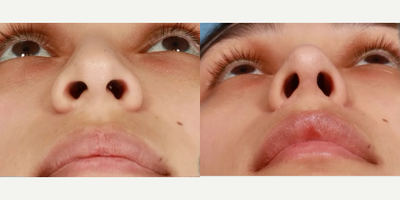
Gull-wing lip lifts place the incision (and scar) right at the vermillion border which is the junction of the red and white lip. The bullhorn technique places the incision (and scar) in the junction between the nose and face, just at the base of the nose in the natural shadows. It is true that the traditional bull horn lip lift preferentially lifts the center of the lip more than the corners so people who have thinning of the lips toward the corners can sometimes get an exaggerated central look. However, the bullhorn incision can be tailored to each individuals lip shape with careful measurements and patient goals as a guide. Even designing the incision to take more laterally, I will still sometimes combine the subnasal lip lift with a corner lip lift. This avoids a scar all the way across the vermillion border and still achieves a natural appearance to the upper lip shape. Each surgeon is different and they tend to use the techniques they know best and are most comfortable with. Without examining you in person it is hard to offer an opinion on your specific situation. I hope this helps, Steven Curti, MD
Asked By: gigigirl14
ANSWER
Traditional incisions that were placed behind the temporal tuft in the hair line hide well, but tend to pull the sideburn into the scalp and can give a very "operated" look. Most current surgical techniques use an incision that follows the sideburn a few hair follicles in. While these can be visible upon close inspection, with a good closure technique involving no/minimal tension and proper suture placement the scars can be almost invisible. This is a question that you should ask your surgeon and be comfortable with prior to surgery. I like to show pictures of cases and exactly what the incisions look like during consultations.
Asked By: Iamtherealslimshady
ANSWER
It takes around a year for scars to completely mature. Until that time the scar can change. From what I can see in the pictures, there is still some redness and a raised component to the scar that may continue to improve. I would speak to your surgeon about scar management but if you are not currently using silicon gel or patches and good sun protection I would start there. Beyond those, dermabrasion or lasers all have some efficacy with camouflaging scars.