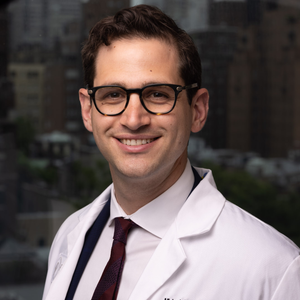
Dr. Michael J. Stein is a renowned double-board certified plastic surgeon with a practice on Park Avenue in Manhattan. His practice focuses on breast and body contouring surgery. He has developed a national reputation for his exceptional results and patient ca
Asked By: Gorgeous198685
ANSWER
This is a difficult question to answer without seeing you in person and knowing more about your medical history. Massive weight loss patients are common in my practice. These patients usually require multiple stages to allow adequate time to heal and keep the surgeries shorter to decrease the chance of complication and the risk of a DVT/PE. I would usually recommend starting with the trunk (tummy tuck vs fleur de lis tummy tuck vs belt lipectomy). This may or may not be grouped with liposuction of the abdomen and flanks. The next step I usually do the breasts and arms together The last step I usually do the thighs. This may vary from surgeon to surgeon but from a safety perspective its usually advisable to perform these procedures in a staged fashion.
Asked By: looking4mybikinibody
ANSWER
You have excess skin and fat of your abdomen and excess fat of your back. You also have breast ptosis (the nipple is below the optimal position on your breast mound). I would recommend 360 liposuction, tummy tuck and breast lift. I think this would best address your concern.
Asked By: coldroad
ANSWER
From a physical examination standpoint you are a great candidate. You have excess abdominal skin and breast ptosis (droop). This is the perfect candidate for a mommy makeover surgery. Your bilateral PEs are concerning as they put you at higher risk for DVT/PE after surgery. This requires workup from a thrombosis specialist. They will order tests to see if you have a congenital coagulopathy (inherited condition that makes you clot more often). Once they do a thorough workup they will make recommendations about your surgical candidacy and your management around surgery. Communication between surgeon and thrombosis specialist is important in your case.
Asked By: Jubilant145376
ANSWER
Every surgeon will have a slightly different cutoff. The longer the surgery, the more procedures done and the heavier the BMI the higher chances of complications after surgery. It is therefore best practice to keep your BMI under 30 My practice is to keep all procedures less than 6 hours and for mommy makeovers I require my patients to have a BMI of 30 or less. A breast lift with implants and liposuction/abdominoplasty usually takes 4-6 hours.
Asked By: Luvbug0909
ANSWER
Great question and you are indeed boarderline. Your nipples are positioned above your breast fold so you have no ptosis (droop). Usually this means that you do not need a lift. In your case however there is mild asymmetry with your breasts so I would probably use a donut incision (also called circumareolar incision). This will leave a hidden scar around your areola and allow me to place the implants while simultaneously raising the areola slightly and improving your symmetry.
Asked By: MamaKeyz
ANSWER
The feeling you describe "hot, tight, stretching" 5 years after tummy tuck is atypical. Ask your surgeon if you had a rectus diastasis repair. This tightens the core and changes the way your trunk feels in certain positions but you usually get used to this and at 5 years it should not bother you. Massages are unlikely to help 5 years after surgery and you do not necessarily need more surgery. I would suggest seeking a board certified plastic surgeon in your area to examine you in person as it is difficult to offer recommendations without performing a physical examination.
Asked By: tashaharg
ANSWER
The principles of fat transfer or all the same. I cannot comment on the airsculpt method as I am not familiar with it but in general all fat transfer involves making tiny incisions to pass a liposuction cannula, suck out fat, process it to "purify it", and then inject it into another area to improve volume and shape. Adjunct technologies with liposuction either help "melt" the fat to make it easy to extract, or heat the collagen to offer additional contraction following fat removal. The type of fat processing, the vascularity of the recipient area, the amount of trauma to the fat during extraction and after implantation, whether you smoke or not, and your overall health are all factors that effect fat survival rates.
Asked By: lindyshellp
ANSWER
It is difficult to make an assessment without seeing you in person. Having said that, there are a variety of reasons for a persistent lower abdominal bulge after surgery- one of them being rectus diastasis recurrence. The number of layers of plication (tightening), the type of suture used, and the amount of fascial tightening during surgery matter. Persistent laxity of the fascia from suture failure or inadequate fascial advancement is one reason for a lower abdominal bulge following abdominoplasty. This is not to say that this is the case in yours- and I think overall you have a very nice result- but I would recommend seeing a board certified plastic surgeon to evaluate you in person and see if this is the case.
Asked By: Joyce_angel1
ANSWER
This is a very common scenario that I see often in my practice. It is difficult to offer a recommendation without assessing you in person however judging by your picture I would offer you liposuction alone. If you have a rectus diastasis the only way to flatten the tummy is to repair it through a tummy tuck incision. Your skin excess appears minimal however, so in the absence of rectus diastasis, liposuction can improve your trunk contour significantly.
Asked By: Easygoing237008
ANSWER
When someone gains weight they don't develop new fat cells but instead their existing fat cells increase in size. It could be that during your initial liposuction technique enough fat cells were leftover that your weight gain allowed them to hypertrophy (grow) limiting your overall result. Exercise, diet and, eventually(if needed), revision liposuction can improve your overall result.
Dr. Michael J. Stein consistently delivers exceptional surgical results and builds strong patient relationships through attentive care and accessibility. Patients across multiple procedures including , , , , and praise his meticulous technique, aesthetic judgment, and warm bedside manner. His commitment to patient communication and post-operative support creates lasting confidence and satisfaction.