Florida Plastic Surgery Group - Jacksonville
14546 Old St. Augustine Rd., Ste. 407, Jacksonville, Florida, 32258
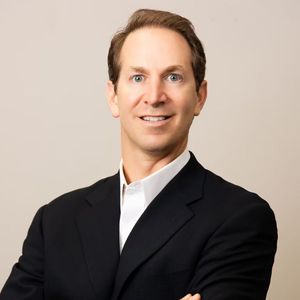
Board Certified Plastic Surgeon
Dr. Michael Fallucco hails from St. Louis, Missouri, and now makes the beautiful state of Florida his home. With over 17 years in the medical field, he is recognized by his peers as being among the most accomplished plastic surgeons in the region.


Asked By: Paradise5998
ANSWER
Thank you for sharing your experience, this is a common and understandable concern after implant reconstruction. That persistent heavy, sagging feeling you describe in the left breast, especially noticeable without a bra can sometimes be due to pocket laxity, asymmetry in implant positioning, or weakened support from the surrounding tissue. After a mastectomy and implant placement, particularly over time, the skin and internal support structures (like the capsule or muscle) on one side can stretch more than the other, leading to a "bottomed-out" or lower-positioned implant. Even after implant replacement, if the underlying pocket wasn’t revised or tightened during surgery, the same issue can recur. Another possibility is capsular stretch or thinning of the soft tissue envelope on that side. This can happen after implant rupture, as the body responds differently to leaked silicone and may lead to changes in tissue integrity over time. If your surgeon didn’t note any complications during the replacement surgery but you still feel and see a difference, you might consider a second opinion from a plastic surgeon who specializes in complex breast revision. Imaging (like ultrasound or MRI) and a clinical exam can help determine whether the implant has dropped, rotated, or if the pocket needs surgical adjustment (e.g., capsulorrhaphy or internal mesh support). In short, what you're experiencing is not uncommon, and while your implants are new, the surrounding tissue and pocket dynamics may need to be addressed to restore symmetry and comfort. You deserve to feel balanced and at ease, don’t hesitate to explore your options.
Asked By: kassie_s
ANSWER
Yes, you can absolutely get round implants at your exchange surgery even if your surgeon placed teardrop (anatomical) expanders initially. The expanders are just temporary devices designed to stretch the skin and muscle; the final implant shape can be different based on your aesthetic goals. Many patients start with teardrop expanders because they mimic a more natural breast shape during expansion but then choose round implants later for fuller upper pole volume or a different look. Regarding the issue with one expander sitting higher and migrating toward your armpit, it’s important to address this with your surgeon. Asymmetry in expander position can cause visible differences in breast shape and size, which you’re already noticing. In many cases, some degree of adjustment can be made during the exchange surgery itself, especially if the pocket needs revision to center the implant better. However, if the expander is significantly malpositioned or causing discomfort, your surgeon might recommend intervention sooner. It’s best to discuss this concern promptly with your surgeon. Sometimes minor adjustments can wait until exchange, but if the position is causing problems or risks tissue issues, earlier correction may be necessary. Open communication will help ensure you get the best possible outcome at exchange.
Asked By: 800plus
ANSWER
Great question! Breast tissue expanders are most commonly filled with saline because saline is safe, easily adjustable, and well-tolerated by the body. Saline expanders allow gradual filling through a valve, which helps stretch the skin and muscle gently over time in preparation for the permanent implant. That said, there are air-filled tissue expanders available, but they are much less commonly used. Air expanders can be lighter and may provide some advantages in specific clinical scenarios, but they are not as widely adopted because air can be more difficult to control and may have risks related to air embolism or leakage. Overall, saline remains the standard choice for tissue expansion due to its safety profile, ease of monitoring, and surgeon familiarity.
Asked By: 2jules
ANSWER
Thank you for your question and for sharing your concerns. Using a castor oil pack over silicone breast implants is generally considered safe and should not cause any damage or breakdown of the implants themselves. Silicone implants are designed to be very durable and resistant to external substances, including oils applied topically. Castor oil penetrates the skin’s surface but does not reach or affect the implant material beneath. That said, your increasing chest muscle neuropathy and discomfort warrant careful evaluation. Neuropathy after mastectomy and reconstruction can result from nerve irritation or injury during surgery, and while it is not typically a sign of capsular contracture, the two conditions can sometimes overlap symptomatically. Capsular contracture usually presents with firmness, tightness, or visible distortion of the breast rather than nerve pain or neuropathy. I recommend that you follow up promptly with your plastic surgeon to assess your symptoms thoroughly. They can perform a physical exam, and if needed, imaging studies such as ultrasound or MRI to evaluate for capsular contracture or other complications. Managing neuropathy may require specific treatments such as physical therapy, medications, or nerve blocks, depending on severity. Using castor oil topically is unlikely to harm your implants, but your new symptoms should be evaluated by your surgeon to rule out capsular contracture or other issues and to guide appropriate treatment.
Asked By: Modest325216
ANSWER
Thank you for your thoughtful question, this is a concern I hear often from patients facing unilateral mastectomy with smaller breast sizes. The good news is that it is possible to maintain a small breast size after mastectomy, including using implants in the range of 75–80cc if that matches your natural breast volume. Advances in implant technology mean there are very small, low-volume implants available that can help achieve good symmetry without drastically increasing size. However, achieving perfect symmetry can be challenging when one breast is reconstructed and the other remains natural, especially if the natural breast is quite small. Often, the reconstructed side may require a slightly larger implant to match the shape and projection of the natural breast, which is why some surgeons suggest larger sizes on the mastectomy side paired with volume adjustments (or reductions) on the natural side. But this doesn’t mean you have to go “dramatically” bigger if your goal is to stay small, it really depends on your individual anatomy and what your surgeon can achieve through pocket placement, implant selection, and possibly minor adjustments on the opposite breast. If you’re comfortable with your natural breast size and prefer to stay within that range or even smaller, it’s important to communicate that clearly with your surgeon. Some patients choose to undergo procedures on the opposite breast, like a lift, reduction, or even a small implant, to achieve better symmetry without increasing overall size. Ultimately, the goal is to tailor the reconstruction to your preferences, not societal expectations. So, yes, an implant around 75–80cc could very well “do the trick” depending on your chest dimensions and soft tissue, and there are options to maintain a small, natural profile after mastectomy. It’s absolutely possible to stay small, and your surgical team should work with you to respect that priority.
Asked By: Generous364513
ANSWER
Thank you for sharing your detailed history and goals. Given your current implant dimensions 3.5 cm base diameter and 6.4 cm projection and the fact that they are partially under the muscle, moving to the Mentor Boost with a base diameter of 14.4 cm and projection of 6.6 cm represents a modest increase that should be well tolerated. The slightly larger base diameter will require some adjustment of the implant pocket to accommodate the wider footprint and help achieve the closer cleavage you desire. Since the projection increase is minimal, the overall profile won’t change dramatically, and the high-profile, smooth, round design of the Boost implant is a good choice to maintain a fuller, more augmented look, which aligns well with your preference for a “fake” appearance rather than a natural one. From a surgical standpoint, your size increase and implant choice seem reasonable and achievable, assuming your soft tissue envelope and chest anatomy can accommodate the slightly larger implant without undue tension. We would carefully evaluate pocket modification during surgery to ensure proper positioning and symmetry while minimizing complications. Overall, this plan is consistent with your aesthetic goals and prior surgical history.
Asked By: Funny158490
ANSWER
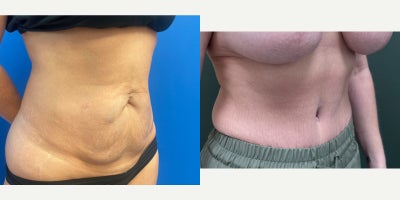
Thank you for your thoughtful question, you’re absolutely right to recognize that much of the online discussion surrounding tummy tuck recovery often includes experiences from patients who also underwent liposuction. In your case, having achieved a low body fat percentage and presenting primarily with redundant skin rather than excess fat, your surgeon made a reasonable decision to proceed with an extended abdominoplasty and muscle repair without liposuction. This can indeed have implications for your recovery experience. Generally speaking, recovery without liposuction tends to be somewhat more straightforward. Liposuction introduces additional trauma to the tissue, creating more inflammation, swelling, bruising, and often a longer-lasting sense of soreness or sensitivity in the treated areas. Without liposuction, the body is not dealing with the same level of fat emulsification, suction trauma, or lymphatic disruption, which may translate to less overall swelling and potentially a faster resolution of discomfort. That said, it’s important to keep in mind that the muscle repair component of your procedure still represents a significant aspect of recovery. Tightening the rectus muscles after weight loss or pregnancy often results in core tightness, pulling, and discomfort with movement, this part of the recovery is generally independent of whether liposuction was performed. Swelling can still occur as part of the normal healing process, particularly in the lower abdomen and flanks, though the absence of liposuction may reduce its intensity and duration. In summary, while you may have a slightly easier recovery course in terms of reduced swelling and soft tissue soreness compared to patients who also had liposuction, you should still be prepared for the typical recovery timeline associated with full abdominoplasty and muscle plication. Listening to your body, following post-op instructions carefully, and giving yourself adequate time to heal will be key to a smooth recovery.
Asked By: mariefl
ANSWER
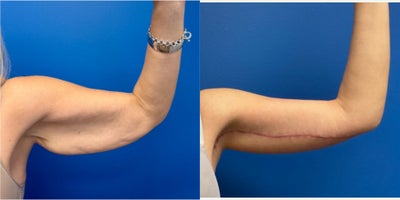
Combining liposuction with an arm lift (also known as brachioplasty) can offer comprehensive improvement for individuals looking to address both excess fat and loose skin in the upper arms. The main advantage of doing both procedures together is that it allows for more complete contouring liposuction removes unwanted fat deposits, while the arm lift tightens and removes sagging skin, resulting in a smoother and more toned appearance. For many patients, this combination leads to more satisfying and long-lasting results than either procedure alone. Another benefit is convenience: undergoing both at once means a single recovery period and anesthesia exposure rather than two separate surgeries. On the downside, combining procedures can slightly increase surgical time, recovery demands, and the risk of complications such as swelling, bruising, or fluid buildup. One of the biggest considerations with an arm lift is scarring; the procedure typically leaves a visible scar along the inner part of the upper arm, although this usually fades over time. Some patients may also experience temporary numbness or changes in skin sensation. Additionally, good skin quality and realistic expectations are important, if the skin is significantly loose or has poor elasticity, liposuction alone may not give the desired results without also removing excess skin. Overall, while combining liposuction with an arm lift can be highly effective for the right candidate, it's important for anyone considering it to weigh the potential benefits and risks and consult with a board-certified plastic surgeon to determine the best approach for their goals.
Asked By: marian1929
ANSWER
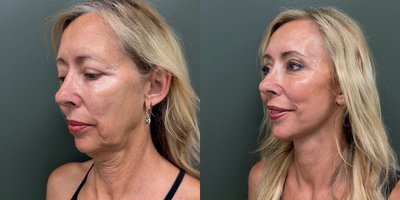
Thank you for reaching out, and I’m truly sorry to hear that you’ve been experiencing ongoing pain and discomfort since your procedure. That is understandably distressing. While I was not involved in your surgery and cannot offer a definitive diagnosis without a full evaluation, I can share some general information that may be helpful. Persistent burning pain and palpable nodules in the area you described could potentially be related to a foreign body reaction, including suture-related granulomas. Permanent sutures placed near the Lore’s fascia can sometimes cause irritation or even neuralgia if they are close to sensory nerves or if a reaction to the material occurs. It is possible that what you're feeling are granulomas, and in some cases, these can cause or contribute to pain. Alternatively, irritation of a sensory nerve in the region (such as the great auricular nerve) might also explain the burning sensation. Both scenarios deserve further evaluation. Given that you're continuing to experience symptoms 21 months post-op and haven't received a clear explanation or follow-up from your original surgeon, I would strongly encourage you to seek an in-person consultation with another board-certified plastic surgeon, ideally someone with experience in revision neck surgery or post-surgical nerve issues. A thorough physical exam and possibly imaging (e.g., ultrasound) might help determine whether the sutures are contributing and whether removal or other treatment is indicated. You should not have to live in chronic discomfort. Please don’t give up on seeking care, there are options, and you deserve a proper evaluation and treatment plan.
Asked By: buglesalmoncat
ANSWER
Board-certification is there for a reason to ensure surgeons meet agreed upon standards and are providing safe care for their patients.
Dr. Michael A. Fallucco is highly regarded for his expertise in plastic surgery, particularly in and . Patients consistently praise his professionalism, skill, and compassionate care throughout the entire process, from consultation to post-operative care. His ability to deliver natural-looking results and his attentiveness to patient concerns have earned him numerous 5-star reviews and strong recommendations.