The Center for Cosmetic Surgery - Denver - Cherry Creek
501 S. Cherry St., Ste. 900, Denver, Colorado, 80246

I am a fellowship-trained, board-certified surgeon who strives to provide patients with the latest cutting-edge techniques and results that reflect my extensive training. I know that today’s patients do their homework: they have seen videos, listened to podcas

Asked By: perezsallal
ANSWER
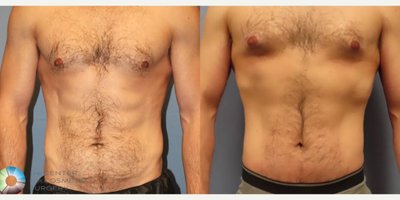
There are some important characteristics that are different between men and women that can significantly impact the result. However, your specific characteristics may be even more important. If your abdomen looks like a "basketball," it could be due to a number of reasons that a plastic surgeon would better explain during a physical examination. The main limiting factor that it could result from is an excess of intra-abdominal (visceral) fat, which is fat that surrounds the internal structures of the abdomen, like the intestines, stomach, etc. If it is simply fascial laxity or looseness of the architecture of the abdomen, this is frequently corrected with rectus fascia plication, which will support the abdomen. One of the major limitations that men have when compared to women's tummy tucks is that men have a much narrower pelvis. This frequently leads to difficulty in achieving a natural transition site from the abdomen to the pelvis. In women, wider hips and pelvic structures allow that transition to be hidden more appropriately. Sometimes, a long vertical incision from the breast bone to the pubic area (fleur-de-lis tummy tuck) can be helpful because it can narrow the abdomen to prevent significant step-off deformity between the abdomen and pelvis with the tradeoff of having a very large and difficult-to-hide-scar. In a traditional tummy tuck or even a lower body lift, there is no reduction in the side-to-side width of the abdominal skin-- only up-and-down, thus it can be difficult to achieve the tighter diameter that the pelvis has in men. I hope this helps.
Asked By: aslaniRound2LDN
ANSWER
Multiple factors play into the final result of a tummy tuck procedure. As you alluded to, one of the most important is pre-existing anatomical characteristics. For example, you have a narrow waist and wider hips with an hourglass appearance. You are very likely to achieve a very nice result from a tummy tuck. Patients who have narrower hips or wider abdomens frequently will not be able to achieve the same result that you might. It is certainly true that adjunctive procedures such as liposuction can help achieve a tightened waistline; however, in my opinion, your pre-operative anatomy plays a more significant role. Another good example is that men who have lost significant weight have a much narrower pelvic structure. It is more difficult to achieve a straight across waistline without a long vertical (fleur-de-lis technique) incision due to a mismatch between the width of their abdomens and the width of the pelvis. I hope this helps.
Asked By: SiliconeSongbird
ANSWER
You are a great candidate for a traditional tummy tuck. What you're seeing is the looseness of the tissues between your ab muscles with a bit of excess skin (diastasis recti). I would usually recommend at least 6 months, but more commonly, at least a year after having a child before having a tummy tuck, though longer may allow for more retraction of the skin. Don't forget about the enormous amount of work a child under 1 year old takes and decide whether recovery from a tummy tuck is something you want to undertake at the same time.
Asked By: Ninabina75
ANSWER
I would not recommend a mini tummy tuck to address this problem. The major limitation of a mini tummy tuck is that it does not adequately address skin laxity above the umbilicus. While a mini tummy tuck does address that lower area, the discrepancy between the area from the belly button to the pubic area compared to the area above the rib cage is unlikely to be flattering. I would recommend a traditional tummy tuck with umbilical transposition for this patient. I would also recommend tightening your muscles. I understand you did not have children, but it does appear that you have fascial laxity in that area, leading to a central "pooching" of the abdominal tissues. However, tightening the muscles is usually the most painful and difficult to recover from. Therefore, you could consider a traditional tummy tuck without muscle tightening, resulting in a much faster recovery. A 2-week window is inadequate for full recovery if your job is very physical. Contact us at The Center for Cosmetic Surgery for more information and a consultation!
Asked By: Marie625
ANSWER
I am curious about what caused that excess skin and contour abnormality in the area just above the belly button. That looks like scar tissue, either from a previous surgery, trauma, or liposuction that came too close to the skin surface. There is also contour irregularity below the belly button, which looks like post-liposuction results. The best technique depends on the quality of those tissues. Are they firm? Soft? Tethered to the underlying tissue? Is that tissue extremely thin? Most likely the best way to at least partially address this issue would be either a traditional tummy tuck or a reverse tummy tuck. A mini will not address this issue adequately.
Asked By: ascend
ANSWER
It is difficult to tell from a single photo, but this would be best improved with a traditional tummy tuck. A mini tummy tuck will inadequately address the bulging above the umbilicus, leading to poor results. The length of the scar from hip to hip is dependent on the amount of skin to be removed. A frontal photo would help to determine the quality of the abdominal tissues and the anticipated amount of skin that can be removed.
Asked By: woffaw
ANSWER
Please follow the post-op instructions of your plastic surgeon as it pertains to exercising. In my practice, however, I am comfortable with my patients easing back into exercise at 4 weeks post-op. Start back any exercises as if you have never done them before and let your body be your guide - if it hurts/pulls/burns, stop.
Dr. Matthew D. Freeman is highly regarded for his expertise in , , and . Patients consistently praise his professionalism, attention to detail, and the exceptional results he achieves. His ability to communicate effectively and make patients feel comfortable and informed throughout the process is frequently highlighted. His dedication to patient care and satisfaction is evident in the overwhelmingly positive reviews.