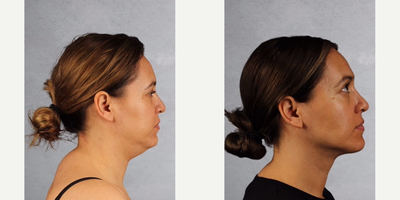
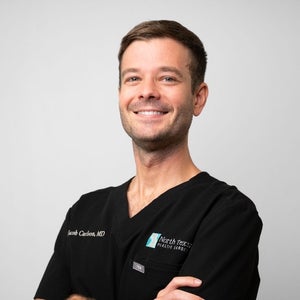
Dr. Jacob Carlson grew up in Arkansas, where he attended Little Rock Catholic High School. After graduating as the valedictorian of his class, he enrolled in the Medical Scholars Program at Saint Louis University. He graduated summa cum laude with a major in B
Asked By: cassyme
ANSWER
Liposuction 360 and a tummy tuck are two procedures that are very commonly combined. Liposuction to the back should be included with the Liposuction 360, so you're not really adding on any time with that. A brachioplasty can add an hour or so to a surgery, so it is reasonable from a time perspective to do all of these procedures together, but I would encourage you to make sure that this is being performed in an accredited facility. A lot of surgeons would also require patients having this combination of procedures performed to stay overnight at the facility to be monitored. At the very least, you should have frequent checkups with the surgeon following the surgery if you were to be discharged home on the same day as surgery.
Asked By: Flower43
ANSWER
I think all of the options that have been presented to you are reasonable. A full abdominoplasty would allow the surgeon to remove the loose skin from the abdomen, +/- plicate the abdominal wall if needed, allow the belly button position to stay the same but not have the hooded appearance. The trade off here is the longer abdominoplasty scar, and you might require a small vertical incision at the bottom-center aspect of the tummy tuck, just because the surgeon might not be able to cut out all the skin from the tummy tuck incision to above the belly button. A reverse tummy tuck is reasonable in the appropriate patient. Those are patients who have mostly skin laxity above the belly button. This technique is also better suited for patients whose inframammary folds extend closer to the center of the chest, because we try to conceal the incision for this technique at the inframammary fold. If the inframammary folds are too far apart, a reverse tummy tuck can lead to bunching of skin between the breasts, which doesn't look great. With a reverse tummy tuck, it is also technically difficult to perform muscle wall plication, so I would also take that into consideration. The umbilical float technique is also a reasonable approach in your case, because the skin excess of the central abdomen isn't a lot. Your belly button would be move down a little bit, but you would only have the abdominoplasty scar along the bikini line (no incision around the belly button and no risk of needing a vertical incision).
Asked By: coxysue
ANSWER
Based on your photos, it looks like there is really only an excess of skin rather than an excess of skin and subcutaneous tissue. I think an abdominoplasty alone would give your a very nice result, because that would allow the surgeon to remove the excess skin +/- plicate the abdominal wall. I don't see areas of significant subcutaneous excess that would necessitate liposuction. In terms of the standard/full abdominoplasty vs. extended, my gut instinct is that a standard/full abdominoplasty would be adequate to accomplish this. An extended abdominoplasty is good for removing excess tissue in the "love handle" region and, to a lesser degree, lifting the outer hips a little bit. A picture of your back, including the hip area, would be more helpful for making that determination more confidently, but again, I don't see anything in your pictures that makes me think an extended abdominoplasty would be needed.
Asked By: Awesome917247
ANSWER
This is a great question. Practicing in Miami, we have a lot of patients who come from out of town to have surgery. I require my patients from out of town to stay here AT LEAST one week after surgery. For a case such as yours, that allows patient to complete a few sessions of lymphatic massage, allows me to see them a few times after surgery, allows us to remove drains. And, most importantly, it gives me the opportunity to make sure that patients are recovering appropriately before they travel back home. The risk for a blood clot (DVT) after liposuction 360 isn't quite as high as an abdominoplasty, but the risk isn't 0%. Prolonged immobility (such as being on an airplane or riding in a car) is a risk factor for blood clots in everyone, not just a surgical patient. So, in addition to waiting at least a week, I also have my patients walk up and down the aisle of the airplane, or get out of the car and walk for a few minutes, at least once an hour during the travel if they are returning home any time in the first three weeks after surgery. Hope your surgery goes well, and safe travels!
Asked By: UlaSip
ANSWER
If you were my family member, I would recommend seeking an in-person consultation with at least one other board-certified plastic surgeon. Based solely on the numbers you provided in your description, using Preserve for your case wouldn't be my first recommendation. With a skin pinch less than 2cm, you are at a higher risk of having palpable or visible rippling of the implant after surgery. Based on the photos you submitted, I would likely recommend using the same size implants or possibly a slightly larger implant on the left side. There might be something that I'm not seeing that your surgeon was able to see during his/her in-person assessment, but it never hurts to get a second opinion.
Asked By: Exciting163099
ANSWER
This is a great question. Practicing in Miami, I have a lot of patients who come from out of town. I require my patients to stay here AT LEAST one week following surgery to ensure that they are recovering well before returning home. One possible complication following the type of surgery to described is a blood clot (Deep Vein Thrombosis). There are things that can be done during and after surgery to reduce the risk of a blood clot from forming, but one thing that can contribute to the formation of a blood clot is immobility (such as sitting down for a long period of time, like being on a plane or riding in a car). To help reduce the risk of this happening in my patients, I typically provide them with a blood thinning shot which they start taking after surgery. I require them to be up and walking the same day as surgery. And, if they are returning home 7 days after surgery, they absolutely have to stand up and walk in the aisle of the plane, or get out of the car and walk for a few minutes, AT LEAST once every hour during the trip. To answer your question more directly, seven days is a relatively safe answer, but if you have the option to wait until 2-3 weeks after surgery to take a flight, that would be more ideal.
Asked By: Awesome327259
ANSWER
Thank you for your wonderful presentation. The level of detail was superb! I would anticipate that the areas of depression are likely due to volume deficiency in those specific areas. Filler would be a temporary solution. Fat transfer would likely yield a more permanent solution. It wouldn't require a lot of fat to accomplish it, but it would require an additional procedure.
Asked By: mrs.401
ANSWER
Silicone and saline implants are both reasonable options. Some people opt for one over the other based on various concerns - cost, rupture rate, rippling, etc. If you are considering having an augmentation, I would recommend making a list of your concerns and looking at which of those implant options makes you feel most comfortable. You did not include your age in your description, but based on your photos, you appear to be young. I mention that because, regardless of which implant type you choose, you are more than likely going to have to do something with the implants again at some point in your lifetime. You might want to replace them, remove them, do a lift in the future, etc. That being said, the implants that are made currently are quite durable. One of my mentors used to tell his patients 'you are probably going to want to change them before you HAVE to change them.' With respect to imaging, ultrasound detection of a rupture is somewhat user dependent compared to MRI, but in my experience the vast majority of ultrasound technicians are trained very well and can identify signs of rupture and capsular contracture at a high rate.
Asked By: leahliany
ANSWER
It sounds like you and your surgeon are taking the necessary precautions. Involving a hematologist in your case is an absolute must. I would agree with the management plan that you have laid out above. As you stated, your pulmonary embolism was provoked by your pregnancy. You are now planning for an elective surgery with you body in a very different condition than what you were going through during your pregnancy. Using TEDs/SCDs during surgery is another measure to reduce the risk of anything happening with respect to developing a DVT. On top of all that, the anticipated time under which you will be under anesthesia is relatively short. The odds of you developing a blood clot during this procedure, especially when you body is not under the same hormone levels as it was during pregnancy, is very low, and it sounds like you guys are taking all of the appropriate steps to make that risk as low as feasibly possible.
Asked By: leahliany
ANSWER
Seeing as how you developed the blood clot during pregnancy and were found not to have a genetic clotting disorder, the blood clot probably developed as a result of the hormonal changes your body was going through during pregnancy. As you said, thankfully being on lovenox during your subsequent pregnancy helped prevent a recurrence of this issue. Since you are now a few years out from your most recent pregnancy, your body has had the chance to return to its 'baseline' and is not being impacted by as many hormonal fluctuations as occur during pregnancy. To be extra cautious, you could find a plastic surgeon who operates in the hospital setting so that they could manage a DVT/PE if this same issue were to happen again. I think that the likelihood of you having a recurrence of this issue for a ~1 hour surgery while not being pregnant is already very low, but to be extra cautious, having it performed at a facility that can manage that complication would be the safest way to go.
Dr. Jacob Carlson consistently provides personalized, attentive care that makes patients feel comfortable and confident throughout their cosmetic surgery journeys. Patients praise his expertise, patience, and ability to deliver natural-looking results across procedures including , , , and treatments. His calm, genuine approach and thorough communication create a supportive environment where patients feel heard and well-guided from consultation through recovery.