Show more
Show more
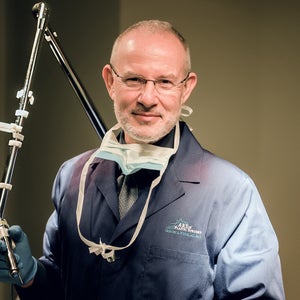
Dr. Gregory Wiener, MD, FACS is a leading, board-certified plastic surgeon in Chicago, Illinois. A Fellow of the prestigious American College of Surgeons, Dr. Wiener is highly regarded for his modern approach to plastic surgery, including his familiarity with
Asked By: Funny7398
ANSWER
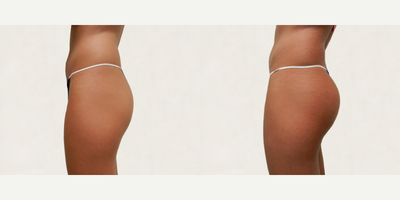
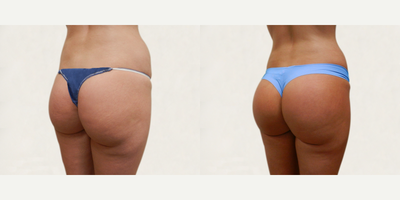
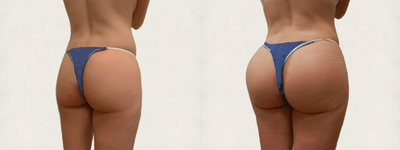
Hello, and thanks for the question and the picture. You have a very common problem. It is really a combination of issues. Skin laxity, combined with dimpling and irregularities from cellulite. Half of my "Brazilian Butt Lift" patients have some form of these issues.I treat these patients with fat transfer to the subcutaneous layer above the muscle. This will add volume and fill up some of that excess, droopy skin. However, due to the fibers holding the skin onto the muscle surface, not all of the depressed areas or dimples will expand nicely, so some of these are released (cut beneath the skin) during the process. This is called "subcision" and is done at a deeper level of the subcutaneous layer, and in a very limited way, so we don't cause more irregularities .Fairly aggressive massaging is also done throughout the procedure to release some of these bands without subcision, so the tissue expands as evenly as possible.This will partially correct your problems, but it is unlikely you will have a complete correction, or a perfectly shaped buttock free of any depressed areas. For patients like you, I will recommend a touch up fat transfer 6-12 months after the first, in order to further smooth and fill in any problem areas.If there is a significant amount of skin hanging over the buttock fold ( the crease between the buttock and the back of the thigh) that still won't lift after fat transfer, we can consider excising this fold along the line of the fold. This will give you a sizeable scar along the fold which would be visible in a bathing suit. It is an option only in the more severe cases of skin laxity.Hope this helps!
Asked By: baslan818
ANSWER
Hello, and thanks for the question and photos. From the photos, I can see the crease and some skin laxity above and below it. Though it is possible that the crease was caused by pressure from the garment not fitting properly, it also looks like the skin laxity, or even some residual fat above and below the crease could be factors here. Something like this could possibly be improved with some additional liposuction above and below the crease with undermining and shifting of some fat to directly under the crease to help smooth the contour. Additionally, for a more predictable, flatter, and smoother abdomen, you may be a candidate for a tummy tuck. An in person exam would be the best way to really assess things and give you the most realistic options.I hope this helps.
Asked By: AngelaniaXoXo
ANSWER
Hello, and thanks for the question and photos. From your weight, height and photos, it looks like you are a good candidate for a Brazilian Butt Lift. While you are not heavy, you do have excess fat on the abdominal wall, waistline and lower back as well as some in the mid to upper back. All of these areas can be treated with liposuction to contour each area, and the fat can be harvested and transferred to the buttocks to improve your shape and volume. Your waistline will really benefit from a complete, fairly aggressive suctioning to narrow it as much as possible, and this will also make the buttock look rounder and fuller indirectly. From the photos, it looks like your skin will contract reasonably well, especially in the waistline, but an in person exam would be the best way to give you a more accurate picture of what is really possible. Hope this helps!
Asked By: agarza1824
ANSWER
Hi, and thanks for the question and photos. I think the most important thing, initially, is that you lose weight, and I'm glad you are already planning this. From the pictures, I can see that you carry a fair amount of excess fat inside the abdomen as well as outside, and this gives your belly that rounded look. Only weight loss will improve this, and it will have to be significant weight loss (40-50 lbs). Then your belly will be flatter, but you will still have a layer of excess fat on the abdomen, hips, back and waistline that could be suctioned to contour you further (and even though you don't care about a tiny waist, making your waist as small as possible will enhance the look and shape of your butt) and that fat could be transferred to your butt. You will still also have excess abdominal skin as well, but you could hold off on the tummy tuck to fix this until after having children.Hope this helps!
Asked By: BBLdoll2015
ANSWER
Hello, and thanks for this very good question. The most likely answer is that there was always some degree of cellulite/dimpling there to begin with, but it wasn't obvious. The increased buttock volume from your fat transfer pushing the tissue out caused these irregularities to become more obvious, and maybe even enhanced them. It is unlikely that the fat transfer actually caused cellulite. Both cellulite and dimples occur because of irregularities in the length of fibers called "septa" that run from the undersurface of the skin down to the fascia (covering of the muscle). When the fibers are all of similar lengths, the fat in between the fibers is spaced out in a smooth, uniform manner. When the fibers are of different lengths, the fat in one "compartment" bounded by fibers all around it may be lower or higher than the compartment of fat next to it. This causes the irregular, bumpy look to the skin we see in cellulite, and if the fibers are all shortened in a larger area compared to the surrounding fibers, it causes a dimple (also likely a form of cellulite). This, unfortunately, has to do with your genetics more than anything else, because even thinner people can have some cellulite. However, exercise and hydration can improve things to some degree. There are creams and procedures involving rollers and suction that have been used for years, but results are transient, and they do not cure the condition. Various other procedures involving lasers and/or cutting of the fibers beneath the skin (to allow the fat compartments to equalize and smooth out) have also been used for years with unpredictable results.I tell my patients (and there are many with cellulite and dimpling) that fat transfer (BBL) will make their buttock fuller and improve their figure, but it will not smooth out cellulite and dimples, and could even enhance them. I do, however, perform limited "subcision" (cutting of the shorter, tighter fibers) during fat transfer procedures where there are deeper dimples. If it is done carefully (with a small cannula with a small forked blade on the end) deeper dimples can be safely softened and partially or completely smoothed out. Too much subcision, however, could lead to irregularities that are even worse than the dimples.There are two procedures which may have some value. One is Cellulaze, which uses a laser to cut the fibers, and another is Cellfina, which uses a wire to uniformly cut the fibers in a given area. Both are done under local anesthesia. I have no experience with these treatments, but I know they can be successful, especially in limited areas.I hope this helps.
Asked By: cill_j
ANSWER
Hello, and thanks for the question and the photos. While scar quality is something that is difficult to predict, I think you would benefit from a revision ( reoperation with removal of the old scar and some additional areolar tissue that has spread out) of the scars around the areola. This would involve placing a permanent suture beneath the skin at the edge of the areola which will hold things in place. The scar and the areola itself will be less likely to spread out if this is done. Using a silicone gel scar treatment as well as lightening creams (to reduce dark pigmentation) on the new scar can decrease the thickening and darkening that tends to occur with your scars.Revising the abdominal scar with careful post operative scar treats with silicone and lighteners may also be an option. Hope this helps.
Asked By: Kimmie0830
ANSWER
Hello, and thanks for the question. It is not unusual to have concerns at this point, because at 8 weeks most patients expect to be at or near their final results. However, there could absolutely be some additional swelling in the area even this far out. I always caution patients to wait a full 6 months before making the final determinations on whether additional or "touch-up" surgery is necessary, because most of the time things will improve. There are always the patients who have significant swelling for longer periods of time. If you feel that the abdominal muscles are still bulging or loose, this may be a problem. In a small percentage of cases, the abdominal fascial ( the tough, fibrous covering of the muscles) repair may fail, especially if your fascia is unusually thin (sometimes this is genetic, or caused by pregnancy or weight fluctuations). If this is the case, repair could be redone with a layer of biologic sheeting (there are several different kinds) to support the repair. But this would mean lifting up the abdominal skin again.It is best to talk with your surgeon. Evaluate whether this is additional swelling or muscular, or a combination of both. Talk about the options. The first option, however, is to give it a little more time.I hope this helps
Asked By: Mary72411
ANSWER
At just over one year after surgery, your scars look generally good, and, overall, the shape looks good. However, I agree that there is a clear volume difference, with the left side being larger (assuming this photo was taken in a mirror). Assuming everything is soft, and there is no capsular contracture (hardening of the scar tissue around the implants), better symmetry may be as simple as placing a larger implant on the smaller side, and the additional volume may raise the nipple/areola to some degree. It would take an in-person examination to confirm this and rule out the need for anything else.Every surgeon has a revision policy. Many involve reduced or even no fees for the surgeon (depending on the situation) while the patient may still be responsible for facility (the use of the operating room, staff, and supplies) and anesthesia fees. Best to go back to your surgeon and have a talk about your concerns again.I hope this helps.
Asked By: josoke
ANSWER
Hello, and thanks for the question and the photos. It appears that much of the vertically oriented skin laxity was removed with the first procedure, but you also have horizontal laxity at the central part of your abdomen. This could be reliably removed by revising your tummy tuck and including what we call a "Fleur de Lis" incision, which would be a vertically oriented incision down the middle of your abdomen from the upper aspect, around the belly button (including it in the scar) and down to, and intersecting with your existing transverse scar. Through this incision, excess tissue can be removed from the central part of your abdomen, and tighten the waistline more, as well as revise the belly button and widen it. The existing transverse incision would need to be reopened in the process, and dog ears could be revised as well.However, there may be a way to improve things without adding this vertical scar. Using a "high lateral tension" technique, the abdominal skin could be re-elevated by opening only the existing incision, doing wide "release" of all the skin (separating it again from the belly button) and then pulling the skin "down and out" away from the midline on both sides. This may spread out all that central laxity enough to avoid the vertical scar and widen the belly button as well. It may not be as tight as the Fleur de Lis incision results, but you may be able to avoid the additional scarring (although a small vertical scar may be necessary below the belly button). Stretch marks will also be spread out by this technique, and will be less obvious ( it would be impossible to remove all of your stretch marks because they go so far up on the abdomen).See your surgeon or another board certified surgeon who performs a lot of tummy tucks and go over these options. I hope this helps!
Asked By: cbw94
ANSWER
Hello, and thanks for the question and the photos. You are certainly muscular with an overall low percentage of body fat, so the only real, viable option is a buttock implant. For men, a buttock implant, placed within the gluteus muscle (intramuscular placement) can be a very successful procedure. Placing the implant within the muscle allows for thicker tissue coverage over the implant (and a more natural look and feel), as well as stabilizes the implant and lowers the possibility of implant malposition and asymmetry. The scar is in the vertical crease between the buttocks, and is usually hard to see. I use drains for about a week after the surgery, so there would be tubes exiting the skin on each side just below the beltline. These will leave 2 small additional scars ( some surgeons may not use drains, but I think removing any blood or fluid from the pocket around the implant lowers the chance of complications).The implants are made of a solid silicone elastomer, so they can't leak/rupture like a breast implant could. This also makes them firmer than a breast implant, and this is one of the major issues with any buttock implant. There is always a risk that the buttock will feel firmer than a natural buttock due to the implants. The key is to choose an implant size that is appropriate for your physique and one that will allow for adequate tissue/muscle coverage. An implant that is too large will stretch the tissues over it, thinning things and resulting in a harder feel. It may look good, but the firmness would be more than one could explain away by stating it is just muscular (lots or squats!). For men especially, be conservative. You don't have as much tissue to cover the implant as women in general, so a round implant in the 280 to 380 cc range with an appropriate diameter is usually sufficient to provide nice fullness and a natural feel (ie. not feeling the implant too much).Also keep in mind that you will feel the implant too. You will notice them more in certain positions, such as laying on your back on a firm surface. You will get used to this sensation faster and more completely if the implant is not pushing the limits of what your tissues can take.I hope this helps, and good luck with your upcoming consultation!
Mention RealSelf to redeem.
Please mention RealSelf to schedule your complimentary consultation with Dr. Wiener.
Dr. Gregory A. Wiener has received overwhelmingly positive reviews for his work in various plastic surgery procedures, including , , , , and . Patients consistently praise his skill, the natural results he achieves, and his attentive aftercare. Many patients report feeling confident and satisfied with their results, highlighting his ability to meet their expectations and provide a comfortable experience throughout the process.