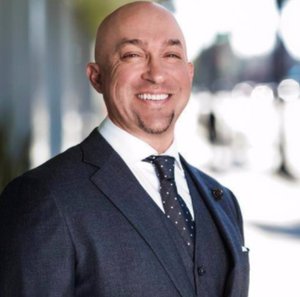
Glenn Vallecillos, MD, FACS is a plastic surgeon certified by the American Board of Plastic Surgery, in private practice in Beverly Hills since 2005. His work centers on facelift and rhinoplasty, VASER liposuction and body contouring, and breast surgery, with
Asked By: Ivy8319
ANSWER
Hello and thank you for the question. I will be direct, because the stakes are higher than a cosmetic question usually carries. Five days between Lipo 360 with fat transfer and a second surgery under general anesthesia is not a plan I would agree to, and most board-certified plastic surgeons in the United States would not either. Lipo 360 is a significant operation. In the days afterward your body is in its most inflamed state: fluid is shifting, there is some blood loss to recover from, swelling is at its peak, and the risk of a blood clot is at its highest. That is exactly the wrong moment to put you under a second anesthetic for several hours of facial surgery. Each of the two operations is safe on its own; stacked five days apart, each makes the other riskier. There is a second problem specific to your plan. Fat transferred to the breast needs the first few weeks undisturbed to establish a blood supply and survive. A second surgery, with its own positioning on the operating table, its own fluid shifts, and its own stress on the body, is an unnecessary threat to a graft you are paying for. If the goal is to do everything in one trip, there are two sound ways to do it. One is to combine the procedures in a single operation under one anesthetic, if the total operating time stays within what is safe, which is how I approach combined cases in an accredited surgical facility with a board-certified anesthesiologist. The other is to separate the surgeries by enough time for full recovery from the first, which is measured in weeks, not days. A five-day gap gives you the risks of both approaches and the benefits of neither. I would also think carefully about recovering from two major surgeries far from home. Flying soon after liposuction raises clot risk further, and if a problem arises after you return to California, the surgeon who operated will not be the one managing it. You are a short drive from excellent care in Los Angeles; a consultation here, in person or virtually, would let me plan the same combination of procedures with the sequencing and safety margins they deserve. Kindest Regards, Glenn Vallecillos, MD, FACS
Asked By: Thoughtful755852
ANSWER
Hello and thank you for the question. You have thought about this more carefully than most patients, and the short answer is that you are not "screwed" at all. Ultherapy works by creating very small points of heat in the deeper tissue, which heal as tiny areas of firmer collagen. In a surgeon's hands that can mean the deep layer is slightly more adherent than in a face that has never been treated, which is the added complexity you have read about. It is a minor one. Surgeons operate on previously treated faces every week, and the difference is a matter of a few more minutes of careful dissection, not a change in what can be achieved. By eight years out it is less than that: scar tissue matures and softens over the first year or two and then stays quiet. It does not disappear entirely, so the planes do not fully "unstick," but they do not need to. Two treatments, the last of them years before surgery, is a history no surgeon should hesitate over. On what to avoid, the question is not energy versus no energy but depth and permanence. The treatments that genuinely complicate a later facelift are the ones that leave material or structure behind in the deeper layer: permanent fillers, silicone, and suspension threads, which can tether the tissue in ways that are hard to release. Among energy devices, the ones that reach the deep layer, which is what Ultherapy at its deepest setting does, have the most effect, and even that is modest. Treatments that work in the skin itself, such as radiofrequency microneedling, Sofwave, and resurfacing lasers, work above the plane a surgeon operates in and have little bearing on a future lift. The same is true of devices that work on the muscle and skin from the surface. So the practical advice is this: there is no need to avoid everything for the next four years. In my own practice I use energy treatments deliberately to prepare patients for a facelift. In the months before surgery I use Emface, which combines muscle stimulation with gentle radiofrequency to the skin, to build tone in the muscle layer so the lift has a good foundation to sit on, and radiofrequency microneedling (Morpheus8) on the chin, neck and upper chest to build collagen. That lower skin is the skin that moves upward in a face and neck lift, so it needs to be in its best condition before surgery. After surgery, radiofrequency skin tightening (Forma) and Morpheus8 Cool maintain the result. What I avoid is repeated deep treatments close to surgery and anything permanent. When you do consult for the lift, tell the surgeon your full history so they can plan for it, and any surgeon who treats Ultherapy years earlier as a reason to turn you away is telling you something about their experience, not about your face. Kindest Regards, Glenn Vallecillos, MD, FACS
Asked By: Thoughtful755852
ANSWER
Hello and thank you for the question. You are asking this at the right time, because the best facelift decisions are made years before the surgery. Male facelifts are not niche, but men are a small minority of facelift patients, so experience with them varies widely from one surgeon to the next. Every plastic surgeon trains on facelifts; what differs is how many men a given surgeon has lifted and how carefully they think about the differences. That is the first thing to ask, directly: how many men do you lift in a year, and may I see before-and-after photos of men specifically, including the profile and the area in front of the ear. If the answer is vague or the male photos are scarce, keep looking. The windswept look you describe comes from an older style of lift that pulled the skin backward toward the ears. We have largely moved beyond it, for men and women alike. A modern lift, whether deep plane or SMAS-based, repositions the deeper layer of the face and lifts it vertically, with the skin following rather than doing the work, so the face looks rested instead of pulled. Ask any surgeon you consult what layer they lift and in what direction. A surgeon who can explain that clearly in plain language is usually one who does it well. The things that make a male lift specifically male are worth knowing so you can ask about them. The incisions have to be planned around the sideburn and beard so that bearded skin is not pulled up behind the ear or into the ear canal, which is a telltale sign of a careless male lift. The skin and tissues are thicker and heavier than a woman's, which affects how the lift is secured. And the goal is different: a man's face should keep its angles and a slightly fuller, flatter midface, so volume is used sparingly and the cheek is never rounded. Over-filling and over-smoothing is what feminizes a male face, more than the lift itself. On cost, men and women are in the same range for the same operation. What moves the price is the technique, the surgeon's experience, the facility and the city, not the patient's sex. You do not need a celebrity surgeon's fee to get a good male facelift; you need a surgeon who does them regularly and whose male results you have examined yourself. One last thought: at 40 you may be several years from needing a lift at all, and that time is well spent on skin quality and small maintenance treatments that keep the eventual surgery smaller. A consultation now, even a virtual one, would give you a baseline and a plan rather than a sales pitch. Kindest Regards, Glenn Vallecillos, MD, FACS
Asked By: tw1958
ANSWER
Hello and thank you for the question. The question you are asking, lift or volume, is the right one, and at eight years after a facelift the honest answer is usually both, because two different things have happened since your surgery. The tissues have relaxed again, which shows as jowling along the jawline and deepening of the folds beside the mouth, and the face has lost volume, which shows as flattening of the cheeks and hollowing beneath the eyes. Fat transfer alone treats the second problem but not the first; adding volume to a face that has become lax makes it look heavier rather than younger. A lift alone leaves the face tight and deflated. Your photo shows both. The under-eye fat that did not take well needs its own attention before any more volume goes in. The lower eyelid is the least forgiving place on the face for fat grafting, and from your photo there appears to be some irregularity there. The first step is to assess whether that is residual fat to be smoothed or removed, or uneven resorption that left hollows; more fat on an uneven base makes it worse. In patients who have had a poor take, I combine the fat with Renuva, a matrix made from donated adipose tissue that gives the graft a scaffold and improves how reliably it survives, or I use nanofat, a refined form of your own fat suited to the thin skin under the eyes. For the lift, a secondary facelift is a more limited operation than the first. For patients in your situation I usually favor an imbrication facelift, which tightens the deeper layer by folding it onto itself rather than releasing it fully, with a quicker recovery than a traditional deep plane lift. From what is visible of your neck, the platysma bands appear to have loosened, and I would tighten those at the same time with a platysmaplasty; a lift that leaves the neck bands behind looks unfinished. Beyond that, a full plan for your face would also address the eyes and mouth, and this is where you decide how far to go. The upper lids show hooding again, which is making the eyes look older than the rest of the face, and the lower lids have drooped at the outer corners, which is common after a previous lower blepharoplasty. A revision upper blepharoplasty corrects the first, and the lower lids need to be reinforced with a canthopexy, which re-suspends the outer corner of the eye, together with an orbicularis suspension where the lid needs more support. The upper lip has lengthened and thinned, which a lip lift addresses through a small incision beneath the nose, or, if you would rather avoid that, a nanofat lip refresh restores the volume alone. The fine vertical lines around the mouth respond to laser resurfacing done at the same time as surgery. And a small amount of Botox afterward keeps the result. An in-person or virtual consultation, with a profile photo and a clear view of the neck, would let me examine the laxity, the under-eye area and the lids, and lay out the sequence and scope that makes sense for you. Kindest Regards, Glenn Vallecillos, MD, FACS
Asked By: Sleeve_Sisters
ANSWER
Hello and thank you for the question. Yes, liposuction is routinely combined with a thigh lift, and in most cases it improves the result. The thigh lift removes excess skin; liposuction removes the fat beneath it and thins the tissue so the skin lies smoothly after it is tightened. I use ultrasound-assisted liposuction (VASER) for this, which is gentler on the tissue and well suited to thighs that have been through significant weight change. The varicose veins are the part of your question that matters most, and the answer is that they need to be dealt with before the thigh lift, not during it. Varicose veins are a vascular condition, and a thigh lift does not treat them. More importantly, prominent varicose veins can mean the deeper veins in the leg are not draining well, which affects how the thigh heals and raises the risk of blood clots after surgery on that area. The right sequence is an evaluation by a vein specialist first, treatment of the veins if needed (usually with injections or a catheter procedure, neither of which requires open surgery), and then the thigh lift once the legs have recovered. Any surgeon who offers to do all of it in one operation without a vein workup is one I would be cautious about. On cellulite, the honest answer is that it is a separate problem from loose skin and excess fat, and it needs its own tools. A thigh lift improves it indirectly by tightening the skin, but neither the lift nor liposuction on its own treats the fibrous bands that pull the skin down and cause the dimpling. There are three things I use for that: the VASER itself, which I use to smooth and plane the fat layer beneath the skin during the liposuction; Aveli, a minimally invasive procedure that releases the individual bands under each dimple and is done in the office under local anesthesia, so it does not mean going under again or another surgery; and fat grafting, which fills the deeper depressions with your own fat. The VASER planing is done during the lift, and Aveli and fat grafting are added once the lift has healed and we can see what dimpling remains. Which of these you need depends on how much of what you see is dimpling versus laxity, and that is something I assess at consultation. Recovery from a thigh lift is more demanding than from liposuction alone, because the incisions run along the inner thigh and the area moves with every step. The early phase involves limited walking, compression garments, and care of the incisions; return to normal activity and exercise comes in stages, and the scars continue to fade well beyond that. I give each patient a specific timeline at consultation based on the extent of the lift and the amount of liposuction planned. An in-person or virtual consultation would let me examine your thighs, review the state of your veins, and lay out the sequence and timing that makes sense for you. Kindest Regards, Glenn Vallecillos, MD, FACS
Asked By: youngfacelift
ANSWER
Hello and thank you for the question. I want to give you a useful answer rather than a generic one, and the photos limit that. Both are close-range selfies taken from slightly below, which widens the nose in the picture, and there is no profile view. The profile is where most rhinoplasty decisions are made: the bridge, any hump, how far the tip projects and how it is rotated. Without it, anyone telling you exactly what to do is guessing. What I can see from the front is a nose that reads somewhat wide through the middle and tip, with a soft, rounded tip and a bridge that does not stand out strongly. That last point matters, because a good deal of what makes a nose look wide from the front is a low or undefined bridge rather than the width itself. That opens up two paths. A surgical rhinoplasty reduces and reshapes the cartilage and bone directly, and it is the right choice when the goal is a nose that is truly smaller. Liquid rhinoplasty is the second option, and it is one I spend a good deal of my time on. It uses a hyaluronic acid filler to reshape the nose without surgery. Placed precisely along the bridge and at the tip, it builds a straighter, more defined dorsal line and a sharper tip-defining point, and the effect of that definition is a nose that looks narrower and more balanced from the front, even though technically nothing has been taken away. It also corrects a small hump, lifts a drooping tip, and evens out mild asymmetry. It takes minutes, there is essentially no downtime, and the result is visible immediately. Its limit is that it cannot reduce the size of a nose that is wide in its bony or cartilaginous structure, so whether it suits you depends on what your profile shows and on examining the nose in person. A word of caution: the nose is the highest-risk area of the face for filler because of its blood supply. The specific risk is vascular occlusion, where filler enters or compresses a blood vessel and cuts off circulation to the skin, which must be recognized immediately and reversed with hyaluronidase, the enzyme that dissolves hyaluronic acid filler. That is why this is a procedure for an experienced injector who knows the anatomy, injects slowly in small amounts, and keeps the reversal agent on hand, not a bargain. I train other physicians and nurse injectors in these techniques for both Allergan (Juvéderm) and Galderma (Restylane) products, and I would still tell you to choose your injector more carefully for the nose than for anywhere else. If you can take two more photos, a straight profile and a three-quarter view, at arm's length with the camera at eye level, I would be glad to give you a specific recommendation. An in-person or virtual consultation would let me examine the nose directly and tell you whether you are looking at a surgical rhinoplasty, a liquid rhinoplasty, or neither. Kindest Regards, Glenn Vallecillos, MD, FACS
Asked By: SilentLucidity
ANSWER
Hello and thank you for the question. What you are describing is a negative canthal tilt, where the outer corner of the eye sits lower than the inner corner. It is a structural feature, so I will be direct about the non-surgical side first: there is no injectable or device that moves the canthus. Filler along the outer orbital rim and upper cheek, or a neuromodulator placed to lift the tail of the brow, can soften the appearance by adding support around the eye, and some patients are satisfied with that. But they create an impression of lift rather than a change in the position of the eyelid corner, and they need maintenance. The surgical options come down to two related procedures. A lateral canthopexy tightens and re-suspends the outer corner to the bone at a slightly higher point without dividing the tendon. It is the more conservative choice, suits mild tilts, and carries a lower risk of changing the shape of the eye in ways you did not intend. A lateral canthoplasty divides the tendon and repositions it higher, which gives more correction and is used when the tilt is more pronounced or the lid is lax. In a young patient with good lid tone, the canthopexy is usually the first consideration. When the outer lower lid needs additional support, I combine the canthopexy with an orbicularis suspension flap, which lifts the muscle and soft tissue of the lower lid along the same line, so the eyelid corner and the tissue beneath it move together. One thing worth knowing: a negative tilt in a young man often comes with a flat or recessed outer orbital rim and upper cheek, and in those cases the canthal procedure alone can look unsupported. Adding volume to the rim, with your own fat or an implant, is sometimes what makes the correction read as natural. Your photo is the kind of case where that assessment matters, and it is the first thing I would look at. On cost, fees vary considerably by region and by whether rim support is included. In my practice the surgeon's fee for canthal surgery starts at $7,500, with facility and anesthesia fees separate. An in-person or virtual consultation would let me examine your lid tone and orbital support and tell you which of these, if any, is the right approach for you. Kindest Regards, Glenn Vallecillos, MD, FACS
Asked By: Fabulous172494
ANSWER
Hello and thank you for the question. What you are describing is a common pattern after aggressive laser liposuction: scar tissue (fibrosis) that you feel as hard lumps, and an indentation where too much fat was removed. The two problems need two different treatments, and the reason your second procedure did not help is that it tried to solve a depression by removing more fat, which cannot work, and tried to do it through scar tissue, which a non-invasive method cannot reach. The first step is to release the fibrosis. Hard scar bands under the skin have to be broken up surgically before anything else can be done; I do this with a combination of direct release of the bands and ultrasound-assisted liposuction (VASER), which is well suited to scarred tissue because the ultrasound energy loosens fibrous fat that conventional or laser cannulas cannot move. This is the step the two surgeons you saw were describing as "difficult to get through," and it is difficult, but it is routine for a surgeon who does revision liposuction regularly. The second step is to fill the indentation with your own fat, taken from another area and grafted into the depression in thin layers. Fat grafting is the standard correction for contour depressions after liposuction, and it is done in the same session as the release. In scarred areas I combine the fat with alloClae, a matrix made from donated adipose tissue that acts as a scaffold for the grafted fat. In my experience this improves retention substantially, which matters most in exactly this situation, where the recipient bed is fibrotic and fat on its own takes less reliably. The surrounding lumpy areas are then feathered carefully so the transition is smooth. The good news in your timeline is that at three years your tissue is fully mature and stable, which is the right time to revise; results are far more predictable than they would have been in the first year. The honest caution is that revision work on fibrotic tissue is less precise than primary liposuction, and the goal is a marked improvement in evenness rather than perfection. An in-person or virtual consultation would let me examine the firmness and depth of the scarred area and the size of the depression, and tell you what degree of correction is realistic in your case. Kindest Regards, Glenn Vallecillos, MD, FACS.
Asked By: Diligent564279
ANSWER
Hello and thank you for the question. In many cases, yes. If your brow position does not bother you and the problem you want solved is skin resting on your lashes, an upper blepharoplasty alone is often the right operation, and your instinct toward the simpler procedure is reasonable. The deciding factor is not whether the brow is low but whether it is contributing to the hooding and whether it will stay put after surgery. A simple test at consultation makes this clear: when the brow is gently lifted with a fingertip to a neutral position, how much excess eyelid skin remains? If most of the hooding is still there, the eyelid is the problem and blepharoplasty will serve you well. If the hooding largely disappears, a meaningful part of what you see is the brow, and removing eyelid skin alone can leave you with a result that looks tight rather than open, or that recurs as the brow continues to settle. There is a middle path that addresses your concern about time and cost. A brow lift does not have to be a separate operation with its own incisions. In patients who need modest brow support, I perform a brow lift through the same upper eyelid incision used for the blepharoplasty, securing the brow with a small dissolvable fixation device. The procedure is called a transblepharoplasty brow suspension, and the device is an Endotine. It adds little to the procedure and nothing to the visible scars, and it protects the eyelid result from being undone by a descending brow. So the honest answer is: start from the eyelid surgery you are considering, but let the brow examination decide whether it needs a small assist. Your photo suggests this is worth assessing carefully rather than assuming either way. An in-person or virtual consultation would let me examine your brow and eyelid together and tell you plainly whether eyelid surgery alone will give you the open eyes you are after. Kindest Regards, Glenn Vallecillos, MD, FACS
Asked By: Exquisite9423
ANSWER
Hello and thank you for the question. Yes, this is possible, and your instinct to ask the question this way is a good one. Every subnasal (bullhorn) lip lift does two things at once: it shortens the philtrum, which raises the upper lip and increases tooth show at rest, and it everts the lip, which shows more vermilion. You cannot separate the two entirely, but how much of each you get is a matter of design, and the design can be tilted strongly toward the result you want. The variables that matter are how much skin is removed, where it is removed from, and how the deeper tissue is handled. A conservative excision concentrated centrally beneath the nose, with the lateral extent kept short and the deeper tissue left largely undisturbed, lifts the lip and shortens the philtrum with relatively little eversion. A more aggressive full-width excision that engages the underlying muscle does the opposite and produces the fuller, everted lip that many patients ask for but you do not want. In a male patient this restraint also matters for a second reason: an over-everted upper lip reads as feminine, so the conservative design is usually the correct one for men regardless. One point worth checking at consultation is how much of your low tooth show is coming from the philtrum length versus the position of your upper teeth and the length of your upper lip overall. A lip lift addresses the first; the second may need a different conversation. Your photos will tell most of that story. An in-person or virtual consultation would let me measure your philtrum, assess your lip and tooth position, and show you how much of each change to expect from a conservative design. Kindest Regards, Glenn Vallecillos, MD, FACS
Dr. Glenn Vallecillos is widely praised for delivering natural-looking results and prioritizing patient needs, particularly in , fat transfer, and facial procedures. Patients consistently highlight his honesty, skill, and attentive care, noting transformative outcomes with minimal complications. A small number of reviews report serious complications following and , including nerve damage, persistent pain, and scarring, though these are outweighed by positive experiences.