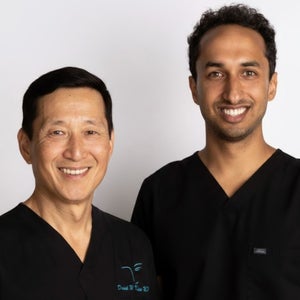
Dr. David W. Kim Facial Plastic Surgery - San Francisco
55 Francisco Street, Suite 705, San Francisco, California, 94133

Show more
Dr. David W. Kim is a double board-certified facial plastic surgeon and internationally recognized expert specializing in primary and revision rhinoplasty. With a background as the former Chief of Facial Plastic Surgery at UCSF, he has performed thousands of n
Asked By: Ninamichaels
ANSWER
Hello and thank you for your inquiry. Yes, you can continue to see improvements in your skin with many treatments here in the office. Microneedling with PRP will definitely help you along your quest for perfect skin, along with IPL, chemical peels, photofractional lasers, as well as skincare (salicylic acid, lactic acid, glycolic acid (AHA and BHA's), as well as Retinol. Please be advised that some of these skincare products may not be used together in one application and further consultation with a clinician can help you put together a safe regimen.
Asked By: An93620
ANSWER
Hello, and thank you for your question. Liposuction is one of many procedures to address this concern. Please be advised that there are also nonsurgical procedures available to you as well. These nonsurgical procedures include coolsculpting using the mini template (freezes and eliminates fat cells), Kybella injection ('melts' and eliminates fat cells), and pdo thread lifting that will lift and tighten the submentum to give you better definition to the jawline.
Asked By: Ptv1809
ANSWER
Hello, and thank you for your question. The area to which you are referring to is called the submalar space. Hollowing in this area is often due to bone loss and/or fat loss. Facial volumization can be achieved with surgical procedures such as implants or fat transfer to the depressed area. Non surgical procedures to address this same concern include filler (such as Juvederm Voluma) and Sculptra. It is important that you are thoroughly assessed during your consultation with your clinician before moving forward with any of the procedures listed above.
Asked By: Phenomenal741001
ANSWER
When you smile, the muscles of the upper lip region tightens/pulls back, and the tip of the nose will pull down slightly. Botox can help release this pull of the depressor septi nasi muscle. Usually 2-4 units is needed for this treatment. The cost of botox is by the unit which averages anywhere between $9-18 per unit.
Asked By: Brunettefairy
ANSWER
The features which make your nose stand-out:1. Dorsal hump2. Tip rounded, low, and over-projected3. Full, bulbous tip cartilageBeneficial potential changes:1. Dorsal reduction2. Tip elevation and deprojection3. Tip refinementYou seems like a good candidate based on your photos. An in person exam would be the next step. There are of course limitations to what rhinoplasty can do. For your nose/goals specifically, you would have to be careful not to reduce the size so much that the soft tissue could not drape tightly over the structure (think clothes that are too big for one's body). Focusing on shape improvement over size reduction is the best way to avoid such problems. I would advise that you see a rhinoplasty specialist to help you.The link below show my approach to reduce tip projection which you may find to be helpful.
Asked By: Brave5795
ANSWER
When the nose heals after rhinoplasty, the body produces healing tissue to allow the soft tissue envelope to re-adhere and drape over all of the structure (bone and cartilage) of the nose. The amount of scar tissue is variable person to person. In general, the thicker the skin is to begin with, the more scar tissue will form. Over time, through a process of soft tissue remodeling and contraction (sometimes called shrink wrap), the soft tissue envelope thins to better show the definition of the nose. However, the capacity of the skin to contract is finite and if there was too much reduction to the size of the nose relative to the ability of the skin to contract, the scar never thins to the ideal point, resulting in permanent thickening. This is most common in the lower third of the nose, especially just above the tip after a hump is lowered. This specific problem is called a polybeak deformity. The best way to prevent such problems is to be strategic in the surgery and not to reduce the nose beyond the ability of that individual skin envelope to contract. The thicker the skin, the less size reduction should be attempted and the focus should be more on shape improvement. If this problem happens, subsequent treatment must be thoughtful and deliberate to prevent further problems. I usually use the following guidelines when treating someone with an excess scar tissue or polybeak deformity following previous rhinoplasty:1. Start with conservative measures such as kenaolg (steroid) injections or taping.2. Wait at least 1-2 years before considering revision--thick skin takes longer to settle and contract.3. If revision surgery is performed, avoid treatment simply through "scar removal" or soft tissue thinning. This will tend to stimulate more soft tissue injury and more scar tissue. Or even worse, if done aggressively can cause vascular damage and unevenness/atrophy to the skin envelope. Revision should be focused on shape improvements--sometimes requiring that the nose be made bigger but better in shape and proportion to stretch the excess skin and scar and result in improved shape and definition.These concepts are advances rhinoplasty topics and as such this type of problem is best tackled by an experienced nose surgeon with lots of revision experience.
Asked By: Anny86882
ANSWER
It is likely that another surgery can help you. The "pig nose" shape you describe is due to a tip that is angle too high and a bridge that is scooped a bit low. That combination creates that characteristic upturned appearance. The bridge aspect (adding height) is the easier part to treat. It can usually be improved by adding structure above the existing cartilage beneath the skin. There are a variety of options but I prefer to use a thin graft of cartilage and fascia as I believe it creates the smoothest and most natural shape. The tip aspect (adding length) is the harder part. This is because the tip anatomy is more intricate and the soft tissue is more constrained in that area, especially with the scar tissue that is likely there from the past operations. If you are willing to undergo a revision using rib grafts in which the foundation of the tip can be strengthened and lengthened and the tip cartilages are rebuilt onto that foundation, you could gain length to the tip. The best thing to do would be to see an experienced revision surgeon to explore these options in detail, ideally with the help of digital renderings. The link below shows my approach to tip lengthening.
Asked By: cmemanuel7
ANSWER
It appears that your nostril asymmetry is related to several anatomical factors:1. The entire tip complex is leaning to the right, likely because the septal foundation (caudal septum) is bent toward that side. 2. The two individual tip cartilages have different shapes. This may be intrinsic, may be due to distortion from issue 1 above, or a combination.3. The nostrils are inserted onto the face at different levels (right side higher than left)4. Possible that there are soft tissue or scar tissue differences on the inner lining of the nostrils (can't see from the pictures).As you can surmise, nostril shape and symmetry is complicated and multi-factorial. The good news is that all of these issues are treatable in the hands of a rhinoplasty surgeon with a robust revision experience. The link below shows my approach to revision tip work (maneuvers which also address the nostrils).
Asked By: parisa_96
ANSWER
It looks like your bridge was lowered and the tip of your nose has drooped a bit. This created an imbalance between the tip and upper part of the nose which causes the tip to stand out. Ideally, the tip and bridge should be aligned along the line and the tip should sit slightly higher than where yours sits. These issues cause your tip to stand out. If you undergo revision, I would recommend you aim to raise the position of the tip and create better balance between the tip and bridge (either by reducing the projection of the tip or raising the bridge slightly). Revisions are difficult, so I would recommend seeing an experienced revision rhinoplasty specialist. The link below may be helpful--it discusses tip and bridge relationships in creating an ideal profile in rhinoplasty.
Asked By: canadiana9
ANSWER
It appears that the tip of your nose protrudes a bit more than ideal (relative to the bridge). I doubt this is due solely to scar tissue, although the scar tissue may contribute somewhat. It is likely that revision surgery could help to make your nose look better, but a full evaluation would be necessary--this would include an in person exam and ideally review of your old operative records. It would also be helpful to be treated by a surgeon who performs a high volume of revision rhinoplasty. You're right about revision being more complicated, but it can be a powerful tool to restore a nose to a better form. The link below shows my approach to reduce an over-projected nasal tip.
Dr. David W. Kim is highly regarded for his expertise in and , with patients praising his attentive care, realistic expectations setting, and natural-looking results. His calm demeanor, thorough explanations, and supportive staff contribute to a positive experience. Patients note significant improvements in both appearance and breathing function, with recovery experiences generally described as manageable.