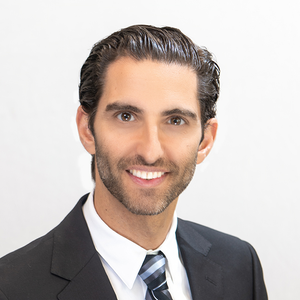
David Samimi, MD
Oculoplastic Surgeon, Board Certified in Ophthalmology
Oculoplastic Surgeon, Board Certified in Ophthalmology
Dr. Samimi is an Oculofacial Plastic Surgeon in the Los Angeles area, taking pride in his ability to provide cutting edge, compassionate care that delivers robust, safe and natural facial rejuvenation results. He honed his skills working around the eye during

Asked By: Eclectic320656
ANSWER
Sorry you are experiencing this complication of subtractive surgery. In my experience most patients are content with this result as they don't see the bags anymore. However I agree with you that it is not the optimal result as things look relatively hollow. For this reason my go to for lower lid appearances like yours are to do transconjunctival fat repositioning (instead of excision) combined with free fat grafting. By solid fat I presume you are referring to a dermis-fat type graft. I do not perform these in aesthetic cases, mostly in corrective/reconstructive cases. In your case, I would find someone with a lot of peri-ocular fat grafting experience and do conservative amounts of grafting, possibly in series if needed but I would allow at least 1-2 years to pass before doing another round as the results are often delayed. Wish you the best.
Asked By: PlasticJesus
ANSWER
Nice photos and questions. Unfortunately it is common to see similar concerns in my practice. What you are seeing is is the delineation of facial compartments as the scaffolding aka zygomatic ligament starts to show. Here are the most beneficial treatments I've seen in my experience: Avoid botox lower in the cheek as this weakens the muscles that are pumping fluid out of this cheek compartment shown, which is also referred to as a festoon or malar mound. Restoring deflated volume with fat grafting is most helpful. Other tools include a midface lift, skin pinch and radiofrequency microneedling modalities such as morpheus. Hope this helps.
Asked By: yuletide99
ANSWER
Thanks for sharing your question regarding drooping of the upper eyelid corner. What you are seeing is loose skin because of what happens with the aging process around the eye: deflation. The best results would likely be obtained with a combination of skin removal and at least 1 of the following options: botox or browlift to raise the brow, filler or fat grafting to inflate the brow. A combo of therapies usually obtains a more natural looking result. Best of luck!
Asked By: Zeeyah
ANSWER
There is no clear reason why having cataract and glaucoma tube shunt surgery should preclude you from an upper blepharoplasty. However, there is a strong chance based on your description that you also have a weakness in the muscle that holds the upper eyelid up, and you may also need a ptosis repair, where in addition to skin removal, the muscle the lifts the eye is also tightened. Best to visit an oculoplastic surgeon for more personalized advice.Dr Samimi
Asked By: Terrific213909
ANSWER
Thanks for including these excellent photos with your question as it allows us to really see what your concerns are and how to best addressed them. If you want a result that looks as natural as possible, my recommendation would be doing an extended deep plane facelift. This would do two things that would address your concerns. 1) this is the only type of deep plane facelift that releases the zygomatic ligament, which teathers the mid face and prevents rejuvenation of the lower lid cheek junction. When those ligaments are released, the sagging tissue from the area around the mouth and lower cheek is able to move up and fill the lower lid cheek junction. Unfortunately, you do not have lower eyelid fat herniation that would allow for a successful fat repositioning blepharoplasty. As for your neck if you’re doing a deep plane and you are under the platysma, you very rarely need any liposuction. Liposuction can lead to central submental depression, what we call a Cobra Nexk deformity. Depending on the lipo to thin the under chin and neck area can remove the subdermal fat necessary to maintain a natural look, leading to a thin skin, skeletonized look. You can click on the link below to see some of the improved lower eyelid and upper cheek results with my extended deep plane facelifting.
Asked By: MumAY1
ANSWER
This is a great question because fat has amazing benefits, but is relatively permanent, so you need to be extremely thoughtful of where you put the fat. In my opinion, if you’re looking at the way the face ages, typically the face starts out slim on the lower portion, and is wider in the upper portion (cheeks, brows and temples). Then every decade, the upper half of the face shrinks and the lower expands. It’s great that you had a deep plane facelift because that slims the lower half. I think without seeing pictures it’s absolutely reasonable to add some to the cheek however, the most important part is not only adding to the cheeks, just make sure you are going to somebody who is experienced at adding to the temples, and brows as well. If you only add to the cheek, then the face does look out of proportion like a lot of people with filler look. If you augment the temples and brows along with the cheek, face looks more natural and youthful.
Asked By: 111L
ANSWER
Thanks for sharing this question. The concern about residual loose skin ladder upper blepharoplasty is a very common one. Unsurprisingly, you are getting different answers from different surgeons as there are many ways to approach this issue. My experience has taught me that one of the main reasons for loose upper eyelid skin is not just “excess skin” but rather age and hereditary related deflation of the bone and soft tissue around the eyes and brow. I have found that the most natural and satisfying results for patients come when the loose upper eyelid skin issue is addressed with more tools than just skin excision. Brow rejuvenation with a lift or volumizing with fat or soft tissue fillers combined with skin excision can provide the best results overall.
Asked By: GreggF
ANSWER
Greetings Gregg,Thanks for the question and the helpful photos. You are a handsome guy but as with the best of us, the aging process does start to show as the face evolves. You have great brow projection, decent temple volume, but you biggest issue it relative skeletal and soft tissue (mostly fat) deflation of your midface (Lower lids and cheeks). Unfortunately no treatments are "permanent" as the face continues to age regardless of what we do however If you are looking for treatments that are longer lasting I think there are 2 options for you. 1) Facial fat grafting +/- lower eyelid fat repositioning blepharoplasty or 2) Sculptra. The fat grafting has the benefit of using your own tissue and a very natural look when done well. Sculptra is a bio-stimulatory injectable treatment that triggers your body to build more collagen. Also looks more natural and is longer lasting than traditional hyaluronic acid filler. Can be done in office and takes an average of 3 sessions. In my experience, both of these treatments take about 6 months to show their effect so patience is needed. Also, when done well, results from both are very natural looking and relatively long lasting. However, any complications such as nodules or contour irregularities can be very challenging to treat so I would strongly recommend going to a provider with a lot of experience in either of these treatments should you choose to proceed.Regards, Dr David Samimi
Asked By: MargaretElaine
ANSWER
Greetings Margaret Elaine:Your concern here is very evident based on the photos. Without full face photos visible it is not easy to say whether or not the facelift contributed to the appearance but I doubt it. The power of most facelifts lies in improving jowls and neck bands. That being said, certain facelifts are better at improving the midface and lower lid area: the extended deep plane facelift releases the (zygomaticofacial) ligaments that limit upward mobility of lower facial tissue into the midface. By recruiting volume to the midface and lower eyelids, the extended deep plane typically does a better job or improving the aesthetic of the lower eyelid-midface continuum. With that being said, you have 3 main issues contributing to your complaint on lower eyelid appearance: 1) Skin quality issue with wrinkles in the native eyelid skin, this is very common2) Upper and lateral cheek volume deficiency3) Festoons aka secondary lower eyelid bags that are related to the anatomy of the ligaments in the midface. These are challenging to treat. In my experience, here are are the most effective things that could be done to improve your issues while maintaining safety and a natural look:1) Lower eyelid blepharoplasty with some component of skin excision, I prefer the skin pinch2) Skin resurfacing, most effective with a laser given the depth of the wrinkles3) Volume replacement, my preferred source is your own fat. You will be in the best of hands if you choose an eyelid specialist for the above. Some facelift surgeons are great at eyelids and some are not. Given the response of your facelift surgeon, you may want to seek an opinion form an Oculofacial Plastic Surgery Specialist here. You can find one in your area at the ASOPRS website. Best, DBS
Asked By: Enthusiastic577579
ANSWER
Thanks for posing the question. The symmetry of the eyes is a common concern with patients before and after surgery. Interestingly, your asymmetry here is not related as much to ptosis, which is a droop of the eyelid margin, but more so an asymmetry of the volume in the “sulcus”, the space between the eyelid margin and the brow. Your left eye has less volume and so it looks deflated, and the skin is folded onto itself. What you need to improve things is an upper blepharoplasty with attempts to not just remove more skin on one side, but even out the volume which can be done with fat repositioning of the upper eyelid, fat grafting, and other techniques. I recommend consultation with an oculofacial plastic surgeon with a lot of aesthetic eyelid experience.
Dr. David Samimi is highly regarded for his exceptional surgical skills and patient-centered approach. His expertise spans a range of procedures including , brow lifts, , and deep plane facelifts. Patients consistently praise his ability to deliver natural-looking results, his thorough explanations, and his attentive post-operative care. His compassionate demeanor and dedication to patient satisfaction make him a top choice for those seeking cosmetic enhancements.