
What patients say
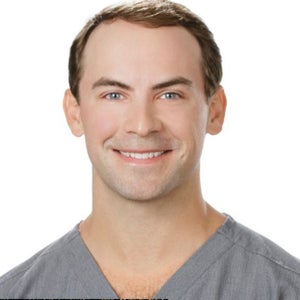
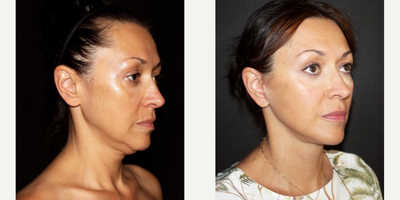
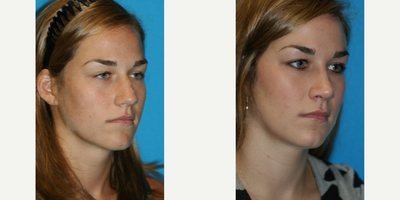
Dr. Clayton Crantford is highly regarded for his exceptional surgical skills and compassionate bedside manner. Patients consistently praise his ability to deliver outstanding results in procedures such as tummy tucks,

Dr. Crantford completed 1 of only 19 programs in the country endorsed by The American Society for Aesthetic Plastic Surgery. These fellowships are one year programs following a 6 year Plastic Surgery residency which focus on the breadth of aesthetic plastic s
Asked By: suzyjane8
ANSWER
You are right to be thoughtful about this. A small superficial filler bump is a common issue and there are a few ways to address it without risking the overall shape of your lips. Regarding the saline flush idea, this is not a widely practiced technique for this particular situation. While saline can theoretically help disperse filler, the results are unpredictable and it may not provide the controlled correction you are looking for with such a small and specific area. The needle aspiration technique you mentioned can work for very superficial filler nodules. An experienced injector can use a fine needle to puncture the bump and express some of the filler. This is most effective when the filler is truly sitting right beneath the surface of the skin. The risk of unevenness is low when done carefully, and this may be your best first option given the small size and superficial location. As for hyaluronidase, your concern about it dissolving surrounding filler is understandable, but the key is using a very small and precise amount. An experienced injector can use a micro dose of hyaluronidase injected directly into the bump with a tiny needle. When done precisely, it can dissolve just the problematic area without significantly affecting the surrounding filler. The enzyme is concentration dependent, so a tiny amount placed right into the nodule tends to stay localized. My recommendation would be to see an experienced injector for an in-person evaluation. They can assess whether the bump is best managed with needle aspiration or a micro dose of hyaluronidase. Both options are low risk when performed by someone with a skilled hand. I would avoid trying to manage this at home or waiting too long, as superficial filler bumps are typically very straightforward to correct.
Asked By: Exquisite9423
ANSWER
This is a great question and one that comes up more often than you might think, especially among male patients who want a more balanced philtrum without the fuller lip look that a traditional lip lift can produce. The standard bullhorn or subnasal lip lift works by removing a strip of skin just beneath the nose, which shortens the philtrum and naturally rolls the upper lip upward, increasing both tooth show and vermilion exposure. However, the degree of vermilion change can be controlled to some extent based on the surgical technique and how much tissue is removed. A few approaches can help minimize the vermilion change while still achieving your goals. First, a conservative subnasal lip lift with a carefully planned excision can focus primarily on shortening the philtrum and increasing tooth show without dramatically rolling the lip outward. The key is removing the right amount of skin so that the lip elevates just enough to reveal more teeth without significantly changing the lip shape. Second, some surgeons perform a modified technique where the depth of dissection is adjusted to control how much the vermilion rolls upward. Third, an Italian lip lift which uses two smaller excisions at the base of the nostrils rather than one continuous incision may provide a more subtle result with less vermilion eversion, though it is less commonly performed. The most important factor is choosing a surgeon who has significant experience with lip lifts in male patients specifically. Male lip aesthetics are quite different from female, and the goal of a natural masculine result with improved tooth show but minimal lip change requires a precise and experienced hand. I would recommend bringing your photos to a consultation and being very clear about your priorities so your surgeon can tailor the approach accordingly.
Asked By: Fabulous172494
ANSWER
I am sorry to hear about the fibrosis and contour irregularities you are dealing with. This is unfortunately a known complication of aggressive laser liposuction, and at three years post-op the scar tissue is well established, which means it will not improve on its own. There are several options that may help depending on the severity and extent of the irregularities. First, fat grafting can be very effective for filling in the indented areas. By harvesting fat from another area and carefully injecting it into the depressions, a surgeon can smooth out the contour significantly. This works well for localized indentations. Second, for the hard lumps and fibrosis, a procedure called subcision may be helpful. This involves using a needle or cannula to break up the bands of scar tissue beneath the skin, which can release the tethering and allow the surface to smooth out. This is sometimes combined with fat grafting for the best results. Third, in more significant cases, a mini abdominoplasty or full abdominoplasty may be the most effective solution. This allows the surgeon to directly excise the damaged fibrotic tissue, tighten the remaining skin, and create a smooth contour. Given that you have both lumps and indentations in the lower abdomen, this may give you the most predictable and comprehensive improvement. I would recommend consulting with a board-certified plastic surgeon who has experience with liposuction revision cases. An in-person evaluation will allow them to assess the extent of the fibrosis and recommend the best approach for your specific situation. There are good options available to improve this.
Asked By: Optimistic893925
ANSWER
I understand how frustrating it must be to still see shedding after three PRP treatments, but the fact that you are noticing new hair growth is actually an encouraging sign. It is important to understand that shedding and new growth can happen simultaneously. PRP works by stimulating dormant hair follicles and pushing them into a new growth cycle. When a follicle re-enters the active growth phase, the old weakened hair often falls out to make room for a newer, healthier strand. So some of the shedding you are experiencing may actually be a sign that the treatment is working. That said, a few things are worth considering. First, PRP results are gradual and most patients do not see the full benefit until about six to twelve months after their initial treatment series. Four months is still relatively early. Second, PRP does not stop all normal hair shedding. Everyone sheds between 50 and 100 hairs per day as part of the natural hair cycle, and that will continue regardless of treatment. Third, if the underlying cause of your hair loss has not been fully addressed, such as hormonal factors, nutritional deficiencies, or stress, PRP alone may not be enough to stop the shedding completely. I would recommend completing your fourth treatment as planned and giving it more time to see the cumulative results. If shedding continues to feel excessive beyond six months, it may be worth having a more thorough evaluation to identify any underlying contributing factors. Keep in mind that PRP is most effective as part of a comprehensive approach to hair restoration. Stay patient — the new growth you are seeing is a positive sign.
Asked By: hema2
ANSWER
Great question, and I understand the frustration of having to delay something you have been looking forward to. The good news is that hip and knee replacements should not prevent you from having a mommy makeover in the future. The key factor is timing and full recovery from your joint surgeries. Most orthopedic surgeons recommend waiting at least three to six months after a joint replacement before undergoing any elective surgery, and ideally you would be fully rehabilitated and moving comfortably before considering a mommy makeover. There are a few things to keep in mind. First, positioning during surgery matters. A tummy tuck requires you to be in a flexed position on the operating table, and your surgeon will need to know about your joint replacements to ensure you are positioned safely. Second, recovery from a mommy makeover involves limited mobility for a period of time, so having stable and well-functioning joints beforehand will make your recovery much smoother. Third, certain medications used after joint replacement such as blood thinners may need to be managed carefully around any elective procedure. I would recommend completing your joint replacements, going through your full rehabilitation, and then consulting with a board-certified plastic surgeon once you have been cleared by your orthopedic team. At 48, you are still a great candidate for a mommy makeover, and taking care of your joints first will set you up for the best possible outcome. Best of luck with your upcoming surgeries.
Asked By: c520
ANSWER
Great question, and it's one that confuses a lot of patients. The short answer is that profile naming conventions are not standardized across implant manufacturers, so "moderate" from one brand is not necessarily equivalent to "moderate" or "moderate plus" from another. Allergan (now part of Abbvie) offers profiles labeled as moderate, moderate plus (sometimes called full), and high. Mentor offers moderate, moderate plus, and high as well, but the actual projection-to-width ratios are slightly different between the two companies. So a 350cc moderate profile from Allergan and a 350cc moderate profile from Mentor will have slightly different widths and projections. The reason some brands don't offer a "moderate plus" option is simply a matter of product line design. Each manufacturer decided how many profile options to offer and where to draw the lines between them. Some brands found that fewer profile options simplified the selection process, while others added moderate plus to fill a gap between moderate and high profile. The most important thing is not to get hung up on the profile name. Instead, focus on the actual implant dimensions — width and projection — for the specific cc size you're considering. Your surgeon can compare the spec sheets side by side to find the closest match between brands. For example, a Mentor moderate plus might have very similar dimensions to an Allergan moderate in the same volume. Trust your surgeon to match the right implant dimensions to your body, regardless of what the manufacturer calls the profile.
Asked By: Vivid705292
ANSWER
I appreciate your honesty about wanting to go as large as possible and being open to a lift down the road. Based on your photos, you do have some existing ptosis (sagging), which is an important factor in planning. Whether you can skip the lift for now depends on the degree of your ptosis. Generally, if your nipple sits at or above the inframammary fold (the crease under your breast), implants alone may provide enough lift through volume to give a nice result. If the nipple is significantly below the fold, adding a large implant without a lift can lead to a "snoopy nose" deformity where the implant sits high and the natural tissue hangs below it — which most patients find unappealing. That said, some surgeons are comfortable placing large implants in patients with mild to moderate ptosis, especially when the patient understands they may want a lift later. The implant fills out the breast envelope and can create a fuller look even if the position isn't perfect. A few things to keep in mind with very large implants: the bigger you go, the more strain on your tissues over time, which can accelerate sagging and stretching. There are also considerations around implant weight on your back and shoulders. Your anatomy — specifically your breast base width, tissue quality, and chest wall dimensions — will determine the maximum size that's safe and appropriate. My recommendation would be to consult with 2-3 board-certified plastic surgeons who can evaluate your anatomy in person and discuss what size range is realistic for your frame. Be upfront about wanting maximum size — a good surgeon will work with your goals while keeping you safe.
Asked By: Funny928854
ANSWER
Great question. The Mentor MemoryGel Xtra was designed with a slightly more cohesive gel fill compared to the classic MemoryGel Smooth. This higher cohesivity means the gel holds its shape slightly better and is less prone to visible rippling, particularly in the upper and lateral poles of the breast where rippling is most commonly seen. For your specific situation — thin skin with a 350cc implant — rippling is a legitimate concern. The good news is that you're planning submuscular (under the muscle) placement, which is the single most effective way to reduce visible rippling. The muscle provides an additional layer of soft tissue coverage over the implant, which helps camouflage any surface irregularities. Between the two implants, the Xtra Smooth does have a slight advantage for rippling in thinner patients due to its more cohesive fill. However, the difference between the two is modest — placement under the muscle, the amount of natural breast tissue you have, and your overall body fat percentage will all have a bigger impact on whether rippling is visible than the choice between these two specific implants. I would recommend discussing both options with your board-certified plastic surgeon during your consultation. They can assess your tissue thickness and help determine which implant is the best fit. In very thin patients, some surgeons also consider using a dual-plane technique or even adding an acellular dermal matrix for additional coverage if rippling is a top concern.
Asked By: madisonvvvl
ANSWER
This is a very common question, and the short answer is: grams and cc's are close but not exactly the same, and the result won't be a perfect recreation of your previous size even with a similar number. One cc of silicone gel weighs slightly less than one gram (silicone has a specific gravity of about 0.97), so 400cc of silicone implant is roughly equivalent to about 388 grams. However, breast tissue that was removed during your reduction was not purely fat — it included glandular tissue, fibrous tissue, and skin, all of which have different densities and distribute differently than an implant. More importantly, the shape and projection of an implant is very different from natural breast tissue. A 425cc implant will add volume, but it will project differently and sit differently than the natural tissue that was removed. The remaining breast tissue after your reduction, combined with the implant, will create a new shape that may be similar in overall volume to your pre-reduction size but won't look exactly the same. That said, many women who regret their reductions are very happy with the results of secondary augmentation. A board-certified plastic surgeon can evaluate your current breast shape, skin quality, and remaining tissue to recommend an appropriate implant size. You may end up needing more or less than 425cc depending on your anatomy and goals. Bring pre-reduction photos to your consultation — they'll be invaluable for planning. Best of luck!
Asked By: c520
ANSWER
Great question. The breast base width (BWD) measurement is an important starting point for implant selection, but it's a guideline rather than an absolute rule. Going slightly wider than your BWD — like your example of a 12.75cm implant on a 12.5cm base — is a very small difference and is generally well-tolerated. That said, the goal of matching implant width to BWD exists for good reason: an implant that significantly exceeds your breast base width can extend beyond the natural breast borders, leading to lateral displacement over time, visible implant edges, or an unnatural appearance. A small overshoot (0.25cm in your case) is typically fine and may actually give you the frame coverage and side fullness you're looking for. The degree to which an implant covers your frame also depends on other factors beyond just width — implant profile (low, moderate, high), your chest wall shape, the amount of existing breast tissue, and whether the implant is placed above or below the muscle all play a role. A moderate profile implant like the 360cc you mentioned will have more forward projection than a low profile but less than a high profile, which affects how the width distributes across your chest. My recommendation would be to have a detailed discussion with your board-certified plastic surgeon about your specific goals for frame coverage. Using sizers during your consultation can give you a better idea of how different widths and profiles will look on your body. Trust your surgeon's assessment of what will work best with your anatomy while clearly communicating the aesthetic you're after.
Dr. Clayton Crantford is highly regarded for his exceptional surgical skills and compassionate bedside manner. Patients consistently praise his ability to deliver outstanding results in procedures such as tummy tucks,