Show more
Show more
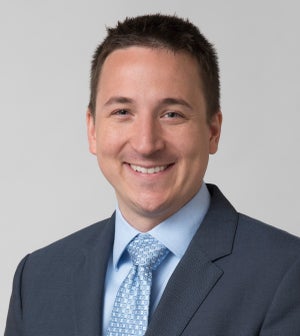
Dr. Brian M. Harmych, MD, FACS is a double board-certified facial plastic surgeon with nine years of experience based in Cleveland, Ohio. Focusing exclusively on surgical procedures of the face, head, and neck, he specializes in rhinoplasty (nose job), revisio
Asked By: Danielle122
ANSWER
Thank you for your question. In many cases, it can be beneficial to dissolve certain types or locations of filler before surgery, particularly when the filler is interfering with surgical planning or could compromise the final result. For example, I often recommend dissolving under-eye filler if it has migrated into the orbicularis oculi muscle or orbital fat, especially when it is causing visible bluish discoloration (Tyndall effect) or persistent swelling within the muscle or subcutaneous tissues. I also dissolve filler when it obscures my ability to accurately assess the anatomy for procedures such as a subnasal lip lift, or when there is excessive filler in the subcutaneous tissues creating contour irregularities. It’s important to understand that it is not possible to remove all of the filler, but reducing the volume can significantly decrease the risk of complications and improve the predictability of your surgical outcome. Hyaluronic acid filler is hydrophilic, meaning it attracts and retains water, which can contribute to more swelling after surgery. Reducing the filler beforehand can help minimize this. I hope you find my answer helpful.
Asked By: irina99
ANSWER
Thank you for your question. Nearly two years after surgery, your scars are considered mature, so what you are seeing now is likely a close representation of their long-term appearance without additional treatment. While well-placed facelift scars are typically concealed within natural creases or the hairline, some patients do experience more visible scarring, particularly if the skin healed with more pigment change, contour irregularity, or depression. From the limited view provided in your photo, the submental incision appears to have healed acceptably. The temporal incision, however, would likely benefit from scar revision, and based on what I can see, this revision would probably be minor. This is not an inevitable or “typical” outcome after a deep plane facelift, and there are options to improve both the appearance and contour of these scars even at this stage. Treatments might include surgical scar revision, laser resurfacing, microneedling, or filler placement to correct depression. Based on your description, improvement is likely possible, and a consultation in person with a facial plastic surgeon who routinely performs revision work could help determine the best approach. I hope you find my answer helpful.
Asked By: RealSelfMember090898
ANSWER
Thank you for your question. At only three months out from your deep plane facelift, there is still likely a significant amount of residual swelling, especially in the lateral cheek and periorbital area. This swelling can temporarily create the appearance of a more vertical orientation of the lateral cheek and outer eye region. The maneuvers you described, which include deep and subcutaneous temporal fascia dissection with orbicularis oculi release, do not inherently make the eyes permanently vertically shorter. In most cases, as swelling resolves and tissues continue to relax and settle, the appearance softens considerably. It is common for the most natural and final result to take up to a year or more to fully develop. I hope you find my answer helpful.
Asked By: suzyjane8
ANSWER
I understand your concern about wanting to maintain the overall shape of your lower lip while addressing that small, superficial bump. In most cases, a very small, precisely placed amount of hyaluronidase can soften or remove just the irregularity without noticeably affecting the surrounding filler (especially if performed by an experienced injector). Injecting saline typically won’t break up hyaluronic acid filler in a predictable way, so the results are often minimal or temporary. “Poking” it with a needle may , but it carries a higher chance of causing swelling, bruising, or unevenness. If it truly bothers you, a conservative injection of hyaluronidase targeted exactly where the bump is would likely give the best chance of improvement without changing the overall look. I hope this is helpful. Thank you for sharing this questions and photos.
Asked By: Intellectual887537
ANSWER
In my practice, I advise patient to avoid alcohol for two weeks after rhinoplasty. We caution patients that during the first year, there may be some triggers that might increase redness and swelling. Alcohol is a common trigger. Spicy foods, exercise and temperature changes may also have a similar effect.
Asked By: Cute891132
ANSWER
Thank you for sharing your question and postop rhinoplasty photo. The photo provided is a little blurred. So, I will make some general comments and hope this information is helpful. Infection, skin necrosis or other serious complication is extremely rare outside of the first few weeks postop. Hyperpigmentation is more likely. Sun exposure, especially for patients with darker skin and those prone to hyperpigmentation (by history) may cause pigment deposition in the skin following rhinoplasty. I generally advise patients to be extremely cautious with sun exposure for the first year. I recommend you follow up with your surgeon. If there is some hyperpigmentation this can usually be treated with a combination of topical medications and light-based treatments such as IPL.
Asked By: IS1894is
ANSWER
Thank you for sharing. You still have some fullness in the submandibular area that is likely due to the submandibular glands and medial platysmal banding. While you may have had a deep plane facelift, you've had too conservative of an operation in the neck. Deep neck surgery involving pulling the platysma muscles together and possibly reducing the size of the submandibular glands (versus additional tightening of the platysma muscle behind the jawline) would improve the concerns. In short, further surgery is required to improve these concerns.
Asked By: joonb2117
ANSWER
Thank you for sharing your photos and questions. You have a mild of aging in the neck and jawline and moderate in the midface. There is elongation of the upper lip. A true extended deep plane facelift (with complete mobility of the midface and malar fat pads) combined with upper lip lift would address the concerns satisfactorily. There is plenty of midface volume so that a fat transplantation is not necessary.
Asked By: ai62
ANSWER
Thank you for sharing your questions and photographs. You have some hypertrophic scarring behind the ears that may be a result of either increased tension on the skin or simply a consequence of how your tissues are healing. In general, a small amount of hypertrophic scarring can be treated with some dilute steroid injection and, if treated promptly, will likely flatten out over time. Ultimately, this type of scarring can be revised once the healing process has completed and, fortunately, scar revisions in this area is relatively easy for both the patient and surgeon.
Asked By: HL Hunter
ANSWER
In my practice, the majority of all facelift and deep plane facelift patient have had prior treatment, including fillers, neuromodulators, ultrasound and other energy-based therapies. Many patients have had prior facelift surgery, as well. While it is true that some of these treatments may increase the difficulty of a facelift or neck lift, an experienced surgeon will be able to explain precisely what challenges and limitations may be a result of prior treatment. However, (excluding serious prior complications from treatment) prior treatment (whether surgical or non-surgical) wouldn't increase the difficulty or chances of risks behind a small degree.
Mention RealSelf to redeem.
- Cosmetic Consultation $175 - Complimentary computerized imaging included with rhinoplasty consultations
- Requires in-person consultation - $175 consultation fee may be applied to Botox treatment on day of initial consultation only
- Cosmetic consultation required to determine if treatment is appropriate - $650 per each 1 mL syringe
Dr. Brian M. Harmych is highly regarded for his expertise in facial plastic surgery, particularly in , facelifts, and . Patients consistently praise his professionalism, thoroughness, and ability to deliver natural-looking results. His compassionate bedside manner and attentive post-operative care contribute to a positive patient experience. Despite some negative experiences, the majority of reviews highlight his skill and dedication to patient satisfaction.