Anthony Bared, MD, FACS
Verified
Board Certified Facial Plastic Surgeon
Board Certified Facial Plastic Surgeon
Show more
Show more
I am a double-board certified facial plastic surgeon and exclusively dedicate my practice to plastic surgery from the neck up. My surgical focus is primarily rhinoplasty, hair restoration, and revision rhinoplasty.
Asked By: User1203
ANSWER
Addressing the crown with hair transplantation as a stand-alone procedure can be very underwhelming for a patient. The crown is a difficult area to achieve the appearance of adequate density. IT is not as much the amount of grafts that factor into the appearance of density but rather the other factors which can limit the appearance of adequate density to the crown. The radial growth of hair in the region, the convex shape of the scalp, and the directional growth of hair all limit the appearance of density. In general, frontal hair loss and transplantation to the frontal area of the scalp is able to achieve a higher appearance of density. Combined measures such as medical therapy, scalp micropigmentation, and hair transplantation will maximize the results of crown hair loss.
Asked By: magiere
ANSWER
In order to address your specific concerns, photos would be needed. However, in the vast majority of cases, the tip needs to be supported to address a long, droopy nose.
Asked By: Oceanstate
ANSWER
Nostrils can be changed in size by using various techniques in rhinoplasty. the size of the nostrils can be altered and made smaller by small incision around the nostrils whether along the inside or the outside--depending on the exact goals and the shape of the nostrils. Alar base reductions can make the nostril size smaller and also change the shape of the nostrils to have them appear more oval and less circular in shape. Alar flare reductions can leave the nostril size unaltered while reducing the width of the base of the nose. Communicating your exact goals with your surgeon will help you each develop the best plan for your specific case.
Asked By: Vivid2211
ANSWER
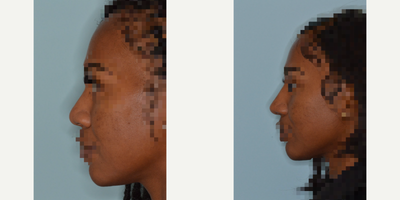
The most important aspect to be taken into consideration in your case is the thickness of the skin. Thick skin is a setup for the potential of a pollybeak deformity or fullness in the area above the tip. In your case, it is not simply the reduction of the bridge but the adequate support of the tip which would enable the best long term outcomes.
Asked By: pat_niller
ANSWER
In your case, the tip can be narrowed and slightly supported on the profile view which would allow for a straighter appearance to the nose from the profile. The front of the nose can be straightened likely through asymmetric osteotomies and addressing the deviation of the cartilage.
Asked By: oscarventuraa
ANSWER
It does appear that the external shape of your nose is deviated. It is not uncommon to see a nose that slightly deviates to one side without necessarily a history of an accident or trauma. the deviation of the septum can only be determined by an internal examination of the nose. You can have an external deviation of the nose without an internal deviation of the septum--which is the cartilage that divides the inside of the nose.
Asked By: nycbp
ANSWER
It appears from the photos that your nose is deviated and is asymmetric. To address these issues, both the cartilage as well as the bones of the nose need attention. You would benefit from a septorhinoplasty to help correct the deviation of the nose and restore symmetry to the nose. These are involved procedure and require a surgeon with a lot of experience in crooked noses and rhinoplasty.
Asked By: agiaconia35
ANSWER
A nose will appear crooked for multiple reasons one of which can be a deviated septum. A crooked nose itself does not necessarily mean your septum is deviated. However, if the septum is deviated it has to be addressed to correct a deviated nose. Rhinoplasty surgeons always need to address a deviated septum at the time of surgery to ensure both proper function and aesthetic of the nose.
Asked By: PatBS
ANSWER
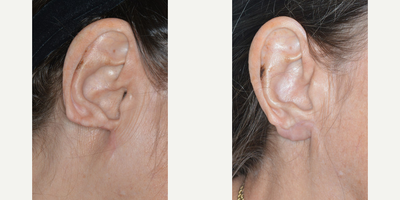
It does appear that your ears can be reshaped to allow for the setting back of the cartilages. The fold you are creating in the ear with your fingers can be created using sutures placed behind the ears. If you have very thick and strong cartilages, they can be weakened with certain techniques in surgery to allow them to be set back. Although relapse after otoplasty can occur, it is rare.
Asked By: ildiagarol
ANSWER
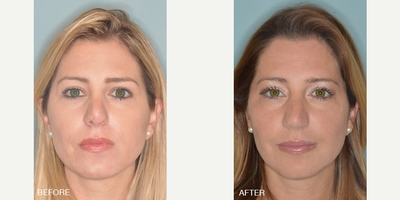
It does appear in your case that refinements can be made to the shape of your tip. The tip cartilages can be narrowed and brought together to provide you with more tip refinement. Techniques would need to be implemented to narrow the tip but also preserve the support needed in the tip cartilages.
Mention RealSelf to redeem.
Dr. Bared is offering Realself patients a complimentary Hair Transplant consultation. Please mention RealSelf when scheduling to receive this offer.
Dr. Bared offers Rhinoplasty imaging to help further communicate your goals. Please inquire for more details and mention RealSelf.
Please mention this RealSelf offer when scheduling your consultation.
Dr. Anthony Bared excels in facial plastic surgery, particularly in , , and . Patients consistently praise his meticulous care, transparent communication, and the natural, satisfactory results of his work. His ability to listen to patients' concerns and deliver personalized, high-quality care has earned him numerous 5-star reviews.