Show more
Show more
Show more
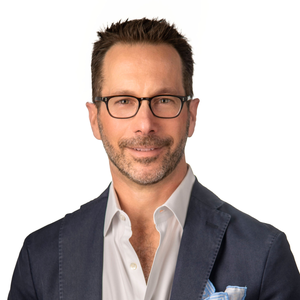
Dr. Andrew Wolfe, a board-certified plastic surgeon at The Center for Cosmetic Surgery serving Golden, Denver, Cherry Creek, and Colorado Springs, Colorado, is a renowned expert in body, breast, and face procedures, including Breast Augmentation, Mini Facelift



Asked By: Jubilant712483
ANSWER
Thank you for your question. The correction of symmastia can be a bit challenging and there are several techniques that can work. In my practice, I do not separate this correction into 2 surgeries and have had good success doing this in 1 stage. I prefer to sew the middle pocket (capsulorrhaphy) and open the lateral pocket (capsulotomy), and will often reinforce the middle repair with a mesh like Galaflex or Tigr to prevent recurrence. For more side-boob, I think your current implants are actually well proportioned for you and would look great if they were pushed outwards a few cm. Be careful going bigger/wider, as this woud just put more stress on the pocket correction. Best of luck with whatever option you choose.
Asked By: JANE357
ANSWER
Thank you for your question. You are more limited with implant choices if you stick to saline. Allergan's 68LP implants in a 175-195 size are 10.4cm wide at the fuller volume, a bit narrow for your 12.5 width. If you bump up to the next 200-220 size the implant width increases, but the implant would be decidedly underfilled at 200cc. One option might be to go with the smaller implant and augment the width of the implant with some fat grafting along the cleavage to enhance the look - we call this a "hybrid breast augmentation". This could be your best bet to get the look you want while keeping your saline implant. Hope this helps!
Asked By: Gdjam
ANSWER
Thank you for you question. I am very sorry that you have this terrible history with a medical provider - I can see why that would undermine your confidence in the medical profession. For a variety of reasons, I would consider preoperative photographs a mandatory part of the surgical process. With these photos, I can help plan surgery and would use them for reference postoperatively. If any undesired outcomes occur or if a revision becomes necessary, it is vital to know where you started before surgery. In our practice, we also use 3D Vectra imaging to help patients visualize what a particular implant may look like. For most patients, these photos are seen by nobody except them, me, and the staff in the operating room. Some patients specifically consent to in-office or website use of their photos but this is not the default in our practice. At the end of the day, the degree of trust that you must place in your provider extends well beyond their treatment of your photos and other protected patient information. You will be under anesthesia for the surgery, and are literally trusting your surgeon, anesthesiologist, and office staff with your life. If your past trauma prevents you from establising a sufficient degree of trust then elective surgery may not be your best choice. I hope that this information helps.
Asked By: SandyCheeks1111
ANSWER
Thank you for you question. It is a little difficult to know exactly what's going on without seeing a preop photo for reference or knowing what exact implant you have. You do have some fundamental differences in how your breasts and implants are sitting, with the right breast being longer and more narrow than the left. It looks like the left implant is encroaching on the midline and your inner, lower breast fold is overdissected on the left, as well. I wouldn't be surprised if you have real symmastia when you push the implants towards the center of your chest. All of these issues should be brought up with your surgeon at your 1 year postop visit. They are correctable but would require a revisionary surgery. Best of luck.
Asked By: randomnameee
ANSWER
Thank you for your question. The redness around the nipple and the vascular streaking certainly look like an infection and should be evaluated urgently. This looks like a mastitis, which is an infection of the the breast tissue itself, vs an implant-related infection. You should see your primary care or an urgent care facility so they can take a look and potentially get you on some antibiotics if appropriate. Best of luck.
Asked By: Diligent840062
ANSWER
Thank you for reaching out. If you do indeed have 3500 cc implants then there are very few good options for you to retain anything near this volume. I know that there are several surgeons around the country using these incredibly overfilled saline implants and I can't condemn the practice strongly enough. In a purely physical sense, there is no breast that can support this volume for long. You will see tissue breakdown and, ultimately, extrusion of the implant. The complication rate is effectively 100%. Aesthetically, even if you like larger breasts, these are cartoonish and flattering to no one, IMHO. I would recommend that you have both your implants removed and let your breasts recover for 3 months, minimum. At that point, you can revisit the idea of implants with perhaps a more rational approach to volume that will not commit you to continued complications. I'd find another surgeon, honestly, as I question the ethics of any surgeon willing to subject a patient to this kind of treatment.
Asked By: amylouise23
ANSWER
Thank you for your question. Motiva implants have a 4 micron surface called SmoothSilk. It is designed to be a more biocompatibe surface and results in less inflammation and fibrosis than either standard smooth or macrotextured implants. That does correlate with a very low capsular contracture risk. Technically, any implant with a surface height of less than 10 microns is considered smooth, even though they look a bit textured, so you can consider them a smooth implant. There have been zero cases of BIA-ALC with SmoothSilk implants with more than 4 million devices over 10 years - this is the lymphoma that can form around more vigorously textured implants. The only additional risk vs traditional smooth implants is that the Motiva implants do result in a very thin capsule, so surgeons must be very precise when creating the pocket in the breast or you can end up with a malposition. They are excellent implants.
Asked By: MrsMae
ANSWER
Thanks for you question. When comparing dimensions, width and projection are only 2 measurements, and they don't take the shape of the device into account. Picture a triangle and a semicircle with the same width and projection - the semicircle will have much more volume due to fullness in the "shoulders". That's where the volume is in the Motiva implants and is simply due to a different shape in the mandrels used to form the implants.
Asked By: Nurturing421541
ANSWER
Thank you for your question. Based on my experience, NO, a very high profile, firm cohesivity implant will not look natural on you. You are a small, slender person with a tight breast and the implant will look decidedly augmented. Which is not to say that it won't look good, only that it will definitely look like you have implants. If you wanted a more natural look, you could drop down to a Full profile, maybe a 255 or 275 if you like the 280cc volume, and I'd recommend the softer Ergonomix gel. Keep in mind that with your build, any decent size implant is going to look augmented, but a smaller, lower profile, softer gel implant would be a good option. Does your surgeon have a Vectra or other 3D imaging? That can be very helpful when choosing implants. Hope this is helpful!
Asked By: Resourceful932469
ANSWER
Thank you for your question. The implants you are referring to are made by Motiva, and the chip is called Q Inside or Qid. It is a 9mm long (think grain of rice) RFID device that is encoded with a unique identifying number for the implant at the time of manufacture. The number is recorded at the time of your surgery and reported back to the manufacturer. The number can be read from outside the body with the right device and an authorized physician could contact Motiva to find out what implant you have. In essence, it is a redundant record of your implant in case that information was lost by you and/or your surgeon in the future. It is a separate FDA approved device and is quite safe. It does not show up on an airport scanner, it cannot "track" you, and it carries no identifying information about you, only a 15 digit number. It would show up on a MRI but is MRI compatible. The Q Inside technology is optional in Motiva implants, so you can choose it if you want it or skip it if it freaks you out. I am an FDA investigator for the US Motiva clinical trial and the majority of my patients chose to include the chip, FWIW. The Q Inside technology will be available in the U.S. next year -- the Motiva implants we are getting right now are shipping without it.
Dr. Andrew Wolfe is highly praised for his expertise in a wide range of cosmetic procedures including , , , and more. Patients consistently report high satisfaction with the results, noting significant improvements in their physical appearance and confidence. Dr. Wolfe's professionalism, attentive care, effective management of recovery, and patient-centered approach are commended for their thoroughness and kindness. His office staff is also noted for their professionalism, helpfulness, and friendliness.