Oceans Dermatology - Boynton Beach
10151 Enterprise Center Blvd., #204, Boynton Beach, Florida, 33437
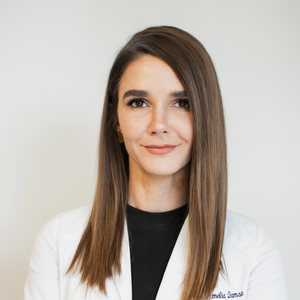
I am a board-certified dermatologist and a fellowship-trained Mohs surgeon. I have a special interest in cosmetic and procedural dermatology, including lasers, microneedling, injectable botulinum toxin and fillers, chemical peels, and skincare.
Asked By: elizabeth17171717
ANSWER
Halo is a hybrid laser, which means that it uses two different wavelengths in order to treat a variety of skin issues. One wavelength is more superficial, treating textural changes, hyperpigmentation, fine lines, etc, while the deeper wavelength goes to the dermis leading to new collagen formation and skin resurfacing. Usually for acne scars, especially if they are deeper, multiple treatments may be necessary to achieve the desired results, but you should see improvement after every treatment.
Asked By: treelover1968
ANSWER
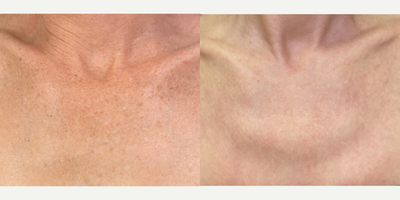
Halo is a hybrid laser, which means it utilizes two different wavelengths in order to address multiple skin issues, including textural changes, crepey skin, fine lines, sun spots. While one wavelength adresses superficial issues such as pigmentation and textural changes, the other wavelength goes deeper into the dermis causing new collagen fibers to form, leading to skin resurfacing and smoothness. You may also consider a fully ablative laser such as Contour if you want a more definitive and longer lasting solution, and don't mind the extra downtime.
Asked By: Gius177914
ANSWER
While rosacea-prone skin is more sensitive and can be prone to flares and redness following laser treatments, an experienced physician can safely use conservative settings to mitigate some of these symptoms. This means that treatments may include adjusting densisty of treated skin, reducing the amount of energy delivered per treatment, and may lead to multiple treatments being needed in order to achieve the desired result. Even with carefully managed settings, patients with rosacea can expect more prolonged redness following any laser treatments compared to patients who do not have rosacea.
Asked By: klp1393
ANSWER
The best treatments for acne scarring are using lasers. In your case I would recommend a fully ablative laser to pare down the skin a little, almost like sanding down the elevated portions, combined with fractionated laser to stimulate collagen production where the scars are indented. Usually a series of 2-3 treatments are needed, but you will see improvement with each treatment.
Asked By: flowergirl78gg
ANSWER
When it comes to acne scarring, a combination of treatments, and usually multiple treatments, will yield the best results. We like to combine TCA CROSS method with fractional resurfacing. Sometimes adding subscision with/without small amounts of filler helps to boost those results and get you to your goal faster.
Asked By: River25
ANSWER
Micro laser peels remove the superficial layer of the skin, and are therefore not very effective for deeper acne scars, such as ice pick scars. For these types of scars there are other options that address the depth issue here, including subscision (using a needle or other instrument to release the scar tissue tethering the skin to the dermis), filler (to fill in the scar), and fractionated lasers that can be tweaked to go deep into the dermis stimulating collagen production. The best results are usually achieved when using a combination of treatments.
Asked By: Tara41352
ANSWER
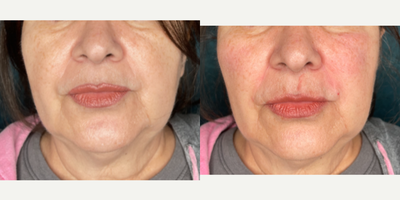
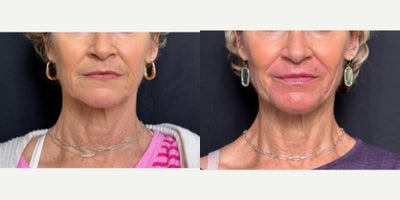
When it comes to treating the face, a combination of treatments usually leads to the most natural outcomes. As we age, volume loss is caused by a combination of factors including bone loss, fat pad migration/thinning, and skin texture changes (loss of collagen and decreased elasticity). Each of these issues should be addressed in order to achieve natural looking results. Replacement of volume loss with fillers/sculptra helps to recreate the bone/fat pad loss that occurs with aging. Energy-based devices such as lasers, microneedling, radiofrequency help to tighten the skin and restore some of the lost collagen and elastin. Using one or some of these treatments will address the drooping that you mentioned in your question. A good skincare routine including retinoic acid, exfoliants, vitamin c, a good moisturizer, daily sunscreen will also help to improve your skin quality and texture. You will be surprised how much implementing some of these changes will do for your skin!
Asked By: msleslie
ANSWER
Mohs surgery is not appropriate for treating actinic keratoses. I would confirm the diagnosis with your physician - perhaps something has been lost in translation. Mohs surgery is reserved for skin cancer removal, and even all skin cancers do not qualify for this procedure. If you want to avoid scarring in this area, a topical chemotherapy cream can be used to treat actinic keratoses. I hope this helps!
Asked By: Fierce125830
ANSWER
Depending on the size of the defect, a flap may or may not be necessary. A good Mohs surgeon will discuss different options with you, but a final decision cannot be predicted or made in advance, because it depends largely on the size of the defect once the skin cancer has been removed. Flaps are good options for larger defects, especially when multiple cosmetic subunits are involved (vermillion lip for example separates two cosmetic subunits: the pink part of the lip from the skin colored part). Occasionally (if the defect is not very large) the lip can be closed as one line that crosses the vermillion border. I hope this helps!
Asked By: Magical661559
ANSWER
There are usually options for Mohs repairs following complete removal of the skin cancer. If the layers that were taken during the Mohs procedure are very thin, and if the location is in an area where there is a rich blood supply, and as long as the patient understands that the scar will be as large as the Mohs defect once it is all healed up, this could be a very good option in some cases. However for deeper wounds, or in areas that are cosmetically sensitive, closing the area with sutures may have a better cosmetic outcome. These are some of the factors that we consider when discussing repair options with patients.
Dr. Amelia Damse is highly praised for her expertise and patient-centered approach in cosmetic and dermatological treatments. Patients consistently report satisfaction with her natural-looking results, professionalism, and attentive care. Her practice is noted for its clean environment, minimal wait times, and friendly staff.