
I am a fellowship-trained aesthetic plastic surgeon in New York City. My practice focuses on aesthetic surgery of the body, and breasts and face. I specialize in facelifts, tummy tucks, liposuction, hi definition body contouring and fat transfer for which I ut
Asked By: jgmj
ANSWER
BodyTite uses radiofrequency energy to heat the skin and soft tissues in between the two "ends" of the device which, in turn, stimulates those tissues to make more collagen and elastin than they normally would, resulting in thicker, better hydrated and tighter skin and soft tissue. While in theory, there could be a potential "arcing" of the energy from the device to metal elsewhere in the body, in practice it is extremely unlikely. In my opinion, BodyTite can be performed on one part of the body if the implanted metal device is far removed. Hypermobility of the soft tissues as a separate issue likely would make BodyTite less effective in tightening but not entirely. I recommend getting a consultation with a qualified plastic surgeon to get an opinion of your options and good luck.
Asked By: Glorious879077
ANSWER
Your situation is common following abdominoplasty as there is sometimes unpredictable healing. You have a hypertrophic scar which has the following characteristics: thickened, discolored and raised tissue where ideally a flat, thin and less obvious healed scar would be desired. The blood vessels being visible following steroid injection happens because the normal surrounding skin has undergone thinning or atrophy of the dermis and underlying fat making those vessels much more obvious. Further steroid injections (in an attempt to thin the scar) will likely make the situation worse. Things to consider are: Does the thickened part of the scar extend the entirety of the incision or limited to one area such as the middle where there is the most tension? Is it itchy or are there other symptoms? If this is an isolated area and you are not a keloid or poor scar former, the definitive treatment would be to excise the unsightly scar full thickness and to close the incision with minimal tension and in multiple layers where the strength layer of the soft tissue called the fascia is recruited to provide a stable and reliable repair. This can be done under local anesthesia (awake) and also can be done in stages so that the surgeon and you can decide that it is the right path to take with a short recovery and the best chance for a good aesthetic result. Please consult a qualified plastic surgeon to evaluate it in person and good luck.
Asked By: Mommybutterfly27
ANSWER
While your question is very common, it addresses two separate issues: the first is lipo and fat transfer to the buttocks and the second is whether a procedure on the abdomen is appropriate when you have diastasis (muscle laxity) and loose skin. BBL's can be performed on candidates where they have enough fat to give from the liposuctioned areas with good skin elasticity either under general anesthesia or local anesthesia (awake) which was first pioneered in our office. Liposuction from an areas such as the abdomen where diastasis or muscle laxity and skin laxity is generally not recommended because if the overlying skin is loose, it may become even looser and "fall down" with gravity and look worse because of wrinkling and other negative aspects. Further, removing fat from the subcutaneous layer or the fat located just under the skin and over the muscle does nothing to improve the presence of intra-abdominal or visceral fat under the muscle that protrudes out due to loose muscle tone. I would seek a qualified plastic surgeon to give an opinion to your options in a consultation and I wish you luck.
Asked By: Itsaandy
ANSWER
Regardless of the energy component associated with liposuction, the basic reason for a deep and crooked depression or "dent" following suction removal of fat is that there was too much fat removed from one area compared to that of the surrounding areas. There is less support of the overlying skin compared to the fat and skin right next to it causing it to collapse downward or invert resulting in a visible dent which is accentuated in certain light and shadows. Since a year has passed without improvement, it is not due to swelling or other reasons that resolve on their own and, unfortunately, requires another procedure or procedures to correct the aesthetic deformity. That would include tumescing or putting fluid into the subcutaneous fat space under the skin just as was done with liposuction, releasing any scar tissue with a cannula off suction (we don't want to remove any more fat from the area of the dent which would make it worse) and finally putting in volume or material to fill the depression smoothly to re-support the skin. The best filler is your own fat harvested from a different area you want to reduce in size and process the fat for injection into the defect. Depending on how much fat survives after several months, another procedure or more may be required to gain the desired amount of smoothness. In our practice, this often can be done under local anesthesia (awake) which reduces risk of general anesthesia and the number of days to recover and may be financially advantageous since extra staff especially anesthesiologists are not required. Consult a qualified plastic surgeon and good luck to you.
Asked By: foozball
ANSWER
You are very perceptive in that when considering a shorter scar for an abdominoplasty or tummy tuck operation, this may leave leftover loose skin on the sides. The reason is that the skin and fat that is removed between the umbilicus and the pubic area is elliptical or roughly football-shaped where the most skin is excised from the midline (along the belly button area) and tapered toward the sides or hips. In an attempt to keep the horizontal scar as short as possible, there may be excess skin that, when sutured, "heaps" up causing a bulge or what is called in the business a "dog ear". It is not uncommon to do a small dog ear excision a few months later if it doesn't settle in which is a small compromise in that the horizontal length of the incision can be kept shorter. Of course, that varies with how much skin has to be taken in, the size of the patient, etc. but you hit the nail on the head as far as the concept goes. Other considerations are how low to place the scar; in my opinion, the lower the scar is placed safely, the more it can be hidden below the waistband of a reasonably sized two piece swimsuit or lingerie.
Asked By: Pioneering260770
ANSWER
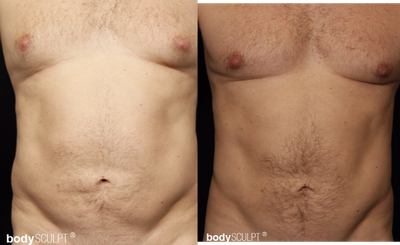
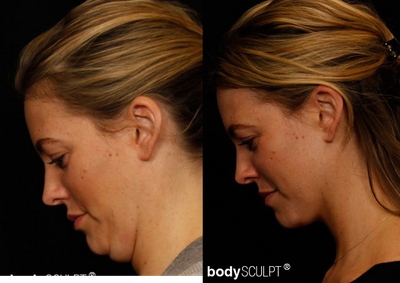
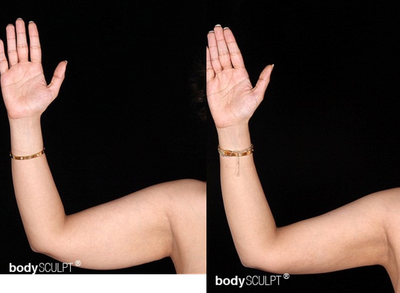
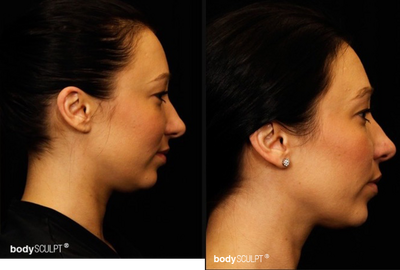
You are accurate in your assessment in that liposuction can be impressive while the skin tightening procedure is moderate in results but still can be significant to the patient. The key is to make sure the patient is a candidate for the procedure. Too much laxity or looseness of the skin and soft tissue will exceed the capability of operation and be unsatisfactory no matter which type is used. Lots of stretch marks and thin skin are hallmarks of damaged skin which has lost the ability to retract which can be due to massive weight loss, multiple pregnancies and the like. No minimally invasive operation will be effective and liposuction with these patients will result in worse hanging skin in most cases since the removal of fat will also remove support of the overlying skin. People with minimal stretch marks, thick enough dermis and moderate fat to be removed have the best chance of good results and contracting soft tissue. Once a patient is deemed a candidate for liposuction and skin tightening, what are his or her options? The principle of skin and soft tissue tightening lies in the production of collagen and elastin, naturally occurring compounds that contribute to the thickness, structural support and hydration of the skin and soft tissues. Like many things, the body makes less of these materials as we age resulting in thinner and less structurally sound skin. Controlled inflammation is key to induce the body to make more of these and other compounds following energy application. The types of energy used are varied and of differing efficacy starting with the most basic: mechanical inflammation. The act of passing a cannula under the skin imparts mechanical energy to the tissues which in itself stimulates production of these compounds when liposuction is performed. Other types of energy include laser (focused light energy such as SmartLipo), ultrasound (high frequency sound waves tradename VASER), radiofrequency (a type of electromagentic energy such as microwaves, fluorescence, etc. as in BodyTite), and noble gas carrying electrons or plasma energy (such as helium in Renuvion) all of which which heat the tissues to achieve stimulation of the cells to produce collagen and elastin. However, not all modalities are equally effective in achieving these results and may have different risk profiles. In my opinion having used all of the above machines in our practice, radiofrequency has the most consistent and significant results in contraction compared to all the others and also has the strongest peer-reviewed body of literature demonstrating its efficacy. I also am able to perform liposuction with radiofrequency (as well as the others) under local anesthesia so the patient does not have the additional risk, expense and excess recovery time of general anesthesia if he or she chooses that technique. All of these modalities are limited in that if there is too much laxity as mentioned above, the only effective procedure is to cut and saw in a traditional surgery such as a tummy tuck or abdominoplasty so choosing a qualified plastic surgeon with lots of experience is important. I have performed over 5,000 of these surgeries on 12 different anatomic areas over my 21 years in practice so have strong opinions on choosing the right one for each patient. Thanks for the question and good luck with your search.
Asked By: Fabulous172494
ANSWER
Fibrosis, or firm areas, in the soft tissue following liposuction, especially with laser is not uncommon as inflammation and swelling is part of the healing process. However, this should usually resolve after several weeks or a few months on its own. Hard, outlined areas that persist for years are due to scar tissue under the skin which may have resulted from improper laser application, fluid and blood collection (which is highly irritating to the soft tissue) or technical misadventure. If non-invasive maneuvers such as massage, steroid injection (not recommended), or external ultrasound are not successful, you may need another procedure. Liposuction alone may not be enough since there is scar tissue that is not amenable to it, as in your case. Internal ultrasound (VASER) and/or radiofrequency (BodyTite) have helped in certain cases but in extreme cases, the scar which is manifested as a capsule of tissue under the skin may be needed to be removed by direct excision to get the overlying skin and soft tissue to look and feel right. Good luck and look for a qualified plastic surgeon who has a large volume of body contouring cases in his or her experience since this is more than a run-of-the-mill situation.
Asked By: Yily Doll Not
ANSWER
Unfortunately, if the umbilicus is off line or anywhere except the midline following an abdominoplasty, it is unlikely to move/improve position on its own. The reason is that the belly button has a stalk that is attached to the abdominal wall or strength layer of the trunk and is set in position by the surgeon when a) the new opening for it is made in the skin flap and b) sutured into place. That is why the preoperative markings are a critical part of the overall operation because once the patient is placed supine (on her back) on the OR table and the skin flap is created, made and then "inset" or readied for suturing, the surgeon relies on the markings to accurately place all key anatomic elements such as the umbilicus. I would wait several months following surgery to assess how much it bothers you so that you may make an informed decision whether to correct it. That would require elevating the skin flap again, detaching the umbilicus either at the stalk ("floating" the belly button), or anchoring it in the middle without detaching it and adjusting the lower, horizontal scar in the direction toward the midline. In your case, it looks like the lower incision is uneven and that could be improved at the same time if choose to correct the belly button position. Thanks for your question and good luck with the next step, whichever you decide to do.
Asked By: Gregarious2918
ANSWER
Thank you for your question and congratulations on leading a healthy lifestyle. Based on your photos, it appears that you would benefit from another facelift since you (presumably) had a good experience before. Although there is only one front view, dramatic improvements in your jowls can be made along with restoring the volume to your cheeks/midface with a well-planned lift of the SMAS and skin. The technical approach to the SMAS varies from surgeon to surgeon but should be addressed during your consultation for the most durable results. It is difficult to assess your neck ( a lateral or side photo would help) but oftentimes addressing the neck muscle (platysma) directly will sharpen your jawline nicely. Regarding your breasts, you are fortunate to have your nipple/areolar complex above your infra-mammary fold (pseudoptosis). You have correctly identified that superior fullness is a desired aspect of the breasts most women seek. What we can't determine without a physical exam is how tight the skin is. Other considerations include: are you happy with the overall size of your breasts or would you like to go bigger? A qualified plastic surgeon will be able to recommend the right procedure. Considerations will include 1. how larger the overall breast size will be 2. the adequacy of the skin "envelope" which will determine if a skin excision will be needed to ensure the best possible shape 3. whether the projection of an implant will be more than you want or if a mastopexy with internal tissue manipulation will give you the natural but perkier look you may have in mind. All these things considered, given your excellent health, well-informed demeanor and desire for aesthetic improvement will, hopefully, get to your goals with the assistance of a qualified plastic surgeon. Best of luck
Asked By: MachitoLindo
ANSWER
As you probably know, gynecomastia is a very common problem which can affect as many as one in three males at some point in their lives and can affect their quality of life. There is a range of how much extra breast and fat tissue there is as well as the quality of the overlying skin which will determine the appropriate course of action. Although I don't have your preoperative photos, you were likely a moderate grade gynecomastia patient. Where there is no excessive skin laxity, liposuction is an effective treatment for reducing the volume and shaping the contour. I use both ultrasound (VASER) and radiofrequency (BodyTite) energy to assist in the emulsification of the fat/breast tissue and tighten the skin, respectively. This is also done under local anesthesia which is a safe, comfortable and effective way to do the operation.Specific to your case, I would allow some more time to pass because some of the residual volume is due to swelling which will subside. If you still appear too big after enough time has passed, see your surgeon to discuss why that could be the case. It is either not enough fat/breast tissue was removed, the subareolar (under the nipple) gland was not removed, or a combination of both. While some may stage the glandular excision at a second operation, I routinely address the gland by direct observation at the time of surgery and take out the amount of gland that will result in the best possible contour. Glandular tissue is not able to be removed by suction and requires accurate surgical excision. The good news is that also can be done in the awake patient and your surgeon will inform you of your options to get the best possible outcome.
Dr. Christopher T. Chia is praised for his attentive care, realistic expectations, and clear communication, particularly in procedures. Patients appreciate his meticulous approach and the supportive, professional staff. Recovery experiences are generally smooth, with results aligning well with patients' goals.