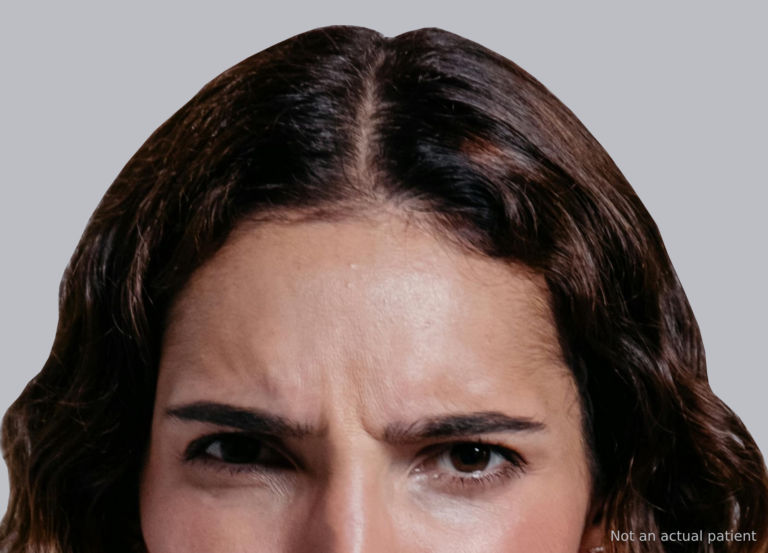
Dysport, the latest injectable wrinkle treatment, has finally arrived as the first true competitor to Botox. And already the RealSelf community is finding out from our docs just how Dysport might amount to serious competition to Botox.
It's still early in Dysport's run -- very early, we should stress -- but here's what we've been hearing from medical experts about what Dysport could do better than Botox.
Botox typically takes 3-7 days to reduce the appearance of facial wrinkles and lines. According to the doctors on RealSelf, Dysport could start to show its effect in as little as a day. Atlanta plastic surgeon Dr. Carmen Kavali, who has administered Dysport injections, has observed results "as early as 1-2 days after treatment."
In most studies, Dysport is lasting about 3-4 months, about the same as Botox. But, as our medical experts point out, some studies in Europe show Dysport might last even longer than Botox. It hasn't been out long enough here to know yet -- but you can be sure RealSelfers and docs will share their experiences with the community.
Dysport -- the long-awaited Botox competitor -- has started shipping to docs, and RealSelf's first member review has arrived!
Jen629 tells the RS community that she "wanted to look natural but good" for her August wedding -- and so she took the leap a week ago.
She says it's "similar to Botox" but had her first no-movement moment the very first day after treatment.
We know you've tried Dysport -- and want to hear from you!
It was recently announced that Dysport, a form of botulinum type A, will officially be available in U.S. doctor offices this July. This news come less than a month after the FDA approved the product, the first of its kind to compete head-to-head with Botox.
We've written a number of times about the entry of Dysport into the market, and what it will bean for Allergan, the makers of Botox. Only time will tell, and now that time is just a month away!
For those of you who have used Botox in the past, are you considering trying Dysport, or sticking to what you know? For more information, check out some of the conversations happening on RealSelf.com, or visit the Physicians Coalition for Injectable Safety for additional information.
We're looking forward to reviews from those who try out the new product, so be sure to keep us posted!
Unscientific consumer research about Dysport points to the uphill battle Medicis' marketing department will face in the process of branding Dysport, their newly FDA-approved Botox alternative.
Using a poll on Facebook, we asked, "What do you think of when you hear the name Dysport?" We received some pretty choice answers:
A Medicis representative, not so amused by the name associations, had to correct us on the pronunciation at the ASAPS conference in Las Vegas last week.
"Dysport is pronounced 'DISS-port,' not 'DIE-sport!'" From the responses we received, it seems of higher importance to make certain consumers don't confuse Dysport with a new Dyson vacuum cleaner.
We asked Medicis, "Why the name change?" and were told by a representative that "Reloxin was the proposed U.S. name for Ipsen’s botulinum toxin product for aesthetic use, but the product will now be marketed under the name of Dysport."
In private discussions with Medicis employees, there is an acute awareness that having Dysport brand name forced upon them by the FDA poses serious challenges to their marketing to consumers.
Medicis recently announced the long-awaited FDA approval of Dysport, the first and only competitor to Botox. You can see a related story in The New York Times.
Doctors on RealSelf.com have been looking forward to the launch of Reloxin, grateful that there will be a choice in products and some competition in the marketplace, but disagree on whether or not the new product will affect the price of Botox.
Baltimore facial plastic surgeon Theda Kontis, MD recalls that "when Juvederm came out, we were wondering how it would affect Restylane prices. They came out priced the same--so competition didn't change a thing."
Kenneth Steinsapir, MD, a Los Angeles oculoplastic surgeon, thinks we need to "recognize that Allergan's BOTOX is the market leader and Reloxin [Dysport] will be the johnny-come-lately."

The potential FDA approval of Reloxin was featured in the Skin Deep column of the New York Times, pointing out that Reloxin would directly compete with Botox in the market of injectables aimed at smoothing fine lines and wrinkles.
Although not yet legal here in the U.S. (Reloxin is currently available under the name Dysport in the UK and South America), the debate has already started as to which product lasts longer, works faster and costs less.
Everyone is on pins and needles (pun intended) waiting for Reloxin, especially Allergan, the maker of Botox Cosmetic.
This week, Archives of Facial Plastic Surgery published a new study evaluating the long-term safety of Reloxin for repeated use in moderate to severe glabellar lines (forehead wrinkles) over thirteen months.
Medicis Pharmaceutical expects to receive FDA clearance for Reloxin injections later this year. When this occurs, it will be the first real competitor to Botox, which created about 1.3 billion in revenue last year.
PurTox -- a potential future competitor to the wrinkle relaxer Botox Cosmetic -- announced a successful completion of 400 person study on the effects of PurTox.
The study found high satisfaction by participants with respect to PurTox reducing the appearance of frown lines. Another direct Botox competitor called Reloxin is also pending FDA approval but is distributed outside of the US.
By Tom Seery for Real Beauty News
Press release:
Mentor Corporation Announces Completion of PurTox(R) 3A Study