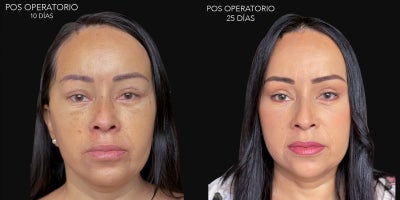
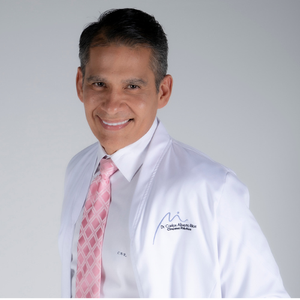
Dr. Carlos Alberto Ríos is a plastic, cosmetic, and reconstructive surgeon. He specializes in the removal of liquid silicone, also known as biopolymers, with over 20 years of experience providing medical care to patients affected by injections of body-contour
Asked By: Powerful484505
ANSWER
You are actually asking the right questions, because in cases like yours the issue is usually a combination of: * fat distribution* skeletal anatomy* soft tissue proportions* and hip projection Based on your photos, you appear relatively lean already, so there are limits to how much the flanks alone can be reduced with liposuction. Some of the prominence you see is likely anatomical structure rather than “excess fat” alone. That is why, in many patients seeking a smoother and more feminine waist-to-hip transition, the best result often comes from *balancing proportions* rather than simply removing more tissue. In your case, the options that may create the biggest visual change are likely: * selective flank/lower back liposuction* increasing lateral hip/glute projection* and, in some patients, waist narrowing procedures such as rib remodeling You correctly identified an important concept:sometimes the hips are not narrow because of fat deficiency alone, but because the skeletal frame and pelvic proportions differ anatomically. In those situations, liposuction by itself may improve contour modestly, but it may not fully create the softer transition you are describing. For patients with very little available fat, gluteal or hip implants may sometimes create more noticeable structural widening than fat grafting alone. Fat grafting can still help, but results depend heavily on how much donor fat is available and how much survives after transfer. In our practice, we frequently evaluate body feminization patients seeking softer waist-to-hip transitions, and one of the most important parts of planning is determining: * what is truly removable fat* what is fixed anatomy* and whether the best strategy is subtraction (liposuction), addition (fat/implants), or structural waist modification. I do think improvement is realistic in your case, but probably through combination contouring rather than aggressive liposuction alone.
Asked By: akjessk85
ANSWER
Yes — in many petite patients, especially those with very little natural breast tissue, implants placed under the muscle can initially look: * higher* tighter* fuller on top* and sometimes visually “larger” early on As healing progresses and the implants soften, settle, and “drop/fluff,” the breasts often begin to look: * more natural* less projected* softer* and sometimes visually slightly smaller even though the implant volume itself has not changed So your thinking is generally reasonable. A 285 cc implant after full settling may visually resemble what you initially imagined a firmer/tighter 250–265 cc result would look like early on. However, this is not an exact mathematical reduction in volume — it is more about: * shape* projection* softness* implant width* tissue stretch* and how the implant blends with your frame after healing In very petite patients like yourself (4’10”, 100 lbs), even relatively small differences in implant size can become surprisingly noticeable because there is less chest width and less soft tissue coverage. Also important:a lift changes the equation significantly. Since the breast skin envelope is tightened and reshaped, implants can initially appear more projected or rounder until tissues relax over time. In our practice, we frequently evaluate petite patients trying to choose between “slightly bigger” versus “slightly more natural,” and one of the most important things to understand is that implant dimensions and profile often matter just as much as the actual cc number itself. Many patients who prioritize a softer, elegant, natural look are ultimately happier slightly smaller rather than slightly larger — especially in petite frames.
Asked By: Dinosaurmom12
ANSWER
Looking more carefully at your photo and understanding your concern about constantly looking tired, I actually think your issue appears more structural than superficial skin quality alone. You seem to have: * early midface descent* heaviness around the nasolabial/marionette area* loss of jawline definition* and lower facial tissue descent creating that fatigued appearance That is why treatments like RF microneedling or repeated collagen stimulators may give only modest improvement while still not truly correcting the underlying problem. In a patient like you, a well-executed deep plane facelift — especially when performed conservatively and naturally — can sometimes produce a much more meaningful and longer-lasting rejuvenation than years of temporary treatments. Importantly, younger facelift patients often heal beautifully because: * skin quality is still relatively good* tissues are healthier* and less aggressive pulling is required You do not appear “overdone facelift” territory at all. In fact, this is often the age where deep plane techniques can create very elegant and natural rejuvenation because the tissues are repositioned before extreme aging occurs. You may also benefit from: * lower blepharoplasty* conservative fat grafting if volume loss is present* or skin quality treatments as complementary procedures But in my opinion, based on your anatomy and goals, the deeper tissue descent itself appears to be the main issue — not simply collagen deficiency or skin texture. In our practice, we frequently evaluate patients in their early 40s seeking a more definitive and natural rejuvenation approach, and many are surprised to learn that a properly performed deep plane facelift can sometimes look *more natural* than years of fillers and repetitive non-surgical treatments.
Asked By: lookinmybest
ANSWER
After 25 years with saline implants, developing a grade 3 capsular contracture on one side is unfortunately not uncommon. Over time, the body can progressively thicken and tighten the capsule around the implant, leading to firmness, distortion, asymmetry, and discomfort. The reassuring part is that capsular contracture can usually be treated successfully. However, there is always some possibility of recurrence because the body naturally forms scar tissue around any implant. The recurrence risk depends on many factors, including: * your healing tendency* implant age* implant placement* chronic inflammation or biofilm* surgical technique* implant type* and whether the capsule is fully or partially removed In general, recurrence is possible, but many patients do very well for years after revision surgery, especially when the underlying causes are addressed carefully. If you choose explantation now and later decide to re-implant, yes, the surgery can become somewhat more complex because: * tissues may thin over time* scar tissue changes the anatomy* the pocket may contract or shift* and additional support or reconstruction techniques may sometimes be needed That said, delayed re-augmentation is still commonly performed and can often be done safely in experienced hands. In our practice, we frequently evaluate patients with long-standing implants and capsular contracture, and one of the most important decisions is determining whether your goals are best achieved with: * implant exchange* total capsulectomy* explant alone* staged reconstruction* or delayed re-augmentation later on There is not one single correct answer for every patient. The best choice depends on your anatomy, symptoms, tissue quality, and long-term goals.
Asked By: Celebrated5049
ANSWER
Based on your photos and description, I do understand what you mean by the implants appearing very medial, round, and somewhat “stuck on” the chest — especially when lying down. The good news is that your concerns are understandable and, in many cases, potentially improvable with revision surgery. Several factors may be contributing to the appearance: * implant width relative to your frame* implant projection and cohesiveness* subfascial placement* previous breast lift anatomy* tight medial pocket positioning* and limited soft tissue coverage Your implants do not appear excessively large, but they do appear relatively prominent for your chest anatomy and soft tissue thickness, which can create that “disc” effect instead of a softer natural slope. You are also describing something very important aesthetically: not necessarily wanting “smaller breasts,” but wanting breasts that move and rest more naturally. In many patients, achieving a softer and more natural result may involve some combination of: * downsizing implant volume* changing implant dimensions* pocket adjustment/capsule revision* lateral pocket balancing* changing implant plane* or adding fat grafting for softer transitions and camouflage However, moving implants too far laterally also carries risks, including loss of cleavage or an “empty center” appearance, so revision planning has to be very precise and individualized. In our practice, we frequently evaluate patients seeking a more natural revision result after augmentation, and one of the most important parts of revision surgery is balancing implant size, tissue characteristics, chest anatomy, and patient goals — not simply making the implants smaller. Your result is not “bad” or alarming medically, but I do think your aesthetic concerns are valid and worth discussing with an experienced breast revision surgeon if this continues affecting your confidence and satisfaction with the result.
Asked By: FranaDubois
ANSWER
Based on your photos and description, this appears more likely to be a combination of: * your natural chest/rib cage anatomy* implant pocket positioning* and the way the implants settle laterally when lying down or relaxing The reassuring part is that I do not see obvious signs of a dangerous complication such as severe capsular contracture, rupture, or major bottoming out. Your implants actually appear relatively soft and mobile. That said, I do understand your concern about the breasts sitting too far toward the sides and leaving less fullness toward the center of the chest. In some patients, this can happen because: * the chest wall is naturally wide* the breast footprint starts laterally* the implants are too wide for the frame* or the implant pockets were dissected too far outward during surgery Often, it is not purely “bad placement” nor purely anatomy, but rather an interaction between both. The good news is that this type of issue can often be improved if it truly bothers you. Depending on the anatomy and implant dimensions, revision options may include: * lateral pocket tightening (capsulorrhaphy)* changing implant size or width* changing implant plane* or improving cleavage support internally In our practice, we frequently evaluate patients with concerns about implant positioning and breast asymmetry, and one of the most important things is distinguishing between normal anatomical limitations versus a pocket that can realistically be improved surgically. At two years post-op, what you are seeing now is likely close to the stable long-term result, so if the appearance continues bothering you emotionally, it would be reasonable to seek an in-person revision consultation with an experienced breast revision surgeon.
Asked By: sdnatvbb
ANSWER
From your photo, it does appear that your main concern is centered more around: * midface descent* lower facial heaviness* and downturn at the corners of the mouth rather than the upper face. One important thing many patients discover after facelift surgery is that not all facelifts improve the midface equally. Some techniques primarily target: * the jawline* neck* and lateral facial tissues while the central cheek and perioral area may remain relatively unchanged. That is likely why you still feel bothered by: * the nasolabial area* mouth downturn* and heaviness around the lower midface even after a SMAS lift and forehead procedure. The challenge is that the area around the mouth is one of the hardest parts of facial aging to fully correct surgically because: * facial movement is constant* tissues are heavy centrally* and volume loss often contributes in addition to skin descent Depending on your anatomy and what was previously done, improvement may sometimes involve: * midface-focused lifting techniques* deep plane revision approaches* volume restoration/fat grafting* corner-of-mouth support* skin resurfacing* or combinations of these The good news is that your overall skin quality still appears relatively good, and this does not look like a failed facelift as much as a procedure that may not have fully targeted the area that bothered you most. Revision facial surgery requires very careful evaluation because previous lifting changes the tissue planes and scar patterns underneath. In these cases, the goal is usually refinement and repositioning rather than simply “pulling tighter.”
Asked By: laurenn12
ANSWER
A lip lift can increase upper tooth show, but the amount depends on: * the technique used* your natural lip anatomy* lip length* muscle dynamics* and how much lift is performed In general, a traditional upper lip lift shortens the distance between the nose and upper lip, which often creates: * more upper tooth show* increased vermilion (“pink lip”) visibility* and a more lifted, youthful appearance The reason teeth become more visible is because the upper lip sits slightly higher after shortening. A direct lip lift can also increase tooth show in some patients, but it tends to work more directly on the lip border itself rather than primarily shortening the philtrum under the nose. Depending on the technique, part of the effect may indeed come from: * outward rolling/eversion of the lip* increased pink lip exposure* and improved lip definition rather than dramatic vertical elevation alone. The important thing is balance. Too much tooth show can sometimes look unnatural, especially at rest, so experienced surgeons usually evaluate: * resting tooth show* smile dynamics* facial proportions* and lip length very carefully before surgery. In patients with very little upper tooth show at rest, a properly planned lip lift can sometimes create a softer, more youthful facial balance without needing fillers.
Asked By: Graceful601882
ANSWER
A 50cc difference by itself is actually not dramatic visually. Most patients would not see an enormous difference between 650cc and 700cc alone. The bigger issue is usually not the extra 50cc — it is crossing into a size range where tissue stress begins increasing more significantly over time. Your surgeon is probably thinking less about: * “Can 700cc physically fit?” and more about:* long-term tissue effects* implant weight* bottoming out* stretching* rippling* thinning tissues* and future revision risk Especially since you already have: * a relatively small underbust (30)* larger hip proportions* and implants that have apparently held up well for 5 years he may be trying to protect the quality of your tissues long term rather than simply refusing size. Going from 450cc to 650cc is already a major volume increase. At that point, many surgeons begin evaluating: * soft tissue support* skin elasticity* pocket dimensions* nipple position* and implant width very carefully. Sometimes surgeons become resistant at certain implant thresholds because they know complications tend to rise disproportionately once implants become too heavy for the patient’s anatomy — even if the patient initially looks great. Another important detail is that larger implants can continue changing the breast over time, especially with: * aging* weight fluctuations* pregnancy* or gradual tissue stretching So your surgeon may simply feel that 650cc keeps you within a safer structural range while 700cc begins pushing those limits. In practical everyday appearance, the difference between: * a well-supported 650cc result vs* an over-stressed 700cc result may become much more noticeable years later than immediately after surgery.
Asked By: Easygoing467984
ANSWER
Based on your photos and description, this does not look like a simple “normal settling” issue alone. There appears to be a combination of:• high-riding implants• limited lower pole expansion• asymmetry• and possible early waterfall-type tissue mismatch where the implant and native breast tissue are not behaving as one unified shape. You are also describing something very important when you say:• “my old boob hanging off implants”because that is often how patients describe:• waterfall deformity• lower tissue descent• or implants sitting higher than the natural breast envelope. At the same time, your implants also appear somewhat high and tight, particularly for being over 6 months post-op. That can happen from:• pocket tightness• incomplete implant drop• lower pole restriction• scar contracture internally• or insufficient lower pole release during surgery. The lack of lower breast pole you are noticing is significant because ideally the lower breast should gradually round out and soften after augmentation/lift surgery. When that does not happen, patients can develop:• a “stuck high” appearance• excessive upper fullness• odd projection patterns• or a breast shape that feels disconnected from the chest. Your areolar scars also appear to have experienced tension and widening, which sometimes happens when:• larger implants are placed• tissues are tight• or the skin envelope is under too much strain. At only 5’3”, 425cc implants can place considerable tension on tissues depending on:• your original breast anatomy• skin elasticity• chest width• and tissue thickness. The encouraging part is that at just over 6 months, some settling can still continue. However, if the implants remain:• high• firm• asymmetric• or disconnected-looking it would be very reasonable to be evaluated for:• implant pocket position• lower pole anatomy• capsular tightness• and whether revision support techniques may eventually be needed. Your instincts that something feels “off” are understandable based on the appearance and your description.
Dr. Carlos Alberto Ríos García is highly regarded for his expertise in and , with many patients praising his professionalism, compassionate care, and the quality of his medical staff. Patients have reported feeling refreshed and relieved after procedures, highlighting the importance of removing harmful substances from the body. While most reviews are positive, some patients have expressed concerns about the cost of procedures and the need for proper wound care by nurses.