Show more
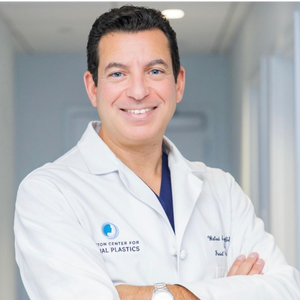
Dr. Ezzat is the medical director of The Boston Center for Facial Plastics located in the exclusive Back Bay district of Boston. He is also Director of the Division of Facial Plastics and Reconstructive Surgery and Clinical Associate Professor at Boston Unive
Asked By: Kaoruhota
ANSWER
I'm sorry you are going through this. As a revision specialist, I see quite a bit of these cases. A good rhinoplasty surgeon sees their results out over 1 year - minimum. This is critical to understand how the nose heals over time and to know what works and what doesn't in your hands. This is not uniformly reinforced when you go abroad for surgery. The honest answer is that, in most instances, improvement can be made. How much depends on how aggressive the procedure was and what exactly you have left over from the first surgery. I advise seeking out a board-certified specialist with extensive experience in revision rhinoplasty and advanced grafting techniques. Be upfront in your wishes but make sure whoever you go to is also upfront about realistic expectations and possible complications. This is critical to a good working relationship. Best of luck to you! Dr. E
Asked By: Honest529771
ANSWER
I'm sorry you are experiencing this. Silicone implants are very common in Asia - this is due to a number of factors. While the implants can produce predictable results in a variety of hands, these implants have up to a 20% failure rate over the life of the implant. In fact, the longer the implant remains, the higher the incidence of implant rejection. I would be very concerned that this may be happening with you. Best move is to find a specialist with extensive experience in salvage rhinoplasty from implant failure for a full exam. (There are nuances of the procedure that are critical to obtaining a good result) If this implant is failing, you have the option to remove it and let the nose heal or reconstruct it immediately with rib cartilage. There is no benefit of letting this heal and contract down, then doing the procedure later. Good luck! I hope I'm wrong that the implant is failing, but if it is, finding the right person will allow you to get the best results out of this process. Best, Dr. E
Asked By: Intelligent5383
ANSWER
Thanks for reaching out. The answer to your question is YES. This is a common procedure among surgeons who are well-versed in revision rhinoplasty. By the pictures you provided, the dorsum of the nose looks well-positioned. It's the over-rotation (upturned) and over-projection (sticking out too far) that is resulting in a very unnatural appearance. I recommend doing some research and seeking out a few consultations with board-certified specialists who have extensive experience in revision rhinoplasty and advanced grafting techniques. Hope this helps! Good Luck! Dr. E
Asked By: Good431559
ANSWER
Thank you for your question. As a rule of thumb, I never use silicone in the nose. Over time, silicone can be recognized as foreign by the body. When this happens, the body will start to reject the silicone implant - requiring revision rhinoplasty.. If you look at the medical literature, complication rates, long-term, are higher for silicone and other implantable material over cartilage. In my practice, I only use cartilage and facia for rhinoplasty on patients with Asian descent. In experienced hands, the rate of resorption is far less than implant failure. I hope this helps answer your question. Good luck to you. Best, Dr. E.
Asked By: Dazzling2087
ANSWER
Thank you for your question. There are many ways to augment the midface, from implants to autologous tissue - including cartilage and fat transfer. Most surgeons who perform a good number of facial plastics surgery in the United States are comfortable with these procedures. So I agree that there should be more options available to you outside of having to travel to Korea. I would seek out a board-certified specialist who has extensive experience facial surgery. Hope this helps! Good luck! Dr. E
Asked By: a.anne
ANSWER
Thank you for your question. I’m sorry your experience wasn’t what you hoped it would be. By the pictures you provided, a revision rhinoplasty would be a good option for you. Of course, a full clinical exam would provide a more definitive answer. The goal of this is to attain the nose you’re hoping to get without having to go through this again. Therefore, I highly recommend you find a board-certified specialist with extensive experience with revision rhinoplasty. Take your time in finding the right surgeon for you, and go to as many consultations as you feel are necessary in order to make an informed decision. Best of luck, Dr. E
Asked By: Brave9480
ANSWER
Thank you for your question. Undergoing, or even contemplating a revision rhinoplasty, can be a very taxing experience emotionally. However, when you think you may need a revision, it is always best to find a board-certified specialist who is well-versed in revision rhinoplasty and get an opinion on what can and what cannot be done through surgery. Without examining your nose or reviewing the operative notes from the first procedure, it will be very difficult to comment on whether you are a candidate or not. A good surgeon will not just tell you that it can be done, they will perform a full exam and then take the time to review realistic expectations on what one can and cannot expect from a revision procedure. If needed, get multiple opinions. With nearly everyone offering virtual consultations, it has never been easier to find the right surgeon for you. Best of luck! Dr. E
Asked By: Witty166919
ANSWER
Thank you for your question. I see this quite frequently in my practice. If you are of Asian descent, more than likely the rules are a bit different for you when it comes to rhinoplasty. Due the to genetic makeup of the nose, it is not possible to accomplish what you would like without adding cartilage from elsewhere in your body to support your nose. You see, in most instances, this type of nose tends to have a short septum, which gives support to the nose throughout. If you attempt to alter the nose without recognizing this, you are asking for trouble. You also have an option for silicone implants into the nose, but these carry a lifetime risk of extrusion and I never use them. One more thing: Because our society is ever-changing and getting more diverse, I am seeing more patients who's parents are of differing backgrounds - so this is assuming you are solely of an Asian background. If not, this answer may not apply to you. The best thing to do is seek out a board-certified specialist in advanced rhinoplasty techniques and get an opinion. Best of luck to you, Dr. E
Asked By: Revised2022
ANSWER
Thank you for your question. Since it has been over one year since your first rhinoplasty, you can consider your nose healed and evaluate whether or not you have achieve the goals you were setting out for. If you feel goals haven’t been achieved, then I would seek out a board-certified specialist with extensive experience in revision rhinoplasty for a second opinion. Having performed many of these procedures, I know how daunting it is for individuals to consider a revision procedure. But do your research and seek out multiple consultations. I would proceed with the surgeon who you are most comfortable with. Hope this helps, Dr. E
Asked By: Nurturing430572
ANSWER
Thank you for your question. I’m sorry to hear that you’re unhappy with your rhinoplasty results. I would give yourself a full year to heal. The tip is likely to swollen and this may change your overall profile. Keep in contact with your surgeon. If this is not an option, then I would wait the full year, or at least close to a year, and find a board certified specialist with extensive experience in revision rhinoplasty. And most cases, revision rhinoplasty can bring your nose back to its form and function that you were hoping for. Best of luck, Dr. E
Dr. Waleed Ezzat delivers exceptional surgical results with a compassionate, patient-centered approach. Patients consistently praise his expertise in , , and , noting natural-looking outcomes that improve both aesthetics and function. His clear communication, attentive listening, and dedicated follow-up care create a trusting environment where patients feel heard and supported throughout their journey. The entire team, especially Carla, is highlighted for their warmth, professionalism, and thorough support.