What patients say
Dr. Tim Neavin is highly regarded for his expertise in cosmetic procedures, particularly in

Board Certified Plastic Surgeon
Show more
Show more
Show more
Dr. Tim Neavin is a board-certified plastic surgeon in Beverly Hills, California and the founder of Artisan of Beauty Plastic Surgery and Hair Transplant Center. He also has a practice in Santa Barbara, California.
A Castle Connolly Top Doctor, Dr. Neavin
Asked By: Beautiful431811
ANSWER
What you're describing (and sharing in your photos) appears to be contour irregularities from the original surgery rather than residual gynecomastia. The right side appears to have a volume deficiency creating the depression and groove, while the left may have a central depression beneath the nipple that makes the surrounding areolar tissue appear relatively elevated. I would recommend conservative fat transfer to restore volume along with conservative liposuction to blend the areas; this would be performed to soften the depressions, and smooth the transitions between the surrounding tissues. Expect at least two sessions, as these areas often require gradual correction to achieve a smooth, natural contour. The good news is that fat transfer can be performed under local anesthesia, making it a relatively straightforward procedure. I would avoid additional tissue removal, as that could worsen the existing depressions.
Asked By: Erudes
ANSWER
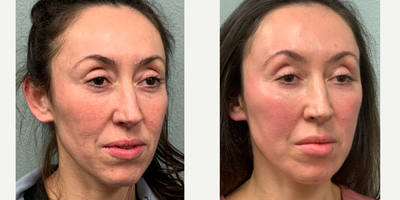
At 33, I would not recommend a facelift of any sort, including an endoscopic midface lift. From your photos, this appears to be more of a volume and contour issue than a problem with tissue descent. I would recommend conservative fat transfer to gently fill in some of the shadows and hollows, particularly in the midface, to create smoother transitions and better facial contours. You don't need dramatic volume restoration or surgical lifting. A little strategic fat placement can go a long way toward improving facial balance while maintaining a natural appearance.
Asked By: Zen0
ANSWER
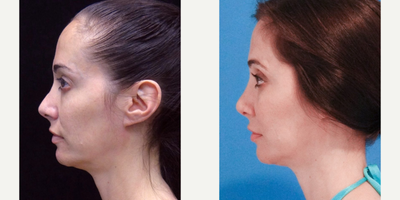
What you're describing sounds like a loss of facial balance, sometimes referred to as a “peanut-shaped” face, which becomes increasingly common as we age. The goal would be to restore a more top-heavy facial architecture by strategically transferring fat to the forehead, temples, and along the zygomatic arches, then blending that volume toward the angles of the jaw to create a wider, more sculpted appearance. A surgical lip lift could also help by shortening the philtrum and reducing the perception of facial length, creating a wider, more balanced facial architecture. Rather than focusing on individual features, such as the nose or lips, I would recommend evaluating the face as a whole. Restoring volume and improving facial proportions may accomplish more than you realize, potentially reducing the need for revision rhinoplasty.
Asked By: Danelectro67
ANSWER
Hollowing following blepharoplasty can occur when too much fat is removed, although it's difficult to determine whether your original surgery was overly aggressive without examining you and reviewing your preoperative photographs. Fortunately, this can often be improved with conservative fat transfer to restore lost volume and soften the transition between the eyelid and surrounding tissues. Small amounts of fat can be carefully placed along the orbital rim in a deep plane to help correct hollowing and contour irregularities, including the divot you describe. The key is to be conservative, particularly around the eyes, where the skin is thin and even small volume changes can make a significant difference. In some cases, more than one fat grafting session may be necessary to achieve the desired result. I would recommend an examination by an experienced, board-certified plastic surgeon familiar with revision blepharoplasty and periorbital fat grafting. Your expectations sound reasonable, provided the goal is improvement rather than perfect symmetry.
Asked By: Nice165138
ANSWER
Trigeminal neuralgia is not necessarily a contraindication to facial fat grafting or a temporal brow lift. However, I would be cautious about recommending either procedure without a better understanding of your condition. It's actually an interesting idea, particularly because fat contains adipose-derived stem and stromal cells that have demonstrated anti-inflammatory and potentially regenerative properties in experimental studies. There is growing interest in the potential role of fat grafting in treating certain types of neuropathic pain and nerve injuries. However, whether these benefits extend to trigeminal neuralgia remains unclear, and fat grafting should not be considered an established treatment for this condition. Although your symptoms sound relatively mild and well controlled, I am not aware of sufficient clinical evidence specifically examining the safety of facial fat grafting or temporal brow lifting in patients with trigeminal neuralgia. Surgical manipulation, inflammation, or irritation of sensory nerves could potentially trigger an episode or worsen existing symptoms. The fact that your flare-ups are infrequent is encouraging, but it doesn't eliminate that possibility. I would recommend discussing the proposed procedures with your neurologist before proceeding. With appropriate evaluation, surgery may still be reasonable, but I wouldn't promise that it couldn't aggravate your neuralgia.
Asked By: Prometheus123
ANSWER
Yes, microfat can technically be placed in the superficial tissues around the lower eyelid, but I generally prefer to place it in a deeper plane, along the periosteum of the orbital rim. This allows for restoration of volume and a smoother transition between the lower eyelid and cheek while minimizing the risk of visible irregularities. The skin beneath the eyes is extremely thin, and placing microfat directly into the superficial subcutaneous layer increases the risk of palpable nodules, contour irregularities, and visible fat deposits. For that reason, I typically avoid superficial placement of microfat in this area. Nanofat can be used more superficially because it contains much smaller, emulsified fat particles, although it is primarily used for potential skin-quality benefits rather than meaningful volume restoration. Importantly, you don't necessarily need to place fat directly beneath the skin to achieve a healthy, fuller appearance. Restoring volume along the orbital rim in the appropriate deeper plane can improve the appearance of the overlying tissues and create a natural, softer lower eyelid contour. The goal is not simply to add fat, but to place it in the safest anatomical plane to achieve a smooth, natural result.
Asked By: Anniepaws87
ANSWER
With the relatively small amounts of HA filler you had injected—1 mL in each cheek and 0.5 mL in each temple—I generally would not recommend dissolving the filler before facial fat grafting, assuming there are no areas of overfilling, swelling, or irregularity. Six months is a reasonable interval, and there is no requirement to wait until all the filler has completely disappeared before undergoing fat transfer. HA filler can persist longer than six months, but that doesn't necessarily interfere with fat grafting. An experienced surgeon can assess the existing volume and place fat appropriately without first dissolving the filler. In your situation, based on the quantities and locations you described, I would generally proceed without dissolving it, provided the examination is otherwise normal.
Asked By: ssrice
ANSWER
Yes, absolutely. Having had small amounts of hyaluronic acid (HA) filler or PRF EZ Gel in the past does not automatically make someone a poor candidate for facial fat transfer. In most cases, there is no need to dissolve existing filler before performing fat grafting. Based on the one photograph you provided, I do think you could benefit from facial fat transfer. Fat grafting can restore lost volume and improve facial contours while providing a natural, long-lasting result. There are certain circumstances where I may recommend dissolving filler first, particularly under the eyes. Hyaluronic acid attracts water, and in this delicate area, it can sometimes contribute to persistent puffiness or swelling. If there is existing swelling or excess filler beneath the eyes, I may prefer to dissolve it before fat transfer to achieve a more predictable result. In other areas of the face, such as the temples, cheeks, nasolabial folds, marionette lines, and chin, I generally don't find it necessary to dissolve filler unless there is obvious overfilling, irregularity, or another concern. Ultimately, the decision depends on an in-person examination, how much filler remains, and where it was placed. But having undergone multiple filler or PRF treatments does not, by itself, prevent someone from being an excellent candidate for facial fat transfer.

Asked By: cauliflowerisaflower
ANSWER
No, that's not necessarily true. Multiple fat grafting procedures to the face can be performed safely, and it's actually quite common to do fat grafting in stages to achieve the desired volume and contour. Any procedure that involves passing a cannula through tissue can produce some degree of inflammation and scar formation. However, when fat grafting is performed properly, the amount of scar tissue is generally minimal and usually does not prevent additional treatments. One reason patients may undergo more than one fat grafting procedure is that not all transferred fat survives. Some of the fat is naturally reabsorbed, and a second or even third procedure may be necessary to achieve the desired result. That said, repeated fat grafting is not entirely without risk. Over time, excessive grafting or poor technique can contribute to fibrosis, irregularities, fat necrosis, or firm areas beneath the skin. These complications are more likely when large amounts of fat are placed in a single area, particularly if the tissue cannot adequately support the transferred volume. The key is proper technique, conservative placement, and a thorough understanding of facial anatomy. Small amounts of fat distributed evenly across appropriate tissue planes generally produce more predictable results than placing excessive volumes in one session. In my experience, there is no arbitrary limit to how many times facial fat grafting can be performed. The decision should be based on the condition of the tissues, the results of previous procedures, and whether additional volume is actually needed. An experienced, board-certified plastic surgeon can evaluate these factors and determine whether another procedure is appropriate. The presence of some scar tissue alone is not a reason to avoid additional facial fat grafting.
Asked By: Jlynnnnn
ANSWER
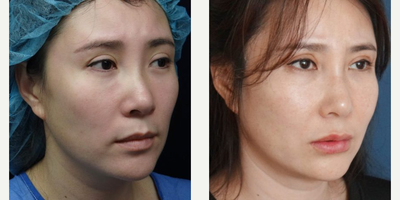
Thank you for your question. Based on your photos, I would consider a lower eyelid blepharoplasty combined with facial fat transfer. This can address prominent lower eyelid fat pads while restoring volume beneath the eyes to create a smoother, more youthful transition between the lower eyelids and cheeks. I would also consider fat transfer to the superior orbital sulcus to soften the hollowed appearance of your upper eyelids. Restoring volume to this area can make a remarkable difference in how rested and youthful your eyes appear. The goal is not simply to remove fat, but to restore the natural contours around your eyes. Of course, I would first want to make sure the persistent swelling isn't related to residual filler or another cause before recommending surgery.
Mention RealSelf to redeem.
Facial Fat Transfer patients receive up to 25 units of Botox complimentary to use post procedure. Offer valid for 6 months post surgery. Please inquire for more details and mention you saw Dr. Neavin on RealSelf.
Dr. Neavin developed super concentrated thrombocyte injections with fat (S.T.I.F.) to provide PRP and fat transfer in one procedure. The aim of S.T.I.F. therapy is to give patients more girth, and improves erections. Speak to Dr. Neavin about adding PRP treatment to your fat transfer at your personal consultation, and find out what S.T.I.F. therapy can do for you.
Dr. Tim Neavin is highly regarded for his expertise in cosmetic procedures, particularly in