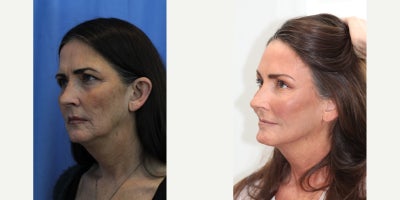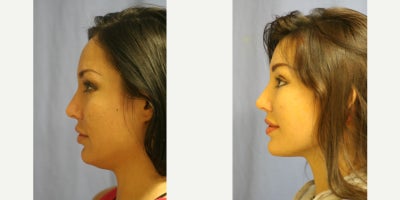
My passions for both Art & Medicine drive how I approach Plastic Surgery. Reverse the clock and age better than before with my Signature Muscle Repair technique, that I created during my residency at Northwestern University, making this procedure ONE of O
Asked By: Ever1973
ANSWER
For your concerns, I would consider non-surgical skin-tightening treatments such as Ultherapy, Sofwave, or Thermage FLX. These treatments use ultrasound or radiofrequency energy to stimulate collagen production and improve skin firmness, helping tighten the neck and improve jawline definition. Since you previously had good results with Ultherapy, repeating this treatment may be worth considering after an assessment of your current skin laxity. Thermage FLX may also help improve loose skin and jowls, while Sofwave can provide additional tightening of the jawline and neck. However, these treatments are best for mild to moderate skin laxity and cannot provide the same results as a surgical neck lift. Given your history of keloid formation, I would recommend an in-person consultation with a board-certified specialist to evaluate your skin and discuss the safest options before proceeding.
Asked By: Stuart3
ANSWER
You will typically begin to see an improvement around 2–3 weeks after surgery, once the initial swelling and bruising start to subside. By 3–4 weeks, you should have a better idea of how your jawline and neck contour are shaping up, although some swelling and tightness may still be present. Your results will continue to improve over the following months as the tissues heal and settle. Final results are generally best appreciated around 6 months after surgery. Remember that everyone heals differently, so be patient and follow your surgeon's postoperative instructions.
Asked By: Bonessa18
ANSWER
The treatment used in your case would focus on repositioning the deeper structures of the neck, including the platysma muscle, fascia, fat, and skin, by moving them upward and inward toward the midline. This helps restore a more defined jawline and neck contour. Excess skin and fat can also be removed when necessary, but the main goal is to address the underlying muscle laxity and tissue descent rather than simply removing tissue. The best approach would depend on whether your concerns are caused by excess fat, enlarged muscles, loose skin, or a combination of these factors.
Asked By: RealSelf Admin
ANSWER
A deep plane facelift differs from traditional facelift techniques because it works on the deeper layers of the face rather than mainly tightening the skin. It releases and repositions the underlying muscles and tissues to restore a more youthful appearance, particularly in the cheeks, midface, jawline, and lower face. This allows the skin to move naturally with the repositioned tissues, rather than being pulled tightly, helping create a softer, more natural-looking result. This approach focuses on restoring facial structure and maintaining natural facial expressions rather than simply stretching the skin. The best technique depends on each patient's facial anatomy, degree of sagging, and desired results.
Asked By: haybailzz
ANSWER
Based on your concerns and significant weight loss, I would recommend an assessment for a lower facelift combined with a neck lift to address the jowls, loose skin, and loss of jawline definition. A traditional SMAS or deep plane facelift may provide a more comprehensive and longer-lasting improvement than a mini facelift if there is significant skin and deeper tissue laxity. For the upper face, a brow lift may help improve forehead wrinkles and brow-related eyelid hooding, while an upper blepharoplasty may be beneficial if there is excess eyelid skin. The best approach would depend on your facial anatomy and the amount of skin laxity. My goal would be to restore your natural facial contours while maintaining your natural expressions and avoiding an overly tight or artificial appearance. An in-person consultation with an experienced facial plastic surgeon would be necessary to determine the most appropriate combination of procedures.
Asked By: Passionate717194
ANSWER
The ears show some asymmetry, particularly in the upper third. The antihelical fold appears more prominent and better defined in one ear, while the other has a slightly flatter and less regular contour. There may also be a difference in the shape of the upper cartilage and the transition between the antihelix and conchal bowl. Overall, this appears to be a mild contour asymmetry following otoplasty. An in-person examination would be necessary to determine whether this is due to cartilage reshaping or natural anatomical variation.
Asked By: jch1223
ANSWER
rhinoplasty with rib cartilage and iliac bone graft can cause a significant warping and resorption. also, it can be a big issue if there is an infection since all that put into the nose will get infected and scarred. not all autologous ( your own ) is good. silicone implant is considered foreign body but it is very friendly to human body. many heart valves and stents are made with silicone and also breast implant outer shell is made of same materials as in rhinoplasty implants. you can remove implant easily if there is an infection, and it comes out easily ( infected rib and cartilage, bone graft do not come out easily, surgeon has to rip or dissect tissues). Most of surgeons perform rhinoplaty with open technique ie, cutting the base of the nose called collumella. this part heals irregularly no matter who does the surgery, and it adds another scar outside and inside. Skilled rhinoplaty surgeon should know how to perform cosmetic rhinoplasty with closed technique without interrupting the base of the collumella, but rather approaches from the inside of the nose . always ask if they do 'closed rhinoplasty'. It offers many superior qualities compared to that of open technique. for the question, No , i don't recommend putting fillers next to the implant since each needle penetration has a risk of introducing the skin bacteria. you may need a customized implant that tapers smoothly from the nasion to the dorsum of the nose ( top of nose bridge that touches globella area. I hope this will be helpful to many who are looking for nose surgery since above is very essentials of 101 to plastic surgery fellows as well!
Asked By: mil27
ANSWER
All qualified plastic surgeons can perform facelift well, but make sure to see their before and after. we all do surgery differently. Also, it is important to define the reason why you are interested in facelift; droopy neck or tired look? do you want to look different? ( most of our patients do not want to look different), but want to look younger, refreshed, youthful? ( most of our patients fit into this category). but often after surgery photos look too natural but they don't look any better. that's why it is very important to see the work of individual surgeons to appreciate their work visually, yes they should look natural , but much younger or youthful. patients often are confused by the techniques of face lift or the naming of the procedures; SMAS, deep plane lift, skin lift, muscle lift , vertical lift, string lift, mini lift, midfacelift and often fancy names like Hollywood lift, celebrity lift. Most of the well qualified plastic surgeons do all of the above all or combinations of the above. that's why it is important to see their work, did the mean face appearance disappear? did the expression brightened? do they look younger? does your eye appreciate the changes? One should assume all the plastic surgeons went to good programs and they are in good standing (most of them are), you should choose who would be the best plastic surgeon by reviewing their work visually. that's why we call this "art of medicine', especially it is true for plastic surgery and yes, this is your face!
Asked By: HowDoYouKnow
ANSWER
The reason that you aren't having the result you were hoping for is that the neck was not pulled vertically. Any time you pull the neck sideways, it becomes the dominant force, which causes the skin of the upper neck below the chin to bulge outward. I rely on the vertical neck lift, in which the skin and the muscle below the chin and above the Adam's apple is returned to the face and not pulled outward toward the back of the ear. This creates a much more natural outcome.
Asked By: diamondgirl2222
ANSWER
The neck skin above the Adam's apple ( voice box, laryngeal prominence) belongs to the face. This part of the neck needs to be lifted north, vertically.The traditional neck lift that uses incisions behind the ear will pull the neck in the wrong direction. Often that tightens the bottom part of the neck too much, so that when you look downward, the skin will bulge outward. The solution is to perform a vertical neck lift, which will give that part of the skin back to the face as opposed to pulling outward.
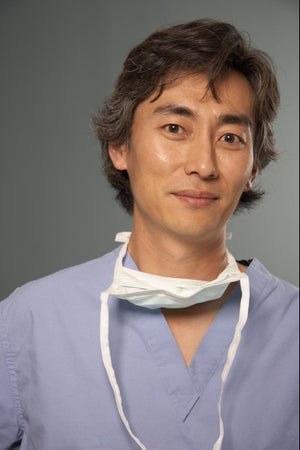
Dr. Michael Byun is highly regarded for his expertise in performing , , and procedures. Patients commend his professionalism, attention to detail, and the positive outcomes of his surgeries. While some patients experienced minor asymmetry post-surgery, the majority of reviews are overwhelmingly positive, highlighting Dr. Byun's skill and the satisfaction with their results.