McRae Plastic Surgery
MIillcroft Professional Center Unit 2, 4300 Upper Middle Road, Burlington, Ontario, L7M4P6

I am a cosmetic and reconstructive plastic surgeon that is board certified in both Canada and the United States. My areas of specialization are facial plastic surgery (facelift, eyelid surgery) and plastic surgery of the breast. I am Associate Professor of P
Asked By: Daisyvvo
ANSWER
Breast and areola asymmetry following unilateral breast reduction is a common concern for many women who have undergone this procedure. While breast reduction surgery aims to improve breast symmetry and proportion, it's important to understand that achieving perfect symmetry is not always possible. In your particular case are you overall more symmetric in terms of your breast volume, breast shape, and nipple position? When repositioning the nipple, a smaller areola is most often created. There are a range of sizes so you and your surgeon have some choice, but depending on the size you started with, a smaller size more likely. In a bilateral procedure the smaller areola is in most cases more aesthetic. Unfortunately when only one breast is operated on, this can result in areola assymetry. The good news is that the areola size of your smaller breast can be made smaller, and repositioned if needed to further improve your symmetry. Some changes in breast shape can also be achieved if needed. Make sure you discuss this with a board certified plastic surgeon and take the time to make sure all your questions are answered before proceeding.
Asked By: Passionate882988
ANSWER
Hi there I hope this helps. This is a similar answer to one I provided to another women recently: Predicting cup size in a breast reduction consultation is a common concern for many women seeking this procedure. However, it's essential to understand why accurately predicting cup size is not always feasible and why it shouldn't be the primary focus of the consultation. First and foremost, cup size is a notoriously unreliable measurement of breast size. The concept of cup sizes can vary significantly between different bra manufacturers and even between different styles within the same brand. Factors such as band size, breast shape, and individual body proportions all contribute to how a bra fits and what cup size it corresponds to. Therefore, basing expectations solely on achieving a specific cup size can lead to disappointment and unrealistic goals. During a breast reduction consultation, the focus should instead be on discussing your goals, concerns, and desired outcomes. A skilled and experienced plastic surgeon will assess factors such as breast volume, symmetry, nipple position, and overall breast shape to develop a personalized surgical plan that addresses the patient's unique needs. This plan may include removing excess breast tissue, reshaping the breasts, and repositioning the nipples to achieve a more proportionate and aesthetically pleasing result. A good rule of thumb is that the breasts will be reduced by about half of their current size in a breast reduction. Some patient will say that is too much, others will say that is too little. It is helpful when trying to figure out whether someone is looking for a reduction or a lift. However in general this approach leaves enough tissue to recreate a pleasing aesthetic and keep the breast size harmonious with the rest of the body as we mature. Now no 2 patients are alike, but that is why this is simply a rule of thumb. Additionally, predicting cup size after breast reduction surgery is further complicated by the fact that breast size can change over time due to factors such as weight fluctuations, hormonal changes, and pregnancy. While the goal of breast reduction surgery is to create long-lasting results, it's important to recognize that individual outcomes can vary, and some degree of unpredictability is inherent in any surgical procedure. In your case you should wait 6 months after completion of breast feeding to get an accurate reading of the volume of your breasts. Again variable but many women will deflate further. Instead of focusing on cup size, focus on communicating your desired aesthetic outcome and trusting the surgeon's expertise to achieve the best possible results. Make sure you connect well, look at their before and afters, and see if you like their aesthetic. By approaching the consultation with realistic expectations and a collaborative mindset, you can work together with your surgeon to create a surgical plan that aligns with your goals and delivers a satisfying outcome that enhances both physical appearance and your quality of life.
Asked By: Witty267980
ANSWER
Predicting cup size in a breast reduction consultation is a common concern for many women seeking this procedure. However, it's essential to understand why accurately predicting cup size is not always feasible and why it shouldn't be the primary focus of the consultation. First and foremost, cup size is a notoriously unreliable measurement of breast size. The concept of cup sizes can vary significantly between different bra manufacturers and even between different styles within the same brand. Factors such as band size, breast shape, and individual body proportions all contribute to how a bra fits and what cup size it corresponds to. Therefore, basing expectations solely on achieving a specific cup size can lead to disappointment and unrealistic goals. During a breast reduction consultation, the focus should instead be on discussing your goals, concerns, and desired outcomes. A skilled and experienced plastic surgeon will assess factors such as breast volume, symmetry, nipple position, and overall breast shape to develop a personalized surgical plan that addresses the patient's unique needs. This plan may include removing excess breast tissue, reshaping the breasts, and repositioning the nipples to achieve a more proportionate and aesthetically pleasing result. A good rule of thumb is that the breasts will be reduced by about half of their current size in a breast reduction. Some patient will say that is too much, others will say that is too little. It is helpful when trying to figure out whether someone is looking for a reduction or a lift. However in general this approach leaves enough tissue to recreate a pleasing aesthetic and keep the breast size harmonious with the rest of the body as we mature. Now no 2 patients are alike, but that is why this is simply a rule of thumb. Additionally, predicting cup size after breast reduction surgery is further complicated by the fact that breast size can change over time due to factors such as weight fluctuations, hormonal changes, and pregnancy. While the goal of breast reduction surgery is to create long-lasting results, it's important to recognize that individual outcomes can vary, and some degree of unpredictability is inherent in any surgical procedure. In your case you should wait 6 months after completion of breast feeding to get an accurate reading of the volume of your breasts. Again variable but many women will deflate further. Instead of focusing on cup size, focus on communicating your desired aesthetic outcome and trusting the surgeon's expertise to achieve the best possible results. Make sure you connect well, look at their before and afters, and see if you like their aesthetic. By approaching the consultation with realistic expectations and a collaborative mindset, you can work together with your surgeon to create a surgical plan that aligns with your goals and delivers a satisfying outcome that enhances both physical appearance and your quality of life.
Asked By: Sh6617
ANSWER
The ability to breastfeed after breast reduction surgery varies greatly among individuals and depends on several factors. While some women can successfully breastfeed after the procedure, many will encounter challenges or find it impossible. Even with meticulous technique, reducing the breast will reduce your ability to successfully breast feed. The extent of breast tissue removal during the surgery is a key factor. If the milk ducts and nerves are minimally affected, there's a higher chance of being able to breastfeed. These challenges can include insufficient milk production, issues with milk letdown, or difficulties with latching. Damage to the milk ducts and nerves during the procedure impact milk production and flow. Women who are considering breast reduction surgery and wish to breastfeed in the future should discuss this with their surgeon beforehand. Surgeons can provide insight into the potential impact of the surgery on breastfeeding and may employ techniques to preserve breastfeeding function. I tell all women that have a strong desire to fully nourish their child with breast milk, to delay breast reduction until after children. Seeking support from lactation consultants, breastfeeding support groups, or healthcare providers experienced in breastfeeding after breast surgery can be invaluable. They can offer guidance, support, and practical strategies to address breastfeeding challenges and optimize the breastfeeding experience. The ability to breastfeed after breast reduction surgery varies from person to person, and it's essential to approach the decision with realistic expectations and a supportive network in place. Ultimately a fed baby is the most important thing. Even if you have less supply, and have to supplement on top of breast feeding, you and your baby may still see many of the benefits of breast feeding.
Asked By: gracebenton10
ANSWER
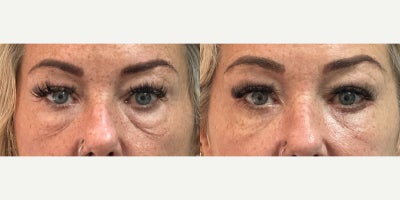
This is a difficult problem and you will get incremental improvements with lower blepharoplasty, and fat grafting, but complete resolution will likely require some direct excision of the festoon itself. One of my favourite lower blepharoplasty techniques blends the orbital fat with the cheek fat and improved the transition between the lid and cheek. The festoon however is below this transition point and will not completely disappear. Fat grafting can also fill in hollowing of the midface and you will see some benefit with that in your case also. But not complete resolution Nonetheless the festoons will still be present (with some improvement). At that point a direct excision of what remains is required to remove the skin excess at that location on the cheek. It is a big step to accept a scar on the cheek. It is much easier to accept a scar on the cheek in older people with more rhytids and sun changes that hide the scar. However the scar will fade with time and good skin care. And right now the demarcation causes a major shadow- a fine scar will be far less noticeable. Hopefully this picture was taken at a point in time when you still had some inflammation that may improve more. I hope you find this helpful. I certainly have treated many patients with this and it takes time to make sure patients understand what improvements surgery will provide. Having knowledge of the process and a step wise approach, as well as a knowledge of the pros and cons should help you as you choose your path forward.
Asked By: Dazzling446420
ANSWER
Congratulations on achieving such significant weight loss Losing weight does result in less volume within the facial fat compartments, and can contribute to signs of aging. That said, based on the concerns listed, facelift surgery would only be able to help address some of them. The facelift typically targets the lower face, jawline, and nasolabial folds. The forehead is addressed in browlift surgeries as well as non surgical modalities. The area around the eyes (peri orbital) is typically treated with blepharoplasty surgery. If the bags under the eyes are noticeable this can be a very effective surgery. Particularly in men the mid face over time faces more fat atrophy than in women at the same stage of life. Fillers or fat transfer can be considered in these cases as additional procedures to help address soft tissue or fat pad deficiencies if they exist. This can be as a complement to a facelift, or on its own. I would not be able to make a recommendation for facelift surgery in your case based on the photos provided here at this stage. However an in person consultation with a board certified plastic surgeon would be worthwhile to help explore your options. In terms of droopy lips- an upper lip lift can be considered as the distance between the nose and the upper lip increases with time. I don't think he yet meets criteria for this intervention. He still has a relatively youthful distance based on the photo provided so I would advise him to wait for that. Congratulations on this inspiring health journey.
Asked By: lvly777
ANSWER
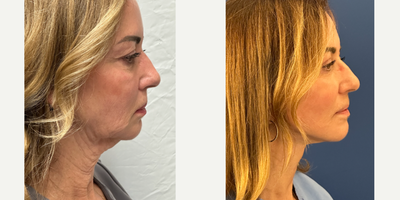
Facelift and neck lift surgery does a wonderful job targeting the lower face and neck for reversible signs of aging. Some of these signs are present in your photographs. Delaying surgery as long as possible is always a good idea, however it sounds as though you are ready for more definitive treatment than can be offered with non surgical modalities. A good face/neck lift surgery will improve your jaw line definition significantly, treat the jowls, and provide more definition to the neck. Depending on your goals, and concerns, you can consider other treatments for the skin and other regions of the face. Unfortunately surgery does not prevent further aging as time marches on. It would be very reasonable to seek a consultation to discuss your options with a board certified plastic surgeon at this stage.
Asked By: ReeWithoutherspoon
ANSWER
As it turns out every single person in the world has facial asymmetry. As a craniofacial surgeon I see this in everyone I examine. I see this asymmetry in most cases as beautiful, unique, and usually not something that I recommend addressing with surgery. Put in a google search for: George Clooney Facial Symmetry. It is a wonderful lesson to see how George Clooney, a very attractive man, has facial asymmetry just like the rest of us. If you do have specific concerns, make sure you consult with a board certified plastic surgeon to get advice that you can trust.
Asked By: Intelligent133927
ANSWER
Dear Intelligent 133927, My advice is to rank your areas of concern and to go with the area of highest concern first. There are many reasons why surgeries may be delayed and so go first with the one that is your highest priority. In my opinion your timeline is not realistic and I would recommend separating these two procedures with several months in between. At a minimum 6 weeks. You really want to be fully recovered before surgery #2. You are right the 2 surgeries should not be combined as the time under anaesthesia would be quite long, and lengthy surgery puts you at a higher risk for complications. It would not be worthwhile. In terms of time in between the surgeries: Any kind of recovery delay or even a minor complication from surgery #1 would require you to cancel surgery 2. You may be back to normal activities 2 weeks after facelift, but another surgery is not a normal activity. Surgery is a major stress on your body. The safest way is always the best way. Start with priority 1, and leave priority 2 for another time. Your surgeon should still be available whenever you are able to get more time off.
Asked By: MumAY1
ANSWER
It is quite unfortunate to have persistent pain and swelling after facelift. In terms of pain: Pain is quite rare but will improve with non surgical modalities. Pain may not necessarily be improved by surgery and in some cases revision surgery can make pain syndromes worse. If the pain can be localized to a very discrete location, you may have a neuroma and that can be improved either with therapy, or with surgery. Your surgeon will be able to help you determine that. If you are one of the very rare cases after any surgery or trauma where a pain syndrome may be present, your best bet is to be referred to a pain management team that can help address your pain from multiple modalities. Some modalities may be invasive (such as injections and blocks), and others such as psychologists that can help you navigate and overcome pain. Saint Joseph’s Hamilton has an incredible pain management team with a wealth of resources available to you. Massage therapy may be helpful to desensitize and help the nerves adjust. Other modalities such as acupuncture and muscle stim systems have also been found helpful if you have this kind of condition in other areas of the body and so may benefit you also. Unfortunately revision surgery may improve your appearance, but it may not be able to address your pain. However with the right help you should be able to make improvements over time.
Dr. Mark McRae is highly regarded for his expertise in plastic surgery, particularly in , , and . While some patients have expressed dissatisfaction with the results of their , others have had overwhelmingly positive experiences with his breast procedures, reporting excellent outcomes and high satisfaction. Dr. McRae is praised for his attentive care, thorough communication, and ability to deliver results that meet or exceed patient expectations.