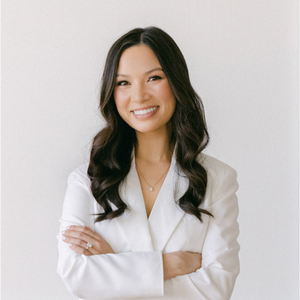
Dr. Kelly Schultz is a board-eligible plastic surgeon based in Dallas, where she brings a uniquely feminine blend of precision, artistry, and genuine connection to every patient interaction. She earned her medical degree from Baylor College of Medicine in the
Asked By: juniperr75
ANSWER
Hi Juniper! Yes, there’s a realistic possibility you could be considered for a tummy tuck once you’re at a weight you can maintain. You’ve worked hard to get here, and it’s understandable to want to address the loose skin. Your prior stroke, blocked carotid artery, and need for both aspirin and Plavix make this a higher-risk decision that deserves a careful review before you schedule surgery. I’d start with the neurologist or vascular specialist who knows your stroke history. Your plastic surgeon and an anesthesiologist should review the proposed operation with that team, including how long it would take, how they’d manage your blood pressure, whether either medication could safely be paused, or whether other interventions may be necessary prior to an elective surgery to ensure your safety. If the team feels it’s reasonable to proceed, I’d recommend having surgery in a hospital (rather than an outpatient surgery center) where you could be closely monitored overnight if needed. As for the leakage, some patients report improvement after a tummy tuck with muscle repair, but I wouldn’t count on it as a treatment for incontinence. Because yours has worsened, I would recommend seeing a urogynecologist if you haven't already, even if you’re still losing weight. They can identify what may be causing the leakage and discuss treatments that could help regardless of whether you have abdominal surgery. I hope this helps, and best of luck as you explore your options!
Asked By: Selina
ANSWER
Hi Selina! Since you’re hoping to start trying for a baby in about a year, I’d generally recommend waiting until after pregnancy and, if you breastfeed, until you’ve weaned and your breast size has stabilized. That gives you the best chance of enjoying your results for as long as possible. That said, if the sagging is affecting how you feel about yourself day to day, it’s reasonable to consider a lift now. You don’t have to be looking for perfection for an improvement to matter. The question I’d ask is whether you’d still feel the surgery was worthwhile if you wanted another lift after you’re done having children. It’s hard to predict how much your breasts will change. They often get fuller during pregnancy and lose some volume afterward, whether or not you breastfeed. That can leave the skin looser and the breasts looking lower or less full again. This can happen with a lift alone or a lift with implants. Some people are still happy with their results afterward, while others choose a revision. If breastfeeding is important to you, ask your surgeon how the planned technique could affect your ability to nurse. If you do choose a revision down the road, your original surgeon or a new surgeon with access to your operative report can use those details to plan around your prior surgery, including how the nipple’s blood supply was preserved. I hope this helps, and best of luck with whichever timing feels right for you!
Asked By: ShrinkM8
ANSWER
Great question! A 75-mile rowing weekend is a helpful detail to share with your surgeon because it gives them a much better sense of what you want to get back to after surgery. Many active patients return to their usual sports after an under-the-muscle or dual-plane augmentation. You will likely need more time to get comfortable with strenuous upper-body activity than you would with over-the-muscle placement. Once your surgeon clears you to row, I’d ease back in with shorter outings before tackling a full weekend on the river. With an implant partly under the muscle, you may see or feel it move when you contract your chest muscles (animation). An implant can also shift position over time, but there’s limited evidence that rowing or mountain biking after you’ve healed causes lasting changes in implant position or appearance. It’s also hard to predict how under-the-muscle placement will feel for you at that level of rowing. Over-the-muscle placement can be combined with a lift in appropriately selected patients. The lift needs to be planned to preserve blood supply to the nipple and areola. In some cases, an internal bra can provide extra support for the implant, but you still need enough of your own tissue to camouflage its edges. For you, one of the biggest questions is how much coverage you have in the upper part of the breast. If that tissue is thin, muscle coverage can help make implant edges and rippling less visible. A consultation with a board-certified or board-eligible plastic surgeon can help you weigh those trade-offs based on your anatomy and how much rowing you do. Best of luck!
Asked By: AnnaBoo71
ANSWER
It’s exciting that you’re ready to take this next step! Based on your description, a tummy tuck may be a very good option to address the excess skin that liposuction alone cannot remove. A standard tummy tuck typically uses an incision running from hip to hip to remove excess lower abdominal skin and reshape the abdomen. An extended tummy tuck carries that incision farther toward the flanks, allowing more excess skin along the sides to be removed and creating a smoother transition from the abdomen to the waist. The choice depends largely on how far the skin excess extends around your sides. A frontal photo alone makes that difficult to assess, so an in-person consultation with a board-certified or board-eligible plastic surgeon would be the best next step. Together, you can discuss your goals and choose the approach that best fits your anatomy. Best of luck as you take this next step toward feeling more comfortable and confident!
Asked By: psurgery51
ANSWER
Yes! Areola reduction can often be performed years after a breast lift with implants, without replacing the implants. Depending on your anatomy, a small, subtle lift may also be possible at the same time. One consideration is that the areolas can stretch again over time, particularly if there is significant tension on the surrounding skin. A permanent supporting suture may help maintain their size and shape, although it cannot guarantee that they won’t widen again. For some patients, this may even be an in-office procedure under local anesthesia. I recommend consulting with a board-eligible or board-certified plastic surgeon to review your previous surgery, assess your anatomy, and discuss your options and goals. Best of luck!
Asked By: baiyani
ANSWER
Hi Biyani! It’s completely understandable that you want your breasts to look more even while preserving the nipple you’re happy with. A bilateral breast lift and reduction may offer the best opportunity to improve symmetry in both breast shape and nipple position. The larger, lower breast would likely need more reduction and lifting than the other side, allowing each breast to be adjusted individually for a more balanced result and your nipples to appear more symmetric after surgery. Fat transfer can add volume and improve contour, but it would not reliably make the higher breast hang lower or lower its nipple to match the other side. Your concerns about preserving your nipple’s appearance and sensation are important, especially given your previous surgery. I would recommend a consultation with a board-certified or board-eligible plastic surgeon to examine you, review your surgical history, and discuss those priorities. While perfect symmetry isn’t always possible, a personalized surgical plan may help bring you closer to the balance you’re looking for. Wishing you the best of luck!
Asked By: strk181
ANSWER
I’m sorry you’ve had such a difficult experience! It’s completely understandable that you would prefer to avoid another implant and want to explore options that help you feel more comfortable in your body. A reduction of your remaining breast, including removal of excess skin, may be a very reasonable option. This could improve your comfort and make it easier to achieve balance when wearing your prosthesis. Breast reduction does create changes that your radiologist will need to account for, but it generally does not prevent continued breast cancer screening. Given your history, I would coordinate the plan with your breast surgeon and breast imaging team. If there are indentations or contour irregularities on your mastectomy side that bother you, fat grafting may also be an option, depending on the condition of your skin and scar tissue. There is no need to pursue additional reconstruction unless that is something you want. Perfect symmetry may not be achievable, but there may be ways to help you feel more balanced and comfortable. A consultation with a board-eligible or board-certified plastic surgeon experienced in breast reconstruction would be a good next step to review your history, discuss your goals, and explore your options. Best of luck!
Asked By: Practical4998
ANSWER
Hi Practical! It sounds like your goal is not to dramatically change the size or shape of your breasts, but simply to restore some of the volume you lost after breastfeeding. Small implants can be a great option for this! Motiva Ergonomix implants are one option that can create a very soft, natural look. They tend to take on more of a teardrop shape when you are standing, which can work especially well for someone who naturally has less fullness at the top of the breast. A mini or other low-profile implant will likely give you enough volume to fill out your bras and tops without creating a very round or obviously augmented appearance. Because you are lean and work out frequently, implant placement will be an important part of the conversation. Under-the-muscle placement can provide more implant coverage, but it may cause some movement or distortion when the chest muscle contracts. Above-the-muscle or subfascial placement avoids that animation, although your surgeon will need to make sure you have enough tissue coverage to keep the implant edges from being visible. Fat transfer may still be an option, even if you do not have enough donor fat for it to provide all of the volume you want. In some patients, a small amount of fat can be used with an implant to soften the edges and make the result look even more natural. I would recommend consulting with a plastic surgeon who performs a variety of implant placement techniques and has experience working with lean, athletic patients. They can evaluate your tissue thickness, chest width, natural breast shape, and breast fold to help select an implant that restores your lost volume while still looking like you. Best of luck!
Asked By: mikajene
ANSWER
Hi Mikajene! The next best step would be to schedule a consultation with a board-certified or board-eligible plastic surgeon. Although an intracapsular rupture is generally not an emergency, removal is typically recommended once a silicone implant rupture has been confirmed. During your consultation, your surgeon can review your imaging, examine you, and discuss the options that are safest and most appropriate for you. These may include removing the implants and capsules, replacing them with newer-generation implants, combining the procedure with a breast lift to reshape and reposition the breast tissue, or removing the implants without replacement. There is no single right choice! The best approach depends on your anatomy, overall health, goals, and whether you would like to continue having implants. A consultation will allow you to see what each option could realistically offer in your particular situation.
Asked By: Gorgeous208460
ANSWER
Hi Gorgeous! Absolutely let your surgeon know if you prefer a more conservative result and are comfortable with your nipples sitting slightly lower. Your aesthetic goals are an important part of planning your surgery! However, performing a smaller lift does not necessarily reduce the risk of nipple necrosis. Nipple blood supply depends on many factors, including your anatomy, the technique used, the amount of tissue being moved, implant size, and tension on the breast tissues. A qualified board-certified or board-eligible plastic surgeon should evaluate these factors and choose a technique that safely preserves the nipple blood supply. If nipple viability is a significant concern in your particular case, I would be more inclined to discuss staging the breast lift and augmentation rather than simply performing a less complete lift. Staging allows the breast to heal before adding the additional volume and tension of an implant and can be a very good option in higher-risk situations. It is completely reasonable to prefer a more natural, slightly lower nipple position, but ideally that decision should be based on the look you want rather than as the primary method of reducing surgical risk. Wishing you the best of luck!