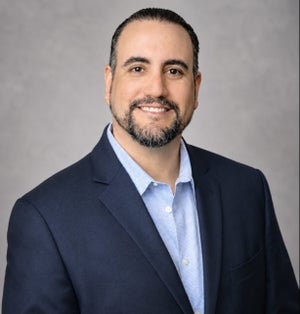
Dr Jose Munoz Dr. José Muñoz, MD is a board-certified plastic and reconstructive surgeon and member of the American Society of Plastic Surgeons, known for blending surgical excellence with genuine human connection. Born and raised in Cuba, Dr. Muñoz immigr
Asked By: Trustworthy373384
ANSWER
Thank you for asking such an excellent question. Many patients use the terms keloid and hypertrophic scar interchangeably, but they are actually different conditions. A true keloid extends beyond the borders of the original incision and unfortunately has a higher risk of recurring after surgery. If you have a history of true keloids, that does increase your risk of developing another keloid following a tummy tuck. A hypertrophic scar, on the other hand, stays within the borders of the incision. It is much more common and often appears raised, thickened, and red during the healing process. These scars can also be associated with itching, tenderness, or pain, and may become irritated by clothing rubbing against them. One of the hallmarks of a beautiful tummy tuck is a natural-appearing belly button. An experienced plastic surgeon carefully designs the umbilical incision so that the scar is hidden within the natural contours of the belly button rather than being visible on the outside, since a conspicuous scar around the belly button has traditionally been one of the classic signs that a patient has undergone a tummy tuck. Achieving a natural-looking umbilicus depends greatly on surgical planning, meticulous technique, and experience. Scar formation is influenced by several factors, including genetics, wound tension, tissue handling, surgical technique, and postoperative healing. While no surgeon can completely eliminate the risk of abnormal scarring, careful surgical technique and close follow-up can significantly optimize the final result. The good news is that even if you are prone to abnormal scars, there are many effective treatment options. These include silicone therapy, scar massage, laser treatments, and corticosteroid injections. For patients with recurrent true keloids, surgical excision combined with postoperative radiation therapy may sometimes be considered to help reduce the risk of recurrence. Most importantly, discuss your history of abnormal scarring with your board-certified plastic surgeon before surgery and choose someone who will follow you closely throughout your recovery. Early recognition and treatment of an abnormal scar often lead to the best outcomes. Thank you for asking such a thoughtful question. It’s one that many patients share, and having this conversation before surgery is an important part of achieving the safest and most natural-looking result
Asked By: joyhicks
ANSWER
Hi and welcome to our forum!From your photos, significant early improvement in abdominal and flank contour is noted following your procedure. Unfortunately, there is no operative procedure to treat postoperative swelling. It has to resolve on its own. Swelling consists of tissue fluid which provides nutrients to the healing tissue. Initially, control of swelling can be obtained with application of a compression garment. It is used to prevent bleeding and to control swelling. As the swelling subsides, its use becomes unnecessary. In our experience, 60-80% of swelling will resolve within 6 weeks, with the remainder slowly subsiding over a period of 12-18 months depending upon the aggressiveness of the procedure and your individual healing time (everyone is different!). As you are 6 months "out", you have a way to go. In our practice, we advocate compression for a period of 6 - 8 weeks, unless excessive, in which case we employ lymphatic massage.From a set of photos, I cannot determine if you are still swollen or if there is residual fat. Allow the swelling to resolve. If still full at one year, only then should you consider a revisional procedure. It is still far too early to determine the need for revision..Continue follow up with your plastic surgeon.Best wishes...
Asked By: Gregarious670292
ANSWER
Hi and welcome to our forum!From your photos, I note that the distance from the top of your breast bone to the exposed nipple is increased, there is loss of superior pole breast fullness, and there is moderate sag. I cannot judge symmetry of size or shape of your breasts as they are partially obscured.Deflated breasts demonstrate normal skin landmarks but lack volume. In your situation, the skin has stretched out, resulting in sag.As you demonstrate in your photograph as you hold up one breast, the nipple areolar complex has fallen significantly due to previous breast skin stretch. Breast augmentation alone will provide larger breasts of the same shape. A lift is required to elevate the nipple-areolar complex into anatomic position, remove excess stretched out skin, restore superior pole breast volume and conify breast shape.I'm sorry but an implant and non-surgical skin tightening will not be sufficient to correct this amount of sag.Visit a board certified plastic surgeon for evaluation and discussion.Best wishes...
Asked By: Cassandra3577
ANSWER
Hi and welcome to our forum!Trivial unrecalled traumatic episodes may have resulted in intracutaneous and subcutaneous bleeding. It may result in extravascular blood cells (escaped blood) to be deposited into the skin and soft tissue. It usually resorbs, but if significant, the iron in your red blood cells may be deposited into these tissues, causing permanent color alteration. If a breast implant resides close to the skin surface, there may be resulting thinning of the overlying skin. If there is a history of excessive bleeding, see your family physician. If concerned about the skin lesion, visit a dermatologist for evaluation and discussion.If your breast implant resides immediately below the skin surface, see your plastic surgeon.Best wishes...
Asked By: Nice667613
ANSWER
Hi and welcome to our forum!From your photos, I note that your left breast implant drifts laterally and upward when lying in bed on your back. The margins of the right implant is visible under the skin. Although asymmetry is noted when supine, it is far less noticeable when in a standing position.Lateral drift is a condition where the surgical pocket is too large for the implant which will fall into the armpit when on your back. This may be caused by weakened connective tissue. Subglandular implant placement may result in implant margin silhouette. You may wish to consider a revisional procedure to convert the implants into a submuscular position to camouflage the implants and to tighten the superior and lateral pocket to eliminate lateral drift. 15% of cosmetic surgeries require a secondary touch up procedure to achieve optimal results.In order to increase superior pole fullness, a larger implant or a lift may be required.Revisit your plastic surgeon for reevaluation and advice.Best wishes...
Asked By: A Self
ANSWER
Hi and welcome to our forum!From your photos, I note the presence of large breast implants. The right implant is riding high with associated nipple-areolar distortion.. At 10 weeks out, the drop and fluff phenomenon might still be in progress. The skin and soft tissues may reconfigure and stretch to accommodate the significant added volume. It is too early to ascertain the final position of the implants.Downward breast massage is recommended.If in 3 months or so, there is no further improvement, a pocket adjustment may be required. 15% of cosmetic procedures require a secondary touch-up for optimal results.Continue follow-up with your plastic surgeon.Best wishes...
Asked By: AortizM
ANSWER
Hi and welcome to our forum!From your description, it certainly sounds as if you are demonstrating a capsular contracture of the breast.Following the procedure of saline or silicone augmentation mammoplasty, the surgical wounds seal and undergo the healing process. This occurs in the underlying soft tissues as well. The silicone polymer making up the shell of the breast implant is biologically inert, and as such, the body creates a thin filmy internal scar which surrounds the implant, holding it in its position. Thus, all breast implant procedures involve the development of a thin capsule. This becomes problematic only if the scar shrinks substantially around the implant, thus causing a capsular contracture. Manufacturer publications state that this will occur in approximately 10% of all augmentation procedures.Generally, capsular contracture only needs to be addressed if the patient experiences discomfort or if the implant becomes displaced, affecting the aesthetic outcome.The precise cause of capsular contracture is unknown but is unique amongst individuals and their individual immune response to the placement of a foreign body. Its incidence is increased in the presence of infection. Capsular contracture is not predictable nor a by-product of surgical quality. It is highly recommended patients learn and follow a massage routine that will dramatically reduce the incidence of contracture. While postoperative massage will help prevent contracture, there exists the possibility that the degree of contracture may require an outpatient procedure to remove the scar tissue.Your upcoming visit to your surgeon is indeed indicated.Best wishes...
Asked By: Sensible2407
ANSWER
Hi and welcome to our forum!From your photos, I note that you appear smaller than a "D" cup. You demonstrate moderately sized breasts with slight asymmetry in size. There is poor cleavage. There is loss of superior pole volume. There is minimal sag. The nipples reside above the level of the fold beneath the breasts.Cup size is an extremely inaccurate measurement of breast size as there is no standardization in the bra manufacturing industry. One brand's "C" is another's "D". In addition, many individuals wear ill-fitting bras. The most important measurement here is the width of your breast (or base width diameter...BWD). Implants come in different sizes, projections, and BWD's. You want to choose an implant of approximately the same width as your breast....too narrow, no cleavage...too wide, exaggerated cleavage and "lateral boob". You can then choose size and projection. This is totally subjective...Find out the brand of implant your surgeon utilizes. Implant manufacturers have websites on the internet. Look at their implant catalog and choose a size of the same BWD. This will centralize the breast tissue on the mound. Size can be determined by placing rice into a measuring cup (1 cc 1 ml) and place in a plastic baggie in your bra.....or, many plastic surgeons will have implant sizers in their offices. Some offer computer imaging, as in your case. If a relatively small implant size is chosen ( less than ~350 cc or so), addition of a lift will increase "perkiness" as it will lift the nipple areolar complexes into anatomic position, will remove stretched out skin, will increase superior pole breast volume, and conify breast shape. Larger implants will fill out the skin envelope without a lift.Visit a board certified plastic surgeon for in-person evaluation and discussion (looks like you already have done so).Best wishes...
Asked By: Intuitive530468
ANSWER
Hi and welcome to our forum!From your photo, I note that there is asymmetry of breast implant position. One implant (right?) is in good position while the opposite implant resides higher and has drifted further laterally. As a result, there is loss of superior pole fullness. Postoperative scarring plays a role in implant position and may cause an implant to drift out of alignment. This is unfortunately unavoidable and is a known complication of the procedure. A pocket adjustment procedure may be in order. 15% of cosmetic procedures can be improved with a secondary touch-up surgery.Revisit your plastic surgeon for reevaluation and discussion.Best wishes...
Asked By: Inventive962298
ANSWER
Hi and welcome to our forum!From your photos, I note that you demonstrate moderate breast volume, there is moderate asymmetry of breast size, the areolae are at different "altitudes" on the chest wall, areolar diameter is perhaps slightly increased, the areolae reside well above the level of the fold beneath the breasts, there is loss of superior pole breast volume, and there appear to be minimal stretch marks on the breast skin. There is minimal-moderate sag.Breast augmentation alone will provide larger breasts of the same shape. Differential fill implants will correct size asymmetry.A lollipop lift will elevate the nipple-areolar complexes into anatomic position (correcting the areolar asymmetry), will decrease areolar diameter, will remove excess stretched out skin, will increase superior pole breast volume, and will conify breast shape. Again, differential fill will correct size asymmetry.It really depends upon the degree of "perkiness" you desire...Visit a board certified plastic surgeon for in-person evaluation and discussion.Best wishes...
Dr. Jose A. Munoz continues to receive stellar feedback from his patients, who commend his surgical expertise, attentiveness, and the outstanding results of procedures like , , and . Patients emphasize his professionalism, availability, and the supportive environment of his practice.