Show more
Show more
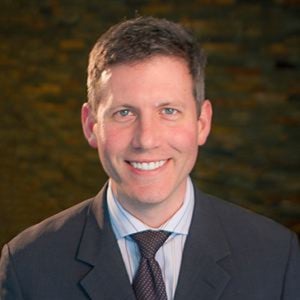
Dr. David Tauber is a Harvard-educated and -trained board-certified plastic surgeon practicing at DeLuca Plastic Surgery in Albany, New York. An inductee into the RealSelf 100 and 500 Hall of Fame, Dr. Tauber specializes in reconstructive and plastic surgery o
Asked By: marvap
ANSWER
Thank you for your question. Brow position may be contributing to the difference you notice. Your right eyebrow appears higher in the photos, which exposes more of the upper eyelid and makes the folds more visible on that side. This does not necessarily mean that eyelid has more excess skin. If this difference is related to forehead muscle activity, carefully placed Botox may improve brow balance and soften the appearance of the folds without surgery. The placement and dose need to be individualized: lowering a brow too much can create heaviness or worsen hooding. I would first assess your brows with your forehead relaxed and observe how they move. If a small amount of true excess skin remains, a conservative upper blepharoplasty may be an option. My approach is to preserve natural fullness and your eye shape while removing only the skin necessary. I would be cautious about removing skin simply to match two sides when the brow positions are different. An in-person examination would help determine whether a conservative Botox treatment would be a reasonable starting point or whether eyelid surgery would offer a worthwhile improvement. When appropriate, I typically perform upper eyelid surgery in the office under local anesthesia. You can read more about the procedure and how I assess candidacy at the supporting link below.
Asked By: rmi567
ANSWER
Under-eye bags and hollows can be inherited and may be present in your twenties. The treatment depends on what is creating the tired appearance: protruding eyelid fat, a hollow beneath it, thin or pigmented skin, or a combination of these. The close-up photographs show an under-eye contour change, but full-face photographs and an examination are needed to separate those components. For a mild hollow with little puffiness, a small amount of carefully placed hyaluronic acid filler may soften the transition between the eyelid and cheek. Filler camouflages the contour; it does not remove a true fat bag. In someone already prone to puffiness, it may make the area look fuller or cause persistent swelling. Irregularities and rare vascular complications, including vision loss, must also be discussed. If protruding orbital fat is the main issue, a conservative lower blepharoplasty may provide a more direct, longer-lasting improvement. I generally favor a transconjunctival approach, working from inside the eyelid to remove or reposition fat while preserving eyelid support. When there is an adjacent tear-trough hollow, fat repositioning may help smooth the transition without aggressively removing volume. Skin treatment is a separate decision; laser can improve selected skin-texture concerns but will not remove a fat bag or reliably eliminate pigmentation. There is no need to rush into surgery. An in-person consultation can clarify which part of your concern a nonsurgical treatment could realistically improve and whether the benefit of surgery would justify the recovery and risks. See the link below for more information on lower-eyelid surgery and fat redraping.
Asked By: Caring269962
ANSWER
A previous liver resection does not automatically rule out a tummy tuck. Your photographs show loose abdominal skin and a midline scar, so skin removal could improve the contour. The key question is whether a standard tummy tuck can provide enough tightening or whether a fleur-de-lis pattern would add a worthwhile improvement. A standard tummy tuck tightens the skin mainly from top to bottom. A fleur-de-lis adds a vertical skin excision to address side-to-side looseness as well. Having an existing vertical scar may make that tradeoff more acceptable, but it does not by itself mean that a fleur-de-lis is necessary. Removing the old scar replaces it with a new scar; it does not create a scar-free abdomen. Your prior operative report and the full extent of the incision should be reviewed carefully. Old abdominal scars can affect the blood supply to the skin that remains after surgery, which influences how much undermining, skin removal, and liposuction can safely be performed. A fleur-de-lis also creates an incision junction that can be more prone to delayed healing. Clearance from your liver specialist is helpful, but it does not replace this assessment of the abdominal tissues. An examination should also check for an incisional hernia or abdominal-wall weakness. At 5 feet 10 inches and 165 pounds, additional weight loss would not usually be the main priority if you are healthy and at a stable, maintainable weight. A senior resident clinic may be a reasonable option when an experienced attending plastic surgeon evaluates the case, supervises surgery, and helps manage follow-up. I would seek a surgeon experienced with previously operated abdomens who can explain why one incision pattern is preferable for you. See the link below for more information on tummy-tuck options.
Asked By: Bb what
ANSWER
Based on your photographs, your eyes appear relatively prominent, and I do not see the typical hollowing of an A-frame deformity. The folds you are noticing may represent the normal amount of skin your upper eyelids need to close comfortably over the eyes, rather than excess skin that should be removed. I would be cautious about an upper blepharoplasty in this situation. Removing that skin could make complete eyelid closure more difficult and expose more of the upper eyelid itself, accentuating the forward position of your eyes. The goal should be to soften the folds without compromising eyelid function or making the eyes look more prominent. Your observation that the folds look better when you first wake up also makes sense. One possibility is that the tissue above your eyes becomes slightly fuller from fluid redistribution while you are lying down. That small amount of temporary fullness may be enough to camouflage the folds that concern you. This would not necessarily mean that you need skin removal. My first consideration would be a conservative amount of hyaluronic acid filler in the brow tissue above the eyelids to create a similar softening effect. This would need to be planned after an in-person examination of your brow, eyelid closure, and eye position. Filler around the eyes requires an experienced injector and careful discussion of risks, including swelling, irregularity, and rare vascular complications affecting vision. Based on the photographs, however, carefully adding brow volume would likely be a better starting point than removing upper-eyelid skin. See the link below for more information on using filler around the eyes to soften contour concerns.
Asked By: vicma
ANSWER
It’s understandable to feel frustrated after trying several treatments without lasting improvement. When the concern is sagging jowls and loose neck skin, treatments aimed at improving skin quality often cannot provide the structural lift you’re looking for. In my practice, I would consider whether you are a candidate for a Tri-Harmony Face & Neck Lift, which addresses the deeper supporting tissues of the lower face and neck while removing excess skin. This may offer more meaningful improvement than repeating treatments that have provided little benefit. Having hEDS does require additional care in deciding whether surgery is appropriate. I would review your history of bruising, wound healing, scarring, and previous procedures, and discuss how tissue laxity might affect the durability of your result. An in-person examination would help determine whether this approach offers a reasonable balance of improvement and risk for you. The supporting link below explains the Tri-Harmony Face & Neck Lift in more detail.
Asked By: ZucchiniMangione
ANSWER
Losing more than 200 pounds is a significant accomplishment. The loose neck skin that can follow reflects how much the tissues have stretched, and being 32 does not automatically make nonsurgical treatment the best starting point. If you have substantial excess skin, I would be cautious about spending money on repeated tightening treatments expecting a surgical degree of improvement. Sofwave and lasers may help selected concerns, but they cannot remove excess skin. FaceTite also has limitations and is a minimally invasive procedure rather than a completely nonsurgical treatment. In my practice, I would evaluate you for a Tri-Harmony Face & Neck Lift. This approach addresses the deeper support of the lower face and neck and removes redundant skin to improve the jawline and neck contour. The extent of surgery would depend on your examination; you may need a more focused neck procedure if your lower face has good support. Once your weight is stable and your nutrition is adequate, a consultation would help determine which approach is most likely to deliver the improvement you want. There is no need to wait a few years solely because of your age if you are otherwise an appropriate candidate. The supporting link below explains the Tri-Harmony Face & Neck Lift in more detail.
Asked By: Bonessa18
ANSWER
Thank you for providing several views. Based on the photographs, there appears to be some fullness beneath the chin, mild skin and platysma laxity, and a chin/jaw relationship that may also contribute to the less-defined jawline. However, photographs cannot reliably determine how much is superficial fat versus platysma muscle, deeper fat, submandibular glands, or underlying skeletal anatomy. A Nefertiti lift, when it provides improvement, generally has a modest and variable effect on early jowling caused by downward platysmal pull. It is less likely to meaningfully improve central neck or submental fullness and will not remove fat, tighten loose skin, reduce prominent glands, or change chin projection. Since your supplemental treatment was only two weeks ago, I would allow the full effect to settle before judging the result. Depending on an in-person examination, options might range from targeted submental liposuction or chin enhancement to a limited-incision neck procedure combining liposuction with platysma tightening. If deeper structures or more meaningful skin laxity are contributing, a more comprehensive neck lift may provide a better correction. At age 39 and a stable weight, the treatment plan should be driven by your individual anatomy rather than any single feature. An examination is necessary to assess skin elasticity, platysmal bands, the superficial and deep fat compartments, gland prominence, chin projection, and hyoid position before making a final recommendation.
Asked By: Johnshoe118
ANSWER
Your concern may not be simple tear-trough hollowing. With prior cheek filler, incomplete dissolution, and additional filler placed to camouflage the irregularity, the first step is to determine what product remains, where it is located, and what is actually creating the contour. Possibilities include residual filler, swelling or scar tissue, malar bags, true volume deficiency, or lower-eyelid fat. I would avoid adding more filler until that is clarified. Blepharoplasty can improve lower-eyelid skin or fat bulging, but it will not correct cheek filler that is sitting in the wrong location. Obtaining the prior treatment records would be helpful. Once the filler issue has been evaluated and the tissues have settled, you can be reassessed for lower blepharoplasty with fat repositioning, conservative fat grafting, filler, or no additional treatment. Your photos are useful, but an in-person examination is needed before recommending one of those options.
Asked By: Original992792
ANSWER
Fat grafting can be used to enhance the lateral zygomatic or cheekbone region, and it can be combined with treatment of the tear trough or lid-cheek junction. The important point is that fat and filler do not behave identically. Fat generally produces softer, more diffuse volume, and the amount that survives is less predictable than the result from a precisely placed filler. Because you already have good forward cheek projection and are looking for a controlled increase in lateral flare, the amount, location, and depth of placement would be especially important. Conservative treatment is preferable; additional fat can be added later, while removing excess surviving fat is much more difficult. An AI-generated image can help communicate your goal, but it should not be viewed as a reliable surgical simulation. The under-eye hollow also needs to be evaluated separately for lower-eyelid fat, skin laxity, cheek support, and any residual filler. Fat grafting may be appropriate, but it is not automatically the best treatment for every tear trough. Your photos suggest a reasonable goal, but an in-person examination is necessary to determine whether fat alone can create the sharper lateral contour you want or whether another approach would be more predictable.
Asked By: Pqna
ANSWER
Thank you for sending your photographs and for explaining your concerns so clearly. I understand why you are questioning whether a full tummy tuck is worthwhile when you are already slim. We approach abdominal contouring through our CoreComplete™ system, which separately evaluates three possible contributors to the abdominal contour: localized fat, loose skin, and the underlying abdominal wall. CoreComplete 1™ uses power-assisted liposuction to shape the abdomen and waist. CoreComplete 2™ adds the removal of loose skin, while CoreComplete 3™ includes liposuction and skin removal plus abdominal-wall tightening, or plication, when muscle separation or weakness is present. The goal is not to perform every possible step, but to select the least extensive combination that adequately addresses the tissues responsible for the concern. Based on your photographs, my preliminary thoughts regarding your questions are: Does a full tummy tuck with muscle repair appear appropriate? You appear to have a relatively small amount of excess skin, but there does seem to be some skin looseness and wrinkling around the belly button and lower abdomen. A full tummy tuck may therefore be appropriate if your goal is to obtain the greatest possible improvement throughout this entire area. Being slim does not make the procedure unnecessary, although the anticipated change would be a refinement of your contour rather than a major reduction in size. Within the CoreComplete system, a full tummy tuck without muscle repair would generally fall under CoreComplete 2, while a full tummy tuck with abdominal-wall plication would be CoreComplete 3. Whether you require CoreComplete 2 or 3 cannot be determined from photographs alone because the abdominal wall must be examined directly. Can muscle repair benefit someone who has never been pregnant? Yes, but only if muscle separation or abdominal-wall laxity is present. Pregnancy is a common cause of muscle separation, but it is not the only possible cause. Being offered a tummy tuck also does not automatically mean that muscle repair is necessary. During an examination, I would assess the firmness of your abdominal wall and look for separation of the rectus muscles. If your muscles are already firm and appropriately positioned, repairing them may provide little additional benefit. In that case, CoreComplete 2 may be sufficient because it includes abdominal and waist contouring with skin removal but does not include plication. If separation or structural laxity is present and contributes to the abdominal contour, CoreComplete 3 adds the muscle-tightening component and may provide a more meaningful benefit. The higher CoreComplete number does not indicate a better result. It describes which treatment components are required for the individual patient. Does the short vertical scar appear necessary? Your skin appears relatively tight, which is actually the reason a short vertical scar may be necessary. During a full tummy tuck, the abdominal skin is pulled downward, and the belly button is brought through a new opening while remaining attached in its original position underneath. The original belly-button opening must then be removed or closed. In someone with more loose skin, that opening can usually be pulled far enough downward to be removed as part of the low horizontal incision. Because you have comparatively little excess skin, the original opening may not reach the horizontal incision without placing too much tension on the closure or positioning the main scar higher than desired. In that situation, closing the original opening leaves a short vertical scar in the center of the lower abdomen, just above and meeting the horizontal scar near the underwear line. The vertical scar is therefore not related to whether you receive CoreComplete 2 or CoreComplete 3, since muscle repair does not determine whether this scar is required. It is related primarily to the amount and mobility of your skin and how far it can be moved downward. The short vertical scar may be the tradeoff required to keep the main horizontal scar low while safely tightening the limited amount of skin you have. Its exact necessity and anticipated length could only be confirmed after examining you. Could a mini tummy tuck, skin-only tummy tuck, or another approach avoid the vertical scar? Possibly, but the improvement would likely be more limited. Within the CoreComplete system, the terms mini, full, and extended describe how much of the abdomen requires skin removal. The CoreComplete number describes the treatment components: CoreComplete 2 does not include muscle plication, while CoreComplete 3 does. A CoreComplete 2 Mini, for example, could combine abdominal and waist contouring with limited skin removal below the belly button while avoiding muscle repair. Because a mini tummy tuck does not usually reposition the belly button, it may also avoid the short vertical scar. However, it primarily tightens the lower abdomen and generally does not correct looseness surrounding or above the belly button. Since some of the visible skin changes appear to involve the belly-button area, a mini procedure may not address everything that concerns you. A skin-only approach could be considered if you have very little fat and your abdominal muscles do not require repair, but omitting muscle repair would not necessarily eliminate the vertical scar during a full tummy tuck. The scar issue is related primarily to how far the skin and original belly-button opening can be moved downward. A more limited procedure may provide a smaller improvement with fewer scars, while a full CoreComplete 2 or 3 procedure may provide greater overall tightening at the cost of the additional short vertical scar. Would the improvement be significant enough to justify surgery when you are already slim? That is ultimately a personal decision. Because you are already slim and have relatively tight tissues, the result would likely be a focused improvement in skin smoothness, waist definition, and lower-abdominal contour rather than a dramatic transformation. CoreComplete is designed to match the operation to the source of the concern rather than treating every patient with the same procedure. If your primary issue is loose skin, CoreComplete 2 may be sufficient. If an examination shows that abdominal-wall separation or weakness also contributes to your contour, CoreComplete 3 may provide additional improvement. If your concern is limited to a small amount of skin below the belly button, a mini skin-removal approach may offer a more appropriate balance. For someone who is very bothered by this specific area, even a relatively focused refinement may be meaningful. For someone who would be more troubled by the scars than by the existing looseness, surgery may not feel worthwhile. An in-person consultation would allow us to assess your skin mobility, abdominal and waist fat, abdominal-wall strength, belly-button position, and preferred underwear line. We could then determine the appropriate CoreComplete level and whether the skin removal should be mini or full, giving you a more definite opinion about the balance between improvement, recovery, and scarring.
Dr. David Tauber is highly regarded for his expertise in plastic surgeries, including , , , , , , , and . Patients consistently praise his professionalism, care, and the positive outcomes of his procedures. Many highlight his ability to alleviate physical discomfort and boost self-confidence.