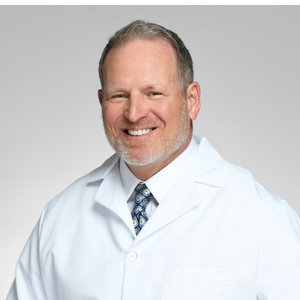
I'm Dr. David Hendrick, a triple board-certified cosmetic and facial plastic surgeon with nearly 30 years of experience. At Millard Plastic Surgery in Denver, I specialize in facial rejuvenation, including deep-plane facelifts, neck lifts, and eyelid surgery.
Asked By: Inikimd
ANSWER
Fat grafting can be a useful addition to a facelift, but I don't believe every facelift patient needs it. The important distinction is whether the facial changes you're trying to correct are primarily caused by tissue descent, volume loss, or a combination of the two. A facelift repositions tissues that have descended with age, while fat grafting adds volume to areas that have become hollow or deficient. These procedures accomplish different things, and one doesn't necessarily substitute for the other. My personal philosophy is to focus first on correcting the underlying anatomy. When the cheek tissues are properly repositioned, patients can sometimes regain fullness in areas that initially appeared depleted, without needing additional fat. For that reason, I don't routinely perform fat grafting with my facelifts. I prefer to see what can be accomplished through tissue repositioning and then evaluate whether additional volume enhancement would provide a meaningful benefit. Fat grafting also has limitations. Not all transferred fat survives, and the amount retained can vary. In certain areas, particularly where the skin is thin, excess volume or irregularities can be difficult to correct. If your facial volume is already good, there may be little reason to add fat simply because you're undergoing a facelift. However, if there are areas of true volume loss, fat grafting may be worth considering. Ultimately, the decision should be based on a careful evaluation of your facial anatomy and what you're hoping to improve, rather than routinely combining the two procedures.
Asked By: themenopausemidwife
ANSWER
Nasolabial folds are one of the more challenging areas to address with facial rejuvenation surgery, and it's important to understand that even a well-performed deep-plane facelift may not eliminate them completely. The nasolabial fold is influenced by several factors, including the position of the cheek tissues, facial volume, skin quality, and underlying anatomy. The key is determining what's contributing most to the fold in your particular case. A deep-plane facelift can reposition descended facial tissues and may soften the nasolabial folds. However, the amount of improvement varies considerably. In some patients, the folds are primarily related to tissue descent, while in others, the underlying anatomy or volume changes play a larger role. I evaluate the midface separately when planning facial rejuvenation. In patients with significant cheek descent, a separate midface lift may provide additional elevation that isn't fully achieved through the facelift alone. However, not everyone needs a midface lift, and it doesn't guarantee elimination of the nasolabial folds. My advice would be to ask your surgeon what specifically is contributing to your folds, how the proposed procedure will address that anatomy, and how much improvement is realistic. Reviewing before-and-after photographs of patients with similar facial characteristics can also help establish reasonable expectations.
Asked By: 16374
ANSWER
The first thing I evaluate when someone comes in with concerns about hooded upper eyelids is the position of the eyebrows. It's important to distinguish between excess upper eyelid skin and a brow that has descended because they are two different problems. I often explain this to patients by comparing the brow to a curtain rod and the eyelid skin to a curtain. If the curtain rod has dropped, simply shortening the curtain isn't necessarily going to give you the result you're looking for. If the primary issue is excess upper eyelid skin and the brow is already in a good position, an upper blepharoplasty may be all that's needed. If the outer brow has descended, a temporal brow lift may be more appropriate. Sometimes a combination of the two provides the best result. One important consideration is that removing too much upper eyelid skin can create an unnatural or hollowed appearance. I prefer to be conservative with skin removal and preserve the natural characteristics of the eyes and brows. The fact that you like the appearance when you gently elevate the outer brow is useful information, but it doesn't necessarily mean a brow lift is the correct procedure. An in-person examination of your brow position, eyelid anatomy, and skin excess would help determine which approach is most likely to achieve the subtle improvement you're looking for.
Asked By: talktokelli
ANSWER
Yes, it is completely normal for a midface lift to be considered a separate procedure and to have an additional cost. Facial rejuvenation isn't necessarily one procedure that addresses everything. Depending on a patient's anatomy and goals, a surgical plan might include a facelift, neck lift, midface lift, brow lift, or eyelid surgery. Each addresses different concerns, and not everyone needs every procedure. The midface refers primarily to the cheek area beneath the eyes. As we age, the cheek tissues can descend, contributing to a longer lower eyelid–cheek transition and more prominent nasolabial folds. A midface lift is designed to elevate those descended tissues. While some facelift techniques provide meaningful midface improvement, others may not adequately address this area. I evaluate the midface separately when planning facial rejuvenation. When significant cheek descent is present, an additional midface lift may provide improvement beyond what the planned facelift would accomplish. Fat transfer serves a different purpose. It adds volume rather than mechanically lifting descended tissues. The important question isn't whether a midface lift costs extra, but whether it will provide a meaningful improvement beyond what your planned facelift and fat transfer can accomplish. I would encourage you to ask your surgeon exactly what each procedure is intended to correct. A thorough facial evaluation should help you understand why each component is being recommended.
Asked By: marvap
ANSWER
Based on your description, upper blepharoplasty may be a reasonable option to explore. The goal would be to address excess eyelid skin while preserving a natural appearance. The difference between your eyelids is also important to assess. Surgery can often improve asymmetry, but the approach depends on whether it comes from excess skin, brow position, eyelid position, or a combination of factors. Perfect symmetry cannot be guaranteed. An examination would help confirm whether you are a good candidate and how much skin could safely be removed from each side. A conservative, individualized plan would be important to achieving the natural result you are looking for.
Asked By: haybailzz
ANSWER
Your goal of looking refreshed while preserving your natural features is a good starting point. I would consider whether a conservative, staged approach could address your main concerns before recommending a more extensive operation. Depending on your examination, options might include Botox for forehead lines, upper eyelid surgery for excess eyelid skin, and carefully selected filler for areas of volume loss. These treatments address different concerns, and they would not necessarily correct loose skin along the jawline or neck. Because you have lost a substantial amount of weight, your skin laxity and anatomy matter more than age alone. I would not promise that smaller treatments could postpone a facelift for a particular number of years. A consultation would help determine whether they could provide enough improvement now or whether a face and neck lift would better address your goals.
Asked By: misty100
ANSWER
You may have options that allow you to postpone surgery, depending on what is causing the shadows and how much skin laxity is present. Carefully placed filler can help when volume loss is part of the problem, but it does not provide the same correction as surgery for loose skin around the lower face and neck. I would approach this in stages: first identify what is contributing to your concerns, then decide whether a conservative treatment would provide enough improvement to be worthwhile. If sagging is the main issue, a facelift/necklift may ultimately be the more effective approach. Questions about HRT should be discussed with the clinician managing your menopausal care; I would not rely on it as a substitute for treating facial or neck laxity. A consultation would help determine whether nonsurgical treatment, a mini facelift, or a more comprehensive procedure best fits your goals.
Asked By: ZucchiniMangione
ANSWER
First, congratulations on such a significant accomplishment. Losing more than 200 pounds is a major achievement. Being young may work in your favor, but nonsurgical treatments generally cannot remove the excess skin left after substantial weight loss. They may offer some improvement in mild laxity, but expecting a surgical degree of correction would be unrealistic. My concern would be that you could spend a considerable amount without getting the improvement you want. If excess skin is the main issue, a surgical neck/face lift is generally the more effective option, although an examination is needed to recommend the appropriate procedure. If you are not ready for surgery or its recovery time, it is reasonable to wait until your weight is stable and the timing works for you. I would rather help you plan an appropriate treatment than encourage you to pursue something unlikely to meet your goals.
Asked By: Helpful962641
ANSWER
Congratulations on your weight loss. To determine the best approach, I would want to know your age and examine the amount of loose skin, its elasticity, and the underlying neck anatomy. After significant weight loss, a limited or “mini” neck/face lift may not provide enough correction to achieve the improvement you want. A more comprehensive procedure may be needed to create a meaningful but natural-looking result. The amount of weight lost alone, however, does not determine which operation is right for you. My approach is always to recommend the right surgery for the right patient at the right time. An in-person consultation would help establish whether a mini neck/face lift would be sufficient or whether another approach would better meet your goals.
Asked By: cauliflowerisaflower
ANSWER
I would not approach your first facelift with a plan to have four or five over your lifetime. A better approach is to address your current concerns and reassess as you age, rather than commit to surgery on a fixed schedule. Someone might have a first facelift around 45 and consider another around 60, but those ages are examples, not a recommended timetable. Smaller refinements may be appropriate along the way, depending on what changes and what bothers you. Previous surgery and scar tissue are considerations when planning another facelift. Whether additional surgery is appropriate depends on your anatomy, healing, prior procedures, and goals. The priority is a natural-looking result with an individualized plan—not reaching a predetermined number of facelifts.
No reviews yet.
When reviews are available, you’ll see ratings, tags, and photos here.


