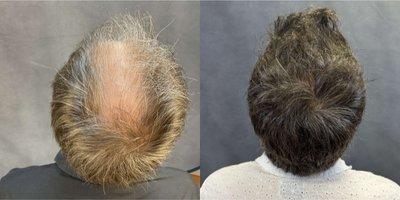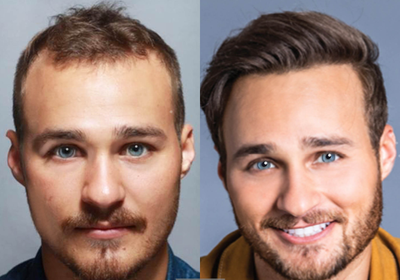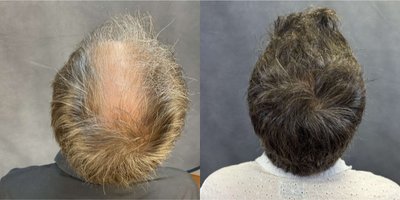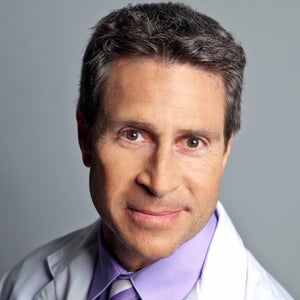
Dr. Deutsch started his training in Hair Restoration under the guidance of Dr. Bosley in 2004 and has since completed over 7000 Hair Transplant procedures.
Asked By: Bright904109
ANSWER
I would wait at least 8 weeks -generally by that time the initial phase of healing is complete., However , scars can " remodel/mature" for up to 1 year
Asked By: jaqandre12
ANSWER
Typically we do not transplant hair into the crown of men under the age of early 30’s . The concern is that the pattern of loss will expand around the transplants leaving an “island” of grafting hair. Additionally, this would use up a large amount of your finite supply of donor hair,leaving possibly an inadequate amount for transplants to the hairline and front when needed. The most important thing for your situation is prevention of further loss -you are already doing this with Finasteride and Minoxidil. You may consider adding Low Level Laser Therapy and/or Platelet Rich Plasma (PRP). Please consult with an experienced Hair Restoration surgeon.
Asked By: misterpete
ANSWER
If done properly the SMP should nicely conceal your donor area. The dots of pigment should be about the size of a ballpoint pen mark, and depending on the pigment used will gradually fade after 8-10 years.
Asked By: matimanda
ANSWER
The most important thing for you to do is have a consultation with a Dermatologist or experienced Hair Restoration surgeon to evaluate your hair loss and create an appropriate treatment plan. Probably they will recommend adjuncts to prevent further loss and possibly thicken up miniaturized hairs. Those adjuncts include Finasteride (Propecia), Minoxidil (Rogaine), Platelet Rich Plasma (PRP) and/or Low Level Laserlight therapy.
Asked By: TammyTourista
ANSWER
LLLT therapy works through a mechanism called photo bio stimulation/biomodulation. There are a number of studies supporting its use an an adjunct to help prevent the progression of hair loss and possibly increase the diameter of miniaturized hairs.
Asked By: alex.burgess
ANSWER
You have not provided any photos so it is difficult for me to give an accurate answer,but in general based on what you describe it should not be a problem to harvest enough single hair grafts for a minor hairline lowering.
Asked By: pvlife
ANSWER
When looking at your photos the length of hair in your donor area is about where we want it for FUE-no other area (recipient) needs to be clipped. However,the most important issue in your case (based on your age and pattern) is to establish a long term treatment plan which will take into account future hair loss and overall donor supply.I would recommend consulting with an experienced Hair Restoration surgeon to develope a treatment strategy appropriate for your situation.
Asked By: SigmundFresh
ANSWER
FUE sessions can be achieved on successive days however more important for you is a comprehensive evaluation to determine your needs ,donor supply and design a long term treatment plan that also includes adjuncts to prevent further loss (e.g. Propecia,Rogaine ).I suggest scheduling an office consultation with an experienced Hair Restoration surgeon.
Asked By: rhal22
ANSWER
Just an isolated pimple or two post procedure should not have any impacts on the grafts. However ,since you have acne there might be an increased chance that you subsequently develop more extensive folliculitis (which still ultimately should not affect your final result) .I would discuss this with your surgeon-perhaps they will want to cover you with antibiotics before and after the procedure.
Asked By: ufcwatcher
ANSWER
Based on the information you provided I would agree that this is more effluvium than MPB, possibly due your fasting. Minoxidil might help with mitigating this process. I would recommend consulting with a Dermatologist or experienced Hair Restoration surgeon.
Dr. David Deutsch has achieved outstanding results with his procedures, including and traditional . Patients consistently commend his expertise, attention to detail, and the natural outcomes he delivers. His team is also praised for their exceptional care and support throughout the procedure and recovery process.