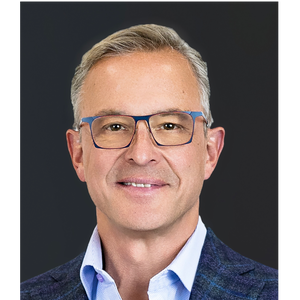
I am a board certified plastic surgeon practicing in Syracuse NY, and specializing is cosmetic surgery of the breast, body, and face. My office provides comprehensive services to meet all your aesthetic goals with artistry, experience and compassion.
Asked By: mm3789
ANSWER
Yes, I am sure it could be revised. Just know, however, that when the permanent stitch is removed, this will allow that nipple to stretch out more. The purpose of the permanent suture is to prevent widening of the nipple areola complex. I recommend you pursue an in person evaluation by a board-certified plastic surgeon who has experience in revisionary breast procedures. Best of luck.
Asked By: v.lynne
ANSWER
Greetings. Yes, this is areolar skin which has been moved along the vertical incision line during your surgery. This happens sometimes when the areolas are very large. This is a easily fixable situation. Re-excising along the vertical incision line can remove that tissue. This can usually be done in the office at a local anesthesia. Discuss it with your surgeon. Best regards Dr. Deboni
Asked By: Morgan228
ANSWER
Thank you for your question and photo. Retained tissue along the vertical limb after a breast lift can happen when the patient has a relatively large areola which impacts on the proposed breast lift pattern. Typically, as the breast skin relaxes after surgery, this tissue can be exercised along the vertical limb. You do appear to have a moderate amount still there, so I would suggest having your surgeon excise it partially so as not to make the lower closure too tight. Once things further relax, more can be excised. Hope this helps. Best regards Dr. Deboni @drdeboni
Asked By: Cool535921
ANSWER
Thanks for your photos and question. At 6 months post op, it is unlikely that the implant position is going to significantly change. Without an exam, it is impossible to tell whether it is a matter of the pocket needing revision to lower the implant, or if it is a case of capsular contracture. I recommend you speaking to your surgeon about your concerns, and possibly getting a second opinion if needed. Best regards. Dr Deboni @drdeboni
Asked By: sweetjamieg
ANSWER
Thanks for your question and photos. Based on your info and photos, I agree that a mastopexy is needed. There really is no such thing as a “scarless mastopexy.” You already have a moderate degree of ptosis. If you down size your implant, this will only increase. I think that you would achieve your best result with an inverted T, or anchor mastopexy. You could consider a lollipop, or vertical mastopexy, but I think it would leave you with a long distance from your nipple to your crease. As far as implant, it needs to be matched to then base diameter of your breast. Saline or silicone is your choice, and your surgeon should be able to discuss pros and cons. At the end of the day, it comes down to how much scar your are willing to accept for the best shape. I will say that this is a tricky operation and recommend that you consult with a surgeon who has significant experience with secondary breast augmentation and mastopexy, and can show you a a number of post op results. Best Regards. Dr Deboni @drdeboni
Asked By: AfroPuff
ANSWER
I have seen this on occasion after abdominoplasty and many times it is because the patient has put on weight after the procedure. You didn’t mention what your weight was before the surgery vs currently. After abdominoplasty, the “reservoir “ for fat that was in the lower abdomen has been removed. Therefore, if you put on a small amount of weight, more of that fat will be stored internally, beneath the muscle compared to before the surgery. For example, if your pre surgical weight was 130 lbs and the amount of fat removed weighed 3 lbs, your new post op weight should be 127. If you currently weigh 135, you would be functionally 8 lbs heavier, and the proportion of fat stores beneath your abdominal muscles will be higher, resulting in feeling “inflated.” Without knowing your weight and if it changes, this is just a thought. If your weight is lower than pre-op, then perhaps a GI work up is in order to further evaluate. Best regards. Dr Deboni
Asked By: SourShortcake
ANSWER
If you have too much skin for a periareolar(keyhole) top procedure, then DI is the best option. An anchor incision is for female breast reduction, not for FTM top surgery. The anchor scar will look unnatural, in my opinion if you think about it, an anchor incision is essentially a DI with an additional vertical incision. As far as nipple sensation, because the sensory nerves run through the breast tissue that is being removed, sensation is not maintained to any degree with top surgery. Hope this helps. Best. Dr Deboni @drdeboni
Asked By: RealSelfMember963
ANSWER
Good morning. So the simple answer is, yes surgeons who specialize in labiaplasty could in theory assist you with revising your reconstruction. That being said, I do think that there are some intricacies which make it different from a cis patient labiaplasty. Because the tissue has been cut and already moved, the blood supply is not going to be the same as in a non-operated cis woman. I would suggest that you seek out a surgeon who has significant experience with trans labiaplasty/reconstruction as I think he or she would be the best suited to help you. If you are in the New York City area, I recommend Dr. Gary Alter, who is a recognized expert in both cos and trans labiaplasty. Even a consultation with him may be a significant benefit in giving you some direction. Best of luck!! Dr Deboni @drdeboni
Asked By: kdowler
ANSWER
Greetings. Based on your one photo, you look more to have some residual skin/ fat on the lateral submental region. Radio frequency skin lipolysis and tightening (Facetite by Inmode) might be a good option. Without more photos as well as preop pics, it is difficult to comment further. Best Regards. Dr Deboni @drdeboni
Asked By: Amy5666
ANSWER
Thank you for your question. This is what we refer to, as medical tourism. Essentially, you are asking someone who didn’t do your surgery to take the liability and responsibility of your aftercare. Although I’m sure that you could find somebody to follow you afterwards, they will likely want to charge for their services. Also, if you have a complication, you are now in a situation where the person who did your surgery is not available to care for you. Most plastic surgeons are not interested in taking on liability from somebody else’s surgery. Overall, whatever you are saving by going abroad, may be offset by the cost of follow up and potential postoperative complications. Personally, if someone who has had surgery done elsewhere then wants me to follow up and care for postoperative issues, my opinion is: If you don’t trust or choose me to do your initial surgery, why would you trust me to take care of a complication? Not trying to sound harsh, but I believe this is the type of sentiment you were going to find from most part certified plastic surgeons. Best regards.
Mention RealSelf to redeem.
- Free Consultation When You Mention RealSelf
Dr. Anthony Deboni delivers exceptional results and compassionate care, particularly for patients undergoing , , and . Patients consistently highlight his attentive follow-up, realistic expectations, and natural-looking surgical outcomes. Many express satisfaction with their improved confidence, body image, and emotional well-being following procedures.