Dr. Harry T. Haramis, MD, FACS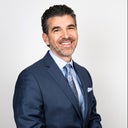
Dr. Harry T. Haramis, MD, FACS
Board Certified Plastic Surgeon
Answered on Jun 12, 2026
Get real answers from board-certified doctors and other qualified providers.
I have researched patient experiences and prefer over-the-muscle or dual-plane placement instead of fully under-the-muscle. I want a closer cleavage gap and natural movement without cutting into the muscle, especially since I workout and worry about upper-body training discomfort. My "pinch test" is thicker than a one-pound coin, which suggests I have enough natural tissue. My goal is a subtle change from a 32B to around a C cup. Ultimately, I love my breasts and want a modest look, so I am very concerned about a botched result, removal, and scars if I go fully under the muscle. 5,7 and 52kg
Hello, I am having a BA in August, and I had a Proveked PE due to pregnancy. I don't have any clotting disorder, and I ended up having another pregnancy 3 years ago. I was put on Lovenox for the whole pregnancy, and everything went successfully. I am having a BA in August, and this is the recommendation that the surgeon is having. I would like to see what you guys think. I am scared !! But I met with my hematologist, he's putting me on Lovenox 24 hrs after surgery for 7 days, and the surgeon is doing 275CC over the muscle, will be doing general anesthesia, and he will be doing small lipo under my armpit since I had excessive milk that travels to under the armpit. Surgery is 2 hours an 15mins. The surgeon will be using a leg compressor. What do you guys think of this????

Hi! Im a 42 year old woman. 5’4” and 125 pounds. I have opted for a conservative submusclar saline implants. I am unable to take Rx pain meds due to allergies. Pain management will be with over the counter Tylenol/Advil. My surgeon feels I can manage my pain with OTC meds. What should I expect with pain following surgery?

Hello, I am 39 years old with two kids. Recovery for a tummy tuck would be extremely difficult with the limited to zero help we do have. I was exploring the idea of fixing an insecurity of mine that I have had for years (pre kids as well). I am wondering if there are alternatives to tummy tucks that is less invasive. Price point is not that issue, it’s the recovery and down time after that is playing a significant role. I am 5 ft, 100 lbs, and toned shape although I have not focused on toning my stomach.

Had a consultation today and the doctor said I needed a Circumferential tummy tuck, and that it would help with my back fat better than what Lipo would. I’m not sure if that’s correct or not. I don’t feel like I have that much loose skin as it’s not necessarily saggy as it’s just fat hanging off me. He said doing this procedure would get rid of my bat wings and my apron belly.
My face already has a bunch of other problems, but my nose is what bothers me the most. I don’t mind it as much from the side, but from the front it often looks like a shapeless blob. It doesn’t help that my other facial features are quite small as well.

I’m about 18 months out from primary rhinoplasty and overall my breathing is good, but aesthetically I’m struggling with some issues that have not improved with time. My main concerns: 1) Alar batten grafts • I can clearly see and feel the batten grafts on both sides of my nose. • They create a visible ridge/edge under the skin, especially in certain lighting. • The skin over the grafts looks stretched and the contour isn’t smooth. 2) Bridge contour irregularities • Along the nasal bridge I have multiple dents/potholes and uneven contour. • It looks almost like small depressions rather than a straight smooth dorsum. • Very noticeable in overhead lighting and in photos. I am not looking to drastically change my nose or undo the functional support. I actually want to preserve support and breathing. My goal is simply a smoother, more natural contour. My questions: 1. Is this likely due to graft visibility vs. thin skin vs. scar contracture? 2. Can alar batten grafts be shaved, repositioned, or softened at this stage? 3. Would a fascia graft help camouflage the edges? 4. For the bridge dents, are soft-tissue camouflage options (fascia, diced cartilage in fascia, or filler) appropriate 18 months post-op? 5. Is this considered a minor revision or does it usually require a full open revision rhinoplasty? I’m hesitant to undergo a ln open revision unless absolutely necessary.
I have been intersted in having a mommy makeover for 6 years now. I am a 48 year old AA female. Soon to be 49 in 1 week. Overall healthy no issues, no medications other than vitiams. I had a gastric sleeve in 2016. My highest weight was 274. My current weight is 183...I have been in a 7 pound window for the last 6 years. I had 3 c-sections 1999,2000 and 2009. Partial hysterectomy in 2011. I have all the usual issues having kids and weight loss. Ideally I would like to have a mommy makeover and tackle everything at once. And recover from 1 surgery instead of multiple ones. I want lipo, tummy tuck and breast lift..with a fat transfer because I lost a considerate amount of destiny in them. Over the years I have been told that 1) cant have all those procedures done at the same time 2) I need to have breast reduction 3) they suggest a lower body lift. The body lift seems like more of major procedure than what I want and I can't get my breast done at the same time. I really want to be 1 and done...I dont wanna rack up debt for multiple surgeries. I am content with my current butt size and shape...I know the body lift will give it a little toot, but thats not my main priority. I would really like to know if it's possible to really have the procedures I want....or do I need multiple surgeries to achive what I want. I appericate you reading to the end and I welcome all feedback. Also I forgot to add that i also am very content with my current breast size 38F. So no reduction.

My breasts are about 34DDD+. It's hard to do any physical activities without them being painful. I have tried losing weight, but they still sag pretty low. What do you recommend I do? I can never go out comfortably without being self-conscious about how large they look in T-shirts. When I don't where bras they hurt even more. My breasts are flatter towards the top and most of the weight is low if that makes sense lol. Should I wait until I'm older and try to fix it naturally or would surgery be the best bet?
I am considering liposuction for the breast area. After liposuction to the abdominal area, I gained a few pounds and it all seems to have gone to my breasts. Does anyone have experience with this? What are the benefits/risks? If this commonly done?

Good morning, I am about to do my breast reduction in 9 days. I weaned my two years old, but i realize I still have milk when I press hard around my nipples. My PS said it won't bother the procedure, but it stresses me out a little. Also, I breastfed more than 2 years so boobs are already empty and like they were before. So I am not concerned about the shape changing once totally dry but more the presence of milk still during and after procedure.

Hello. I am starting my reduction process. I have two questions. First question is will they reduce my nipples. I know the areola is made to be proportional to the new breast, but my nipples are larger than average at about 20mm. I’d like them to be around the 10mm mark that ive read is average. My second question is if im a good candidate at all. I have quite a few medical things that my insurance would need to approve, but wasnt sure with breast size. Im 5’4”-5’5” and about 150 pounds (give or take). I wear a 34DD-36DD.

I'm a trans woman planning breast augmentation and I'm stuck between sizes. My stats: 5'9", around 100 kg, broad shoulders and a wide chest wall, about a 40" underbust and currently roughly a 40B. I have limited natural breast growth from HRT. My surgeon has shown me three Mentor cohesive silicone options, all placed subglandular (over the muscle) and all on the same base width — so the only real difference is projection: 470cc Moderate Classic (~35 mm projection) 600cc Moderate Plus (~46 mm projection) 750cc High Profile (~59 mm projection) He recommends the 600cc Moderate Plus. What I want is a natural, gently sloping (teardrop) look — soft upper pole, volume lower, mild natural settle. I really want to avoid a round, "puffed-up," over-projected look with visible implant edges. But because my frame and chest are large, I'm genuinely worried that going too small won't look proportional or "won't show." So I feel caught between natural and proportional. My questions for surgeons and anyone with a similar build: On a fixed base width like this, how much difference in upper-pole fullness should I actually expect between 470, 600, and 750? Is 600 Moderate Plus a sensible middle, or would you lean smaller/larger for a broad frame? Does over-the-muscle placement change your size/profile advice, and how do you minimize visible upper-pole edges or rippling given limited tissue coverage? Would a more cohesive gel (e.g., MemoryGel Xtra) help, or would it push me toward the round lo

5ft8 170 pounds. Getting lift and saline implants. My dr recommeded to try 500 to 700 sizers after showing pictures and exam. I wear 38 c now. Nursed 4 babies. 650 and 700 felt perfect for me. It was still hard to tell tho with the sizers as i shoved my own boobs in there too haha. I am afraid of going too small so i figured 700 is the right choice. But so hard to tell. Want them to be nice and full but not so obvious that they are fake. Or make me.look too top heavy in sweaters. Etc.

Hello, I recently had my under the muscle silicone implants removed with the capsule left inside. I had them for exactly 1 year. If I were to get another set of implants over the muscle this time, would the capsule need to be removed?

I'm a trans woman planning breast augmentation. I'm 5'9", around 100 kg, with a broad chest and roughly a 40-inch underbust, currently about an A to B cup. My surgeon has shown me three Mentor silicone options on a 3D simulation, all placed over the muscle (subglandular) and all on the same base width: a 470cc moderate classic, a 600cc moderate plus, and a 750cc high profile. He has recommended the 600cc moderate plus. My goal is a natural, gently sloping look rather than a high, round, heavily projected upper pole — but because my frame and chest are large, I'm concerned that going too small won't look proportional or won't show enough on my body. So I feel caught between wanting something natural and wanting enough volume to suit my frame. For a body and chest like mine, is 600cc moderate plus a sensible middle choice to balance those two goals, or would you lean smaller or larger? Since all three share the same base width, how much difference in projection and upper-pole fullness should I expect between the moderate classic, moderate plus, and high profile? And does the over-the-muscle placement change what you'd advise?

I am 5'6, 125 pounds and have stubborn belly & thigh fat, even when I'm down to 115. I've heard it can be harder to do lipo on thin people and have a 'smooth' result on the skin's surface. Would it be 'better' for me to gain a few pounds before the procedure, to make fat extraction easier, remove the same amount of fat as if I were thinner and get a good result? My skin is healthy and tight, so loose skin isn't a concern.
Hi, I am a 36 year old female and for some time now I have noticed the right side of my face appears to be ‘lazy’ and wondering what could be causing this or if it is just part of the aging process? The left side of my face is still quite youthful and tight even though I have always slept on my left side. It is particularly noticeable when I smile and you will see in the photos my right eyelid is lazy and my right lip and cheek droop down which causes a puckering of the skin around my mouth on that side. Wondering what surgical options could help with this? Or should I wait until my 40’s and have it corrected once I am ready for a full facelift? Thank you

I had a facelift procedure in May 2022. Everything seem to be fine except for my incision on my left ear did rupture open. The surgeon did not use drains for fluid after the procedure and I believe that may be why that transpired however, now my scars have moved onto my face and below my earlobe. What would cause this to happen? I am so devastated that this has happened.
I had a lower eyelid lift as part of the facelift surgery. I don't like how it has looked since then. Upper eyelids didn't need any work. However, as part of lower eyelid lift, my left eyelid was pulled down and over too much. My upper eyelids look very heavy now and make me look older. Is it possible to correct this?

I had a procedure on February 4th this year to remove a chalazion, and it did go away at the time. However, it has now returned, and I’m wondering whether the procedure wasn’t fully effective, or if I might need to undergo another one?
What’s trending? Who’s turning heads? Which TikTok myths need busting? We’ve got you. No fluff, no gatekeeping—just real talk. Get our free, unfiltered newsletter.

