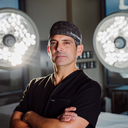
Surgical treatment of facial aging changes must be carefully individualized to match each patient's aesthetic needs and desires. No two 'facelifts', by necessity, are the same. In helping a patient to make decisions about plastic surgery for facial rejuvenation, I always examine and assess how each aesthetic area or 'unit' of the face contributes to an individual's overall appearance: the brows and eyelids, the cheeks or 'midface', the lower face and chin, and the neck. An individualized surgical plan is then developed which addresses each patient's specific concerns and needs.
The facelift procedure involves incisions that skirt the contour of the ears, using the anatomy of the ear to help conceal them. For a full facelift, the incision starts in the sideburn area, follows the contours of the junction of the ear with the face, curves behind the earlobe into the recess between the posterior ear and the neck/scalp, and then extends into the hairline posteriorly at the top of the ear. When I make these incisions, I design them so that, once fully healed, they may be difficult for even a hairdresser to detect. That goal can often be achieved, and it requires meticulous attention to every centimeter of the closure.
In any case, the only way to truly decide whether or not to "have something done" is to get the best information available from a source with experience and appropriate credentials, whom you trust with your well-being. That information includes a thorough understanding of all options available (both surgical and non-surgical), and it should be provided by someone that understands your aesthetic sensibility and goals. This is what I do my best to provide for every individual that I meet in consultation.
My personal aesthetic sensibility is this: a good aesthetic cosmetic surgery result is a result that looks natural, not 'done'. I always delight in the patient who reports that their friends or their colleagues at work say "You look fantastic!", but that they can't quite put their finger on why.