Austin Oculoplastic Surgeons

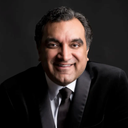
Tanuj Nakra, MD Tanuj Nakra, MD
Austin Oculoplastic Surgeon
3705 Medical Pkwy Ste 120, Austin
47 answers
Sean M. Blaydon, MD Sean M. Blaydon, MD
Austin Oculoplastic Surgeon
3705 Medical Parkway Suite 120, Austin
3 answers
Russell W. Neuhaus, MD Russell W. Neuhaus, MD
Austin Oculoplastic Surgeon
3705 Medical Pkwy Suite 120, Austin
1 answer

Recent Answers

Is It Okay to Have Silikon 1000 Injected Days Before a Rhinoplasty?

I'd like to have some more facial volume ,and also a rhinoplaty plus a chin reduction but since this increases swelling it would take many months until i would be able to get the silikon 1000 injections done, am i correct about this?

A: Silicone is safe for injection, but probably not ideal right before surgery

Silicone is a safe option for facial filling.  It is an ideal nasal filler option, especially after rhinoplasty to "tweak" the results.  It can be quite useful for facial injections as well.

I'd like to comment on a previous plastic surgeon's strong opinions against silicone.  Dr. Jay Barnett in NYC is the world's leading authority on cosmetic and reconstructive facial silicone injections.  He has been performing injections for the past 40 years, and at the 2009 American Academy of Cosmetic Surgery he was a keynote speaker and reported no episodes of granulomatous inflammation in his practice ever.  Please see his website for more information.  Also, Jacinto reported in 2005 in the the journal Dermatologic Surgery a 10 year follow up of 200+ patients.  2 percent had transient inflammation, with resolution. There are many stories and reports of problems with silicone injections- these cases are typically performed by non-medical specialists using non-medical grade silicone.  Finally, the previous plastic surgeon reports that you should only seek out care from a Board Certified Plastic Surgeon.  There are many other "Board Certified" specialists that are more than qualified to perform cosmetic work on the face, as evidenced by the specialties recongnized and promoted by this website.

Tanuj Nakra, MD
Austin Oculoplastic Surgeon

Non Dissolving Stitch, Now a Knot on the Eyebrow, What Should I Do?

Non dissolving stitch is sitting on brow bone, 10 weeks post surgery. (10 weeks post upper/lower bleph) It feels like a little knot directly under the skin, which remains puffy immediately around that stitch. It is mildly tender, but not discolored. Other brow did not have this problem. Doc seems baffled. If he goes in to remove it, will I risk a droopy lower lid, or whatever the stitch is supposed to hold? Doc seems baffled, so I'm concerned. Any input is invited!

A: 10 weeks is still in the early postop healing phase

Hi there,

Occasionally, surgeons will choose to use internal sutures during blepharoplasty.  Reasons for the sutures may include internal brow supporting sutures, internal canthal tightening sutures, and orbicularis muscle tightening sutures in lower blepharoplasty.  All these scenarios would involve having the suture pass into the orbital rim along the upper outer section of the orbit.

These sutures can cause focal local swelling and/or tenderness in the first few months after surgery.  As long as there are no signs of increased swellng or redness, I would not be worried about risk of infection.    Also, it is not uncommon for there to be asymmetry in the healing process, and so swelling/irritation on one side is a can certainly happen.

I would be patient and let things heal more.  Continue to have an open dialogue with your surgeon about this issue. He or she may need to intervene if many months go by and you still have a little swelling or tenderness. Your surgeon may at that time decide that a minor procedure to excise the offending suture or to inject an antinflammatory medication may be an option.

Best wishes to you

Tanuj Nakra, MD
Austin Oculoplastic Surgeon

Is a Rhinoplasty Suitable for Me?

I am of Pakistani origin and I have quite a large nose. I am considered attractive sometimes. I feel my large nose looks a little masculine. I have read a lot of rhinoplasty reviews. It leaves me a little scared to follow through with a procedure that could have a negative effect including not being happy with result, nose collapsing etc. What are the minimilistic and safest procedures in order to change the shape. If for example you have the tip changed will the nose still collapse?

A: Good rhinoplasty surgeons leave little room for nasal collapse

Hi there,

As a physician of Indian origin with a genetically large nose, I myself underwent rhinoplasty to reduce the size of my nasal dorsum and to improve the definition and elevation of my nasal tip.  As someone who performs rhinoplasty, it was an excellent experience for me to be a rhinoplasty patient.  From these experiences, I sympathize greatly with your concerns.

In general, if you have the typical "large indian/pakistani nose," the surgery you would need is a reduction rhinoplasty to reduce the height of your nasal dorsum and probably narrow your nose a bit.  Also, probably improved tip definintion and rotation would help you.  These procedures are the most commonly performed steps in cosmetic rhinoplasty, and are generally very safe manoevers with little risk of nasal collapse.  You are not describing any major asymmetries or breathing problems that might require septoplasty.  These deeper surgeries can lead to collapse of the nose.

Today, most rhinoplasty surgerons have evolved into becoming quite defensive about protecting the nose from collapse.  And so a columellar strut (internal tip support) is typically performed to not only improve the tip definition and rotation but also to protect the tip from collapse.  Historically, rhinoplasty surgeons occasionally were aggressive about removing tissue from the middle vault or middle third of the nose- this would put patients at risk of midline volume collapse and/or breathing problems from nasal valve collapse.  Again, most rhinoplasty surgeons today support the middle vault with grafting and also conservative resection.

I hope this is not too detailed of answer for you, but the bottom line is that it sounds like you probably need a full-blown surgical rhinoplasty, and less invasive options are not going to be the right treatment for you.  This message is an attempt to allay your concerns about the safety of modern rhinoplasty with your nasal issues which seem fairly run-of-the-mill.  Go get some consultations with reputable local surgeons and from personal as well as professional experience, I think you are going to love your results!

Tanuj Nakra, MD
Austin Oculoplastic Surgeon
Use of this website and the posting of any reviews or other content on this website constitutes acceptance of the RealSelf® Terms of Service. The material on this site is for informational purposes only, and is not a substitute for medical advice, diagnosis or treatment provided by a qualified health care provider. © 2011 RealSelf, Inc. All rights reserved.